
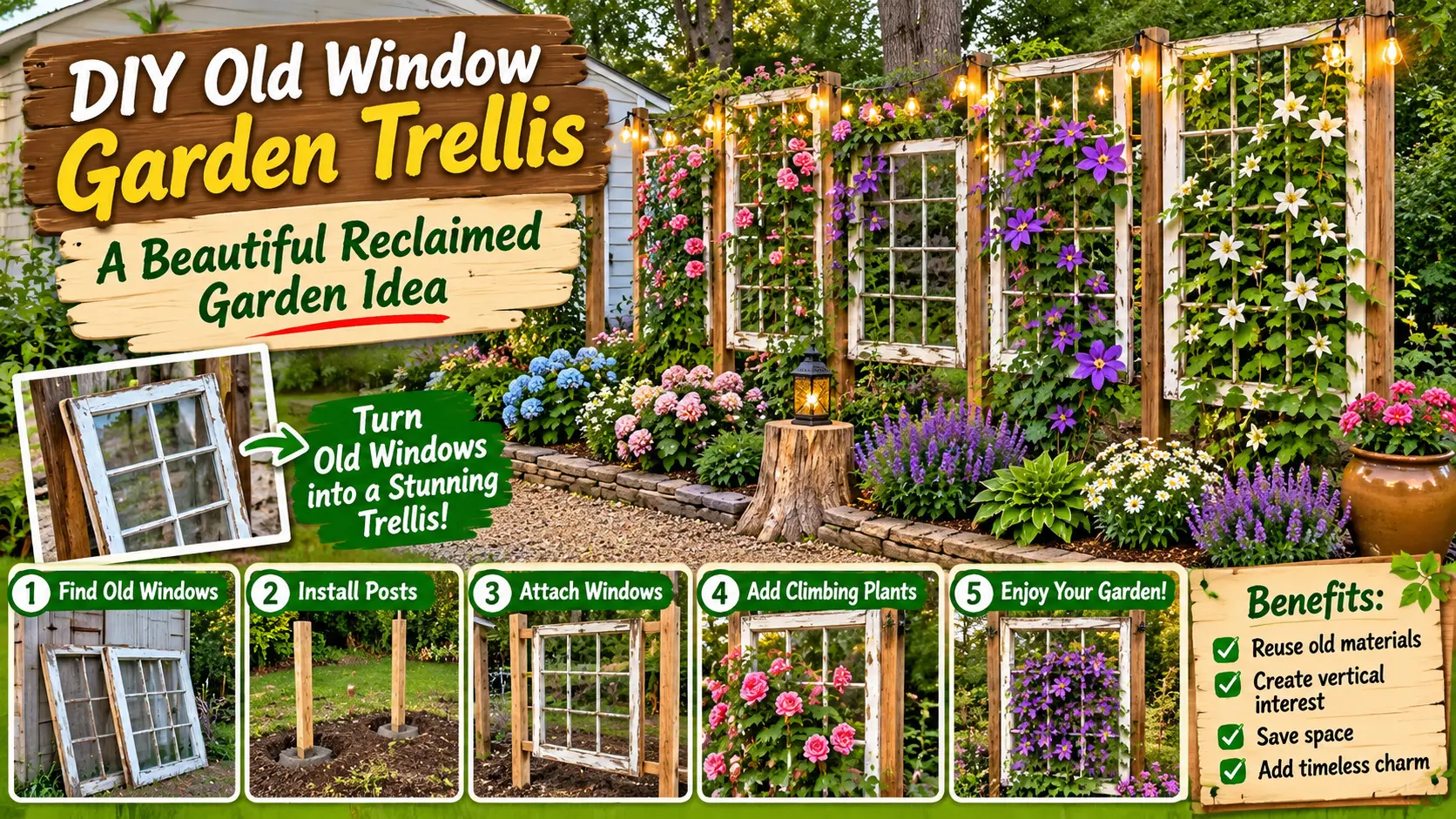
Old window frames can become a beautiful garden trellis instead of ending up in the trash. Once the glass is removed and the frames are mounted securely between sturdy posts, they can support lightweight climbing flowers while adding height, texture, and cottage-garden character to a backyard border.
The Pinterest idea looks simple, but a good real-world version needs more than placing an old window in the soil. The frame should be checked for loose glass, peeling paint, rot, sharp hardware, and enough strength to handle wind after vines cover it.
Quick answer
Remove the glass, inspect the frame, attach it to independent posts, and add thin wire or twine if the vine needs a smaller surface to grab. Use lightweight climbing plants and avoid badly deteriorated old paint around edible garden soil.
Why Old Windows Make Good Garden Trellises
Old windows already have many of the visual features of a decorative trellis:
- A rigid outer frame
- Vertical and horizontal divisions
- Open spaces for vines
- A strong architectural shape
- An aged look that suits cottage and farmhouse gardens
Instead of disappearing once plants grow, the frame remains part of the garden design.
1. Remove the Glass Before Using the Frame
Do not leave fragile glass panes in a freestanding garden trellis.
Wind, falling branches, garden tools, pets, children, or movement in an aging wooden frame can break old glass.
For this project, the safer approach is to use the empty window frame only.
2. Check Old Paint Carefully
Old painted windows need extra attention before they go into a garden.
Oregon State University Extension warns that chipping paint from old window frames can introduce lead into soil when the age and paint history are unknown. Paint from older residential materials is a particular concern.
Safer choice: If a frame has unknown, badly peeling old paint, do not simply sand it beside a vegetable bed. Use a newer frame, have the coating evaluated appropriately, or keep questionable materials away from edible garden soil.
3. Inspect the Wood and Hardware
A window that feels solid indoors may loosen quickly after rain, sun, and repeated outdoor moisture.
Check for:
- Soft or rotten wood
- Loose joints
- Protruding nails
- Old glazing points
- Sharp screws
- Splinters
- Loose muntins or dividers
Repair weak joints before adding plants because vines add both weight and wind resistance as they mature.
4. Use Real Posts to Carry the Structure
Treat the reclaimed window as the decorative climbing panel—not as the main structural support.
Install sturdy wood or metal posts beside the frame and attach the window to them securely.
University of Minnesota Extension recommends driving trellis stakes deep enough that the structure will not tip during strong winds. The exact depth and strength depend on the plant, post type, soil, and total vine weight.
5. Fasten the Frame Securely
Do not balance the window loosely between posts.
Depending on the frame and post material, suitable fastening methods may include:
- Exterior-rated screws
- Bolts with washers
- Metal brackets
- Exterior structural straps
The frame should not sway significantly when pushed by hand.
6. Match the Vine to the Trellis
Different vines climb in different ways.
Illinois Extension explains that climbing plants may use:
- Twining stems
- Tendrils
- Leaf petioles
- Aerial roots
- Adhesive pads
The support should match the plant’s attachment method rather than expecting every vine to climb any decorative frame.
Clematis Is One of the Best Matches
The flowering vines in the inspiration image resemble clematis, and clematis can work especially well on this type of feature.
Clematis climbs using its leaf petioles, which wrap around relatively thin supports.
Illinois Extension recommends thin supports and notes that if a support is thicker than about 3/4 inch, adding wire, twine, screening, or similar narrow material can help the vine climb.
Easy upgrade: Run thin wire or garden twine across the empty window openings. The old frame provides the look; the thin wire gives clematis something easier to grab.
Other Plants That Can Work
| Plant | How It Fits |
|---|---|
| Clematis | Excellent with thin wire or narrow lattice |
| Sweet peas | Lightweight annual climber |
| Black-eyed Susan vine | Good ornamental climber in warm conditions |
| Nasturtium | Can be trained loosely through the frame |
| Light climbing rose | Needs tying and a stronger structural support |
Avoid Very Heavy Vines on Weak Window Frames
An old sash window is decorative woodwork, not a heavy-duty livestock panel.
Be cautious with vigorous or heavy plants such as:
- Mature grapevines
- Wisteria
- Large climbing roses
- Heavy gourds
- Squash
- Large fruiting vines
If you want to grow a heavier vine, let a separate structural trellis carry the load and use the old window only as decoration.
7. Use Several Window Sizes for a More Natural Look
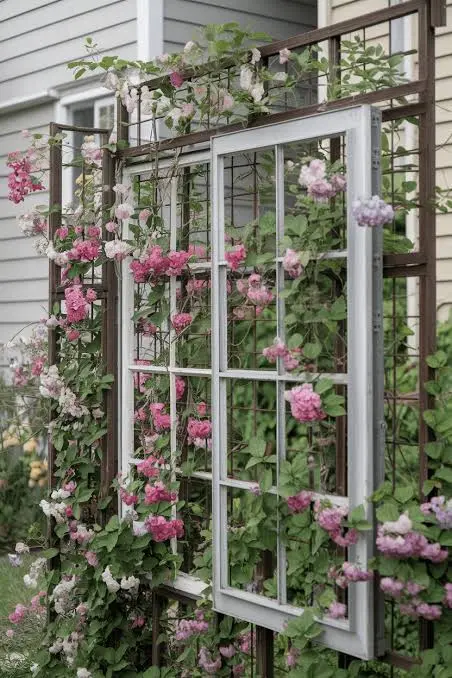
One reason the Pinterest design looks attractive is that the frames are not identical.
Mixing tall, narrow, and medium-size frames creates rhythm without making the border look like a solid wall.
Leave visible gaps between frames so plants have room to spread and air can move through the garden.
8. Think About Sunlight Before Installing the Posts
The best location depends on the vine you plan to grow.
Before making the trellis permanent, check:
- Hours of direct sun
- Afternoon heat
- Shade from nearby trees
- Wind exposure
- Access for pruning
- Whether mature vines will shade nearby plants
9. Keep the Bottom of the Frame Out of Wet Soil
Old wood deteriorates faster when it remains in direct contact with damp soil.
Instead of burying the window frame itself, let the structural posts go into the ground and keep the reclaimed frame slightly above the soil surface where practical.
That also makes it easier to inspect and repair the frame later.
10. Add Garden Lighting Carefully
The finished inspiration image uses small garden lights to make the flower-covered frames stand out in the evening.
That can look beautiful, but use equipment rated for outdoor conditions and follow the manufacturer’s installation instructions.
Keep cords away from mowing, trimming, pruning, and foot-traffic areas.
Simple Build Order
- Find suitable reclaimed window frames.
- Remove all glass.
- Remove sharp glazing hardware.
- Inspect old paint and wood condition.
- Repair loose joints.
- Mark the final positions in the garden.
- Install strong independent posts.
- Secure the frames to the posts.
- Add thin wire or twine where needed.
- Plant suitable lightweight vines.
- Guide young growth onto the support.
What the Pinterest Idea Gets Right
- Reuses an attractive old material.
- Adds vertical structure to a flat flower border.
- Uses several frame sizes for visual interest.
- Leaves open spaces instead of creating a solid fence.
- Pairs well with flowering climbers.
- Creates a strong before-and-after transformation.
What I Would Change
- Remove every glass pane.
- Avoid badly peeling unknown old paint.
- Use separate structural posts.
- Add thin climbing wire for clematis.
- Keep the wood itself out of wet soil.
- Avoid heavy vines unless a separate structure carries them.
6 Mistakes to Avoid
1. Leaving glass in the frame
Outdoor impacts and movement can turn old glass into a hazard.
2. Ignoring peeling old paint
Unknown vintage paint can contain lead and should not be allowed to flake into garden soil.
3. Burying the window itself in the ground
Use independent posts so wet soil does not become the frame’s structural foundation.
4. Choosing a vine that cannot grab the support
Match the climbing method to the frame or add thin wire.
5. Underestimating wind
A frame covered in foliage catches far more wind than an empty one.
6. Loading a fragile frame with a heavy vine
Use the reclaimed window for lightweight climbers unless stronger framing carries the load.
Old Window Garden Trellis FAQ
Can you use an old window as a trellis?
Yes. Remove the glass, inspect the wood and paint, attach the frame to sturdy posts, and choose vines suited to the available support.
Should I remove the glass?
Yes. For a freestanding garden trellis, an empty frame is much safer than leaving old panes exposed to wind and impact.
Can clematis grow on a window frame?
Yes, especially if you add thin wire, twine, or screening. Clematis climbs using leaf petioles and prefers relatively narrow supports.
What plants are best?
Clematis, sweet peas, black-eyed Susan vine, nasturtiums, and other lightweight climbers are good starting choices. Match the species to your climate and light conditions.
Is old painted wood safe in the garden?
Treat unknown peeling paint cautiously. Older residential paint may contain lead, so avoid allowing deteriorating coatings to contaminate soil.
Can I use it for grapes?
A mature grapevine usually needs a stronger permanent trellis. Use a reclaimed window only as a decorative layer if a separate structural system carries the vine.
The Bottom Line
Old window frames can become striking garden trellises, especially when several different sizes are arranged together and softened with flowering vines.
The safest version removes the glass, avoids deteriorating questionable paint, uses independent structural posts, and matches the climbing plant to the frame.
Treat the old window as the decorative climbing surface—not as the structural foundation of the trellis.
Growing vegetables vertically too?
See FarmSolo’s Best Trellis for Vegetables guide for peas, beans, cucumbers, melons, tomatoes, and other edible vines.
Sources
- Oregon State University Extension — Old Window Frames and Lead in Garden Soil
- Illinois Extension — Attachment Methods for Climbing Vines
- Illinois Extension — Clematis Growing and Support Guidance
- University of Minnesota Extension — Trellises and Cages