A garden shed reading nook can turn a tiny backyard building into one of the most relaxing spaces on the property. You do not need a large shed. A comfortable seat, dry book storage, good light, airflow, and a view of the garden can be enough to create a small backyard library that feels completely separate from the house.
Plan these first
- Make sure the roof, walls, and floor stay dry.
- Give books airflow instead of sealing them into a damp shed.
- Choose one genuinely comfortable seat before adding decorations.
- Use natural daylight plus safe task lighting for evening reading.
- Keep book storage off floors that could become damp.
- Check local rules before adding permanent electrical, heating, or major structural changes.

Why This Garden Shed Reading Nook Works
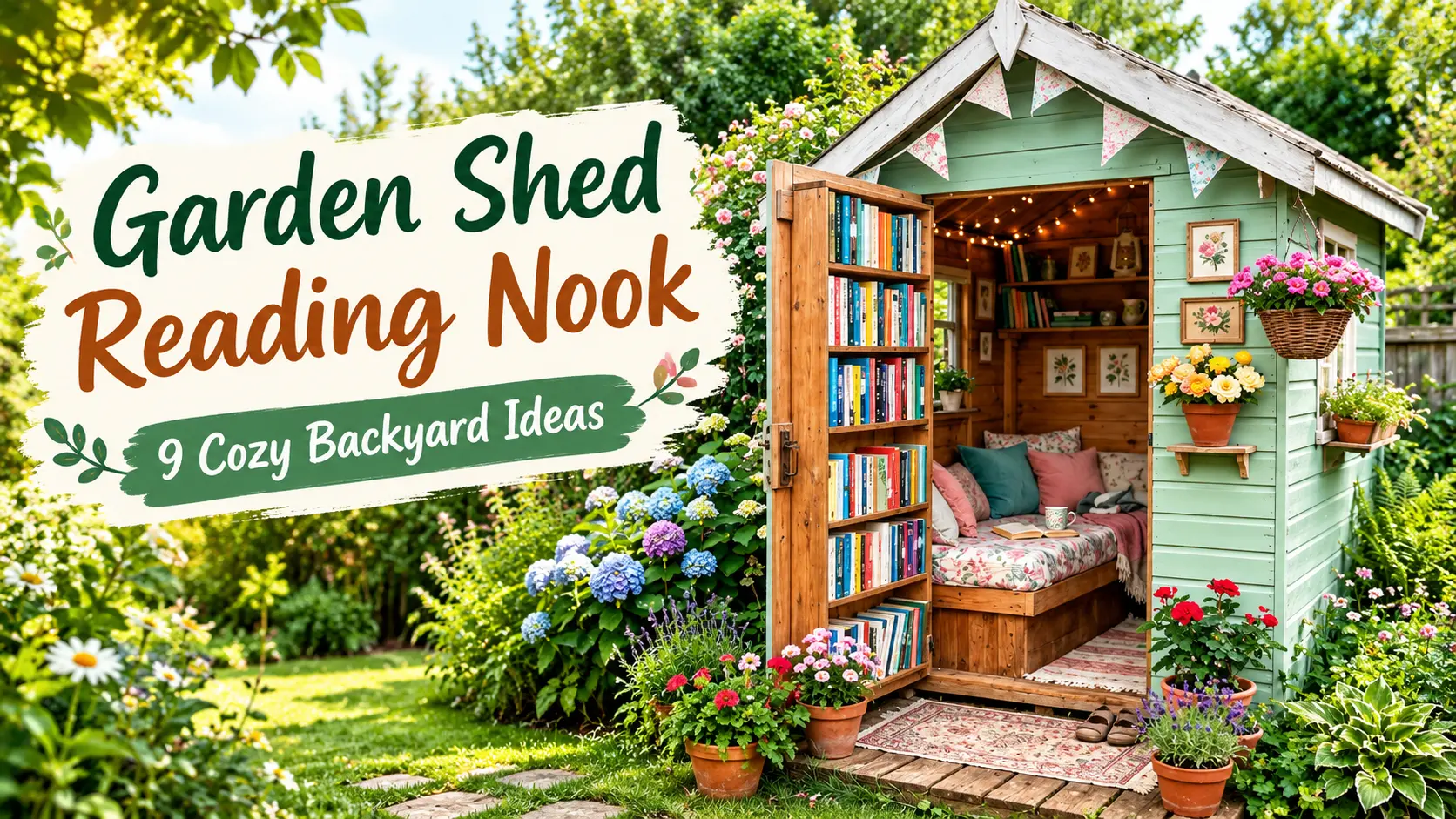
The inspiration image gets several small-space decisions right.
Instead of trying to turn the shed into a complete outdoor living room, almost the entire interior is organized around one activity: reading.
A deep cushioned bench fills the back wall. Books use vertical space. Warm lights make the timber interior feel cozy, while the open doorway connects the room to flowers and greenery outside.
The pastel exterior also helps the building feel more like part of the garden and less like a tool shed that happens to contain a chair.
There is one feature I would treat carefully: the bookshelf attached to the door. It looks clever, but books become heavy surprisingly quickly. If you copy that idea, the door, frame, hinges, fasteners, and shelf system all need to be designed for the additional weight.
9 Garden Shed Reading Nook Ideas
1. Build the Room Around One Deep Seat
In a tiny shed, the seating should come before the decorations.
A deep built-in bench, daybed, compact loveseat, or comfortable reading chair can become the main piece of furniture.
Measure the interior first and leave enough floor space to enter, close the door, reach the shelves, and sit down without moving other furniture.
If you like to read with your feet up, a bench long enough to stretch out may be more useful than squeezing two small chairs into the same footprint.
2. Use Wall Space for the Books
Small sheds usually have more usable wall area than floor area.
Shallow built-in shelves can hold a useful collection without making the center of the room feel cramped.
Keep the heaviest books on lower shelves and anchor tall shelving securely so it cannot tip when books are removed unevenly.
Do not push valuable books directly against a wall that regularly feels damp or shows condensation.
3. Turn the Door Into Storage — Carefully
The bookshelf door in the inspiration image is one of its most memorable ideas.
It can work particularly well where the shed has almost no unused wall space.
But a standard lightweight shed door may not be designed to carry rows of books.
If you want door shelving, keep it shallow and confirm that the door structure, hinges, frame, latch, and fasteners can handle the loaded weight through repeated opening and closing.
Another option is a narrow bookshelf immediately beside the doorway. You get almost the same storage without adding moving weight to the door.
4. Add Natural Light Without Creating Glare
A reading room needs light, but more glass is not automatically better.
A window beside or slightly behind the reading seat can provide useful daylight without sending direct glare onto every page.
Watch the shed at the time of day when you expect to use it most. A window that feels perfect in the morning may create intense afternoon heat if it faces strong western sun.
A small shade tree, exterior planting, blind, or curtain can help control bright seasonal light without making the shed dark all day.
5. Use Warm Task Lighting at Night
String lights create atmosphere, but they should not be the only light if you plan to read for long periods after sunset.
Add a focused reading light near the seat so the page is bright without needing to flood the entire shed with light.
Rechargeable LED lamps can be a simple solution when the shed has no electrical service.
If you install permanent power, use an electrical installation suitable for an outdoor accessory building and follow applicable local requirements.
6. Make Moisture Control Part of the Library
This is the part most Pinterest images do not show.
Books, paper, rugs, cushions, and timber interiors all make moisture problems more noticeable.
University of Minnesota Extension notes that damp, warm, undisturbed places encourage mold and booklice around paper and books. Reducing moisture and improving airflow are key ways to prevent the problem.
Before filling the shed with books, inspect the roof, windows, walls, and floor after rain. Look for leaks, condensation, musty odors, peeling finishes, or damp corners.
A small operable window, screened vent, fan, or dehumidifier may help depending on climate and how sealed the shed is.
Before moving your favorite books outside: Leave a few ordinary books in the shed for a short test period through changing weather. If the space smells damp or paper begins to feel wavy, solve the moisture problem first.
7. Give the Floor a Real Finish
A shed can feel surprisingly unfinished when the walls are decorated but the original rough floor remains exposed.
A suitable finished floor or removable rug can make the room feel warmer and more comfortable underfoot.
But do not hide an existing damp-floor problem under a thick rug.
Make sure the floor structure is sound, stays dry, and can support the bench, shelving, books, and people you plan to put inside.
8. Let the Garden Frame the Entrance
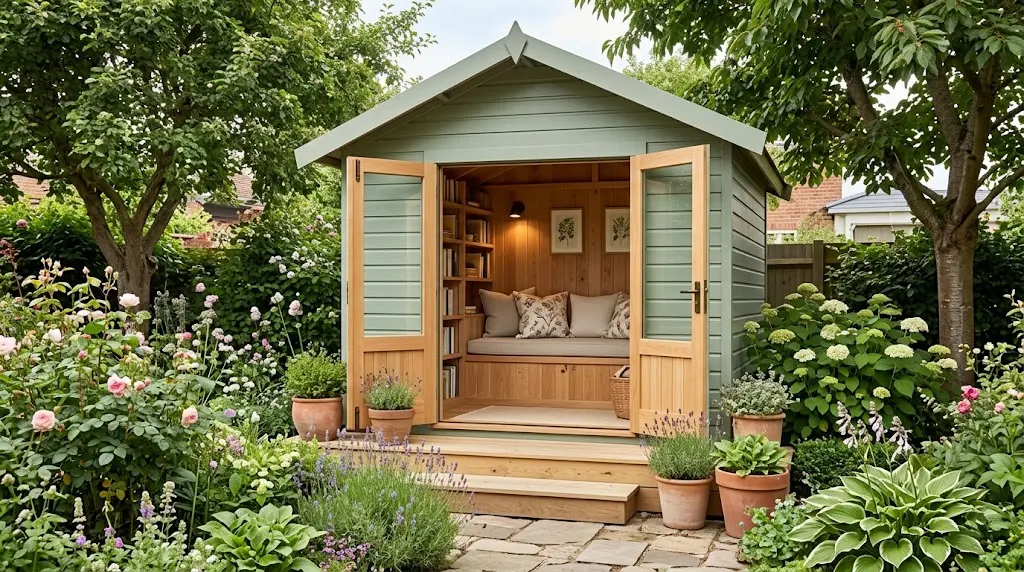
The planting around the inspiration shed is a big part of why the space feels special.
Hydrangea-like blooms, roses, ferns, lavender, pots, and hanging flowers make the doorway feel like a transition from the garden into a tiny retreat.
You do not need that many plants to get the effect.
Two or three containers near the entrance, one larger shrub nearby, and a simple path can connect the building to the landscape without making access difficult.
Keep plants away from wall vents and leave enough space to repaint, repair siding, inspect the foundation, and clean gutters or roof edges.
9. Keep the Room Focused Instead of Filling Every Corner
Tiny rooms become cluttered quickly.
A reading shed usually needs fewer things than you think:
A good seat, books, a reading light, a small table or shelf for a drink, a blanket, and perhaps one or two plants may be enough.
The empty space around those pieces is what keeps a tiny shed feeling peaceful rather than like another storage room.
Can Books Really Stay in a Garden Shed?
They can if the shed behaves more like a dry room than an outdoor storage box.
The biggest risks are repeated moisture, condensation, mold, insects associated with damp paper, strong temperature swings, leaks, and direct sunlight fading book covers.
University of Minnesota Extension notes that booklice are commonly associated with warm, damp places where mold and fungi grow and recommends moisture reduction as the main solution.
Keep shelves off potentially damp flooring, repair leaks quickly, encourage air movement, and avoid pushing books tightly against cold or wet exterior surfaces.
Rare, valuable, signed, or irreplaceable books may still be better stored inside the main house where temperature and humidity are more predictable.
Should You Insulate a Reading Shed?
If you want to use the shed for more than a short part of the year, insulation can make a large difference.
A thin timber shed can become very hot in sun and lose heat quickly in cool weather.
But insulation should be part of a complete wall, roof, and moisture strategy rather than simply pushing insulation into cavities and covering it.
Climate, wall construction, vapor control, ventilation, and local building practices all affect the correct assembly.
If the shed is only a mild-weather retreat, improving shade and airflow may be enough. If it is becoming a conditioned year-round room, treat the conversion more like a small building project.
What About Electricity?
Rechargeable lights can keep the project simple.
If you want outlets, permanent lights, heating, air conditioning, or a dehumidifier, a proper electrical installation is the safer long-term approach.
CPSC recommends GFCI protection for outdoor receptacles because moisture increases shock risk, and modern electrical-code requirements also address GFCI protection for accessory buildings and outdoor outlets.
Do not run an ordinary indoor extension cord across wet grass as a permanent power supply to your library shed.
Use equipment appropriate for its location and have permanent wiring installed according to the electrical rules that apply where you live.
Should You Add a Heater?
A chilly shed can make winter reading unpleasant, but adding heat changes the project.
Do not use candles, improvised combustion heaters, or other open-flame devices just to create a cozy atmosphere inside a small timber room filled with books and fabric.
If you use an electric heater, choose a suitable listed appliance, maintain the clearances in its instructions, and do not bury it behind cushions, curtains, paper, or books.
A well-insulated shed may need much less supplemental heat than a thin uninsulated garden building.
Make the Outside Useful Too
The reading room does not have to stop at the doorway.
A few pavers, a tiny deck, or a gravel pad can create a clean place to leave muddy shoes and keep soil away from the threshold.
You could also add one outdoor chair for days when the weather is too nice to sit inside.
If the shed sits inside a larger productive garden, FarmSolo’s raised bed garden layout guide explains why seating and storage work best after the main garden paths and growing areas are planned.
If shade is the bigger goal, FarmSolo’s backyard pergola ideas offers another way to create an outdoor retreat without enclosing a complete room.
Common Garden Reading Shed Mistakes
- Moving books in before checking for leaks. Test the shed through wet weather first.
- Ignoring humidity. Paper, fabric, and timber make a damp shed much less forgiving.
- Overloading the door with books. Door shelving needs suitable hinges and structural support.
- Putting every wall behind a bookshelf. Leave access for inspection, airflow, cleaning, and repairs.
- Using only decorative string lights. Add useful reading light where the pages actually are.
- Covering a damp floor with a rug. Fix the moisture source before adding soft furnishings.
- Filling the shed with too much furniture. One excellent seat is often better than several cramped ones.
- Blocking ventilation with plants and shelves. Air still needs to move through the room.
- Using a permanent extension cord for power. Install electricity appropriately if the shed needs long-term service.
Garden Shed Reading Nook FAQ
Can I turn a normal garden shed into a reading room?
Often yes, if the structure is sound and stays dry. Start by checking the roof, floor, walls, windows, door, ventilation, and any electrical work before adding books and soft furnishings.
Will books get ruined in a garden shed?
They can if the shed has leaks, condensation, high humidity, mold, or severe temperature swings. A dry, ventilated shed is much safer for ordinary books than a damp storage shed.
Does a reading shed need ventilation?
Some form of air exchange is useful, particularly in a small structure containing books, fabric, plants, and a person for long periods. Moisture control is also important for preventing mold and damp-related pests.
Can bookshelves be attached to the shed door?
They can be in a properly designed setup, but books add significant weight. Confirm that the door panel, frame, hinges, fasteners, and latch are appropriate for the loaded shelving.
Does a reading shed need electricity?
No. Natural light and rechargeable lamps can be enough for a simple seasonal reading nook. Permanent electricity becomes more useful if you want reliable evening lighting, heating, cooling, or moisture-control equipment.
Can I put plants inside a reading shed?
Yes, if the plants receive suitable light and you manage watering carefully. Remember that plants and wet potting mix also add moisture to a small enclosed space.
Do I need permission to convert a shed?
Rules vary by location and by how the building will be used. A simple furniture makeover may be very different from adding permanent electrical service, plumbing, heating, structural changes, or using the building for sleeping. Check the requirements that apply where you live.
Make the Shed Comfortable Before You Make It Cute
The flowers, pastel paint, bunting, framed botanical prints, and bookshelf door are what make the inspiration image memorable.
But they are not what makes a reading shed work.
Start with a dry structure, airflow, comfortable seating, useful daylight, safe lighting, and enough shelf space for the books you actually read.
Then add the rug, cushions, flowers, artwork, string lights, and soft garden colors.
That order gives you more than a pretty backyard photo. It gives you a small garden room you will actually want to use.