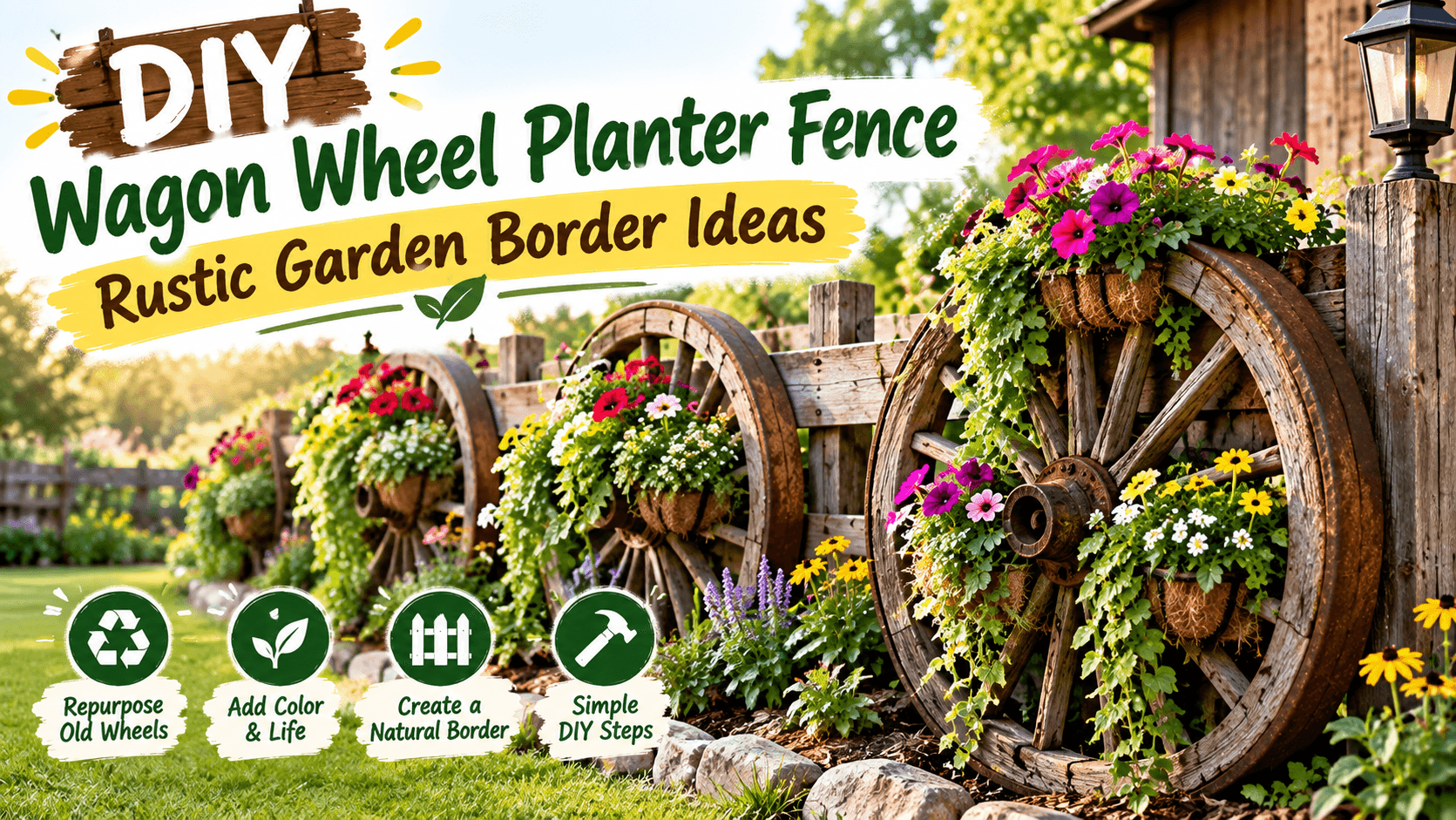
DIY Wagon Wheel Planter Fence: My Favorite Rustic Garden Border Idea
There are some garden projects that are useful, and then there are projects that just make the whole backyard look better. A DIY wagon wheel planter fence is kind of both.
You take old wagon wheels, line them up around a garden bed, add a few plants, and suddenly a plain patch of dirt starts looking like an actual little homestead garden. It has that old-fashioned country look without needing to build a complicated fence.
And you don’t need a huge property for this either. A small backyard, side yard, driveway garden, or even a big container garden can use the idea.
The trick is making the wagon wheels look like part of the garden instead of looking like you just dumped a pile of old wheels beside your tomatoes. Yep, there’s a difference.
Why I Like a Wagon Wheel Planter Fence
I’ll tell you what I like about this idea first: it’s flexible.
You can use wagon wheels as a decorative border, turn sections into little planters, use them around a raised bed, or combine several wheels with short pieces of wood fencing.
It also gives you a good excuse to reuse old materials.
That’s one of the things I enjoy about backyard homesteading. Before buying something new, I usually look around and ask, “Can I build this from something I already have?”
Sometimes the answer is no. Other times, you end up with something better than what you’d find at a garden center.
What You’ll Need for a DIY Wagon Wheel Planter Fence
You don’t need a truckload of supplies.
For a simple project, you’ll want:
- Old wagon wheels or decorative wagon-wheel replicas
- Garden soil or quality potting mix
- Plants or flowers suitable for your growing conditions
- Wood stakes or posts if you need extra support
- Outdoor screws or suitable fasteners
- Hand tools appropriate for the materials you’re using
- Landscape fabric if you want to control weeds in certain sections
- Optional wood planks for connecting the wheels
If you’re using genuinely old wagon wheels, inspect them before putting them in the garden. Some old painted or treated materials may contain substances you don’t want around edible crops.
For a vegetable garden, I prefer materials with a known history whenever possible. Decorative replicas are often easier if you’re unsure where an old wheel came from.
First, Decide What This Fence Is Supposed to Do
This sounds obvious, but it saves headaches later.
Is your wagon wheel fence mainly decoration?
Is it supposed to keep chickens out?
Are you trying to stop dogs from walking through the garden?
Or are you simply creating a border around flowers and herbs?
Those are four different jobs.
A wagon wheel sitting on the ground isn’t going to stop a determined chicken. Chickens are basically tiny feathered burglars when they see fresh soil.
If you need an actual barrier, use the wagon wheels as the decorative part and add proper fencing behind them.
How to Lay Out Your Wagon Wheel Planter Fence
This is the part where I’d slow down.
Don’t start digging holes immediately.
Put your wheels on the ground first and move them around until you like the layout.
Try overlapping them slightly. Then try spacing them apart. Look at the garden from the house and from the driveway.
You’ll probably find that the arrangement looks completely different from different angles.
Keep the line a little imperfect
A perfectly straight line can look surprisingly artificial with rustic materials.
A gentle curve usually looks better around a flower bed or vegetable garden.
You don’t need to measure every wheel to the exact inch. That’s actually part of the charm.
Should the Wagon Wheels Be Buried?
You can bury part of the wheel, but you don’t necessarily need to.
If the wheels are simply decorative, placing them securely on the ground may be enough.
If you’re using them as a more permanent border, setting the lower portion into the soil can make them less likely to move.
For larger or heavier wheels, get another person to help move them. Don’t try to wrestle a heavy antique wheel into position by yourself just because you think it will only take a minute.
That’s how small garden projects turn into trips to the hardware store for something completely unrelated.
Turn the Wagon Wheels Into Mini Planters
Now we’re getting to the fun part.
You can use the open spaces around the wheel to create little pockets of planting space.
For example, you can position a wheel beside a raised bed and plant flowers around it. Or build small planter boxes between several wheels.
Another easy option is to use containers that sit behind or beside the wheel. The wheel becomes the decorative frame rather than the actual container.
This is often easier than trying to turn the wheel itself into a functional planter.
What Plants Look Good Around Wagon Wheels?
For a rustic garden, I like plants that spill, climb, or soften the hard edges of the wheel.
Some ideas include:
- Marigolds
- Nasturtiums
- Lavender
- Thyme
- Rosemary
- Trailing flowers
- Small ornamental grasses
- Compact herbs
If you’re using the area for food production, herbs are especially nice because they make the decoration useful too.
Just make sure the plants you choose match your local sunlight, soil, temperature and watering conditions. A pretty plant that hates your climate won’t stay pretty for very long.
What I Wouldn’t Do With an Old Wagon Wheel
Here’s where the rustic look can get a little carried away.
I wouldn’t automatically plant edible vegetables directly against every old piece of painted or weathered wood and metal you find.
If you don’t know the history of an old wagon wheel, don’t assume the old paint or coating is harmless.
This is especially important if you’re growing food for your family.
Use the questionable old materials for decoration, and keep edible plants in clean containers or beds with materials you trust.
How to Connect Several Wagon Wheels
If you want something that looks more like an actual fence, you can connect the wheels with short wooden boards or fence sections.
The easiest approach is to use the wheels as repeating decorative posts, then attach simple horizontal boards between them.
That gives you a rustic fence without asking the wagon wheels to do all the structural work.
For anything tall, heavy, or intended to protect a garden from animals, make sure the actual posts and fasteners are strong enough for the job. The decorative wheels shouldn’t be the thing holding the whole fence together.
Painting the Wheels: Do You Really Need To?
Nope.
That’s one of the best things about this project.
An old weathered wheel can look fantastic exactly as it is.
If you want a cleaner look, you can use an outdoor-rated finish appropriate for the wheel’s material. But I wouldn’t make every wheel bright white or perfectly polished unless that’s the style you’re going for.
A little rust and faded wood can actually fit a backyard homestead beautifully.
Just be careful with heavily rusted metal. Sharp edges can cause injuries, especially if kids or pets use the garden area.
How to Make the Fence Look Less “Store Bought”
This sounds funny, but don’t overdo it.
One of the easiest ways to make a rustic garden look fake is to make everything too perfect.
Instead, mix textures.
Put an old wheel beside a simple wood planter. Add some stone around the base. Let a flowering plant spill over one edge. Maybe use an old metal bucket as another planter nearby.
Now it starts looking like a garden that grew over time instead of a themed display you assembled in one afternoon.
Could You Use Wagon Wheels Around a Vegetable Garden?
Absolutely.
I’ve seen this style work especially well around raised beds.
The important thing is not letting the decorative border get in the way of normal garden chores.
Leave enough room to walk, weed, water and harvest.
This sounds like common sense, but it’s very easy to make a garden look beautiful in a sketch and then realize you can’t reach the tomatoes without stepping into the bed.
Plan for your future self, especially when everything is overgrown in July.
Using Wagon Wheels in a Small Backyard
You don’t need acres of land.
Actually, a small space may be where this idea works best.
A single wagon wheel can frame a small herb garden beside a patio. Two or three can create a border around a compact flower bed.
If you’re gardening in an urban area, keep the design tidy enough that it doesn’t interfere with sidewalks, drainage, neighbors, or local property rules.
You can also use a single wheel as a focal point instead of building an entire fence.
Sometimes less is better.
My Simple Layout for a Rustic Wagon Wheel Garden
If I were starting from scratch, I’d keep it simple:
- Choose the garden bed first.
- Lay the wagon wheels around it without fastening anything.
- Step back and check the view from several directions.
- Adjust the spacing.
- Secure the wheels where necessary.
- Add simple planters or garden soil behind the decorative border.
- Plant herbs, flowers or other suitable plants.
- Add mulch or stone to clean up the edges.
And then I’d stop.
Seriously.
It’s easy to keep adding stuff until the garden starts looking like an antique store exploded in it.
Mini FAQ About a DIY Wagon Wheel Planter Fence
Can I make a wagon wheel fence without digging?
Yes, if you’re using the wheels mainly as decorative borders and they’re stable where they sit. For anything that needs to act like a real fence, you’ll usually want proper posts or another secure support system.
Can wagon wheels be used around vegetables?
They can be used as decorative garden borders, but be cautious with old painted, treated or unknown materials. If you’re unsure about a wheel’s history, keep edible plants separated from it with clean containers or a suitable garden bed.
How many wagon wheels do I need?
It depends on the size of your garden and the look you want. You can make a nice feature with one wheel, while a larger border might use several. Lay everything out first so you don’t buy more than you actually need.
A Few Things I’d Do Differently Next Time
If you’re building your own DIY wagon wheel planter fence, don’t rush the layout.
That’s probably the biggest lesson.
People get excited because the project looks simple, then they start hammering and screwing things together before they’ve actually looked at the whole garden.
Take ten minutes and move the pieces around.
Also, think about watering. If you’re putting planters around the edge of a vegetable bed, make sure you can still get a hose or watering can where it needs to go.
And leave enough space to mow or trim around the outside.
You’ll appreciate that decision later. Trust me on that one.
Give Your Garden a Little Old-Fashioned Character
A garden doesn’t have to be expensive to be beautiful.
Sometimes an old wagon wheel, a few reclaimed boards, some herbs and a pile of mulch are enough to turn a boring corner of the backyard into something people actually notice.
The nice thing about a DIY wagon wheel planter fence is that you can build it slowly. Start with one wheel. See how it looks. Add another later. Plant something in the empty space. Change your mind. That’s gardening.
Don’t worry about making it perfect. A homestead garden should look like people actually live there.
And if your first layout looks a little wonky, well… congratulations. You’re officially gardening.
Got an old wagon wheel sitting around somewhere? Give it a second life. Start small, keep the useful parts practical, and let the garden grow around it.