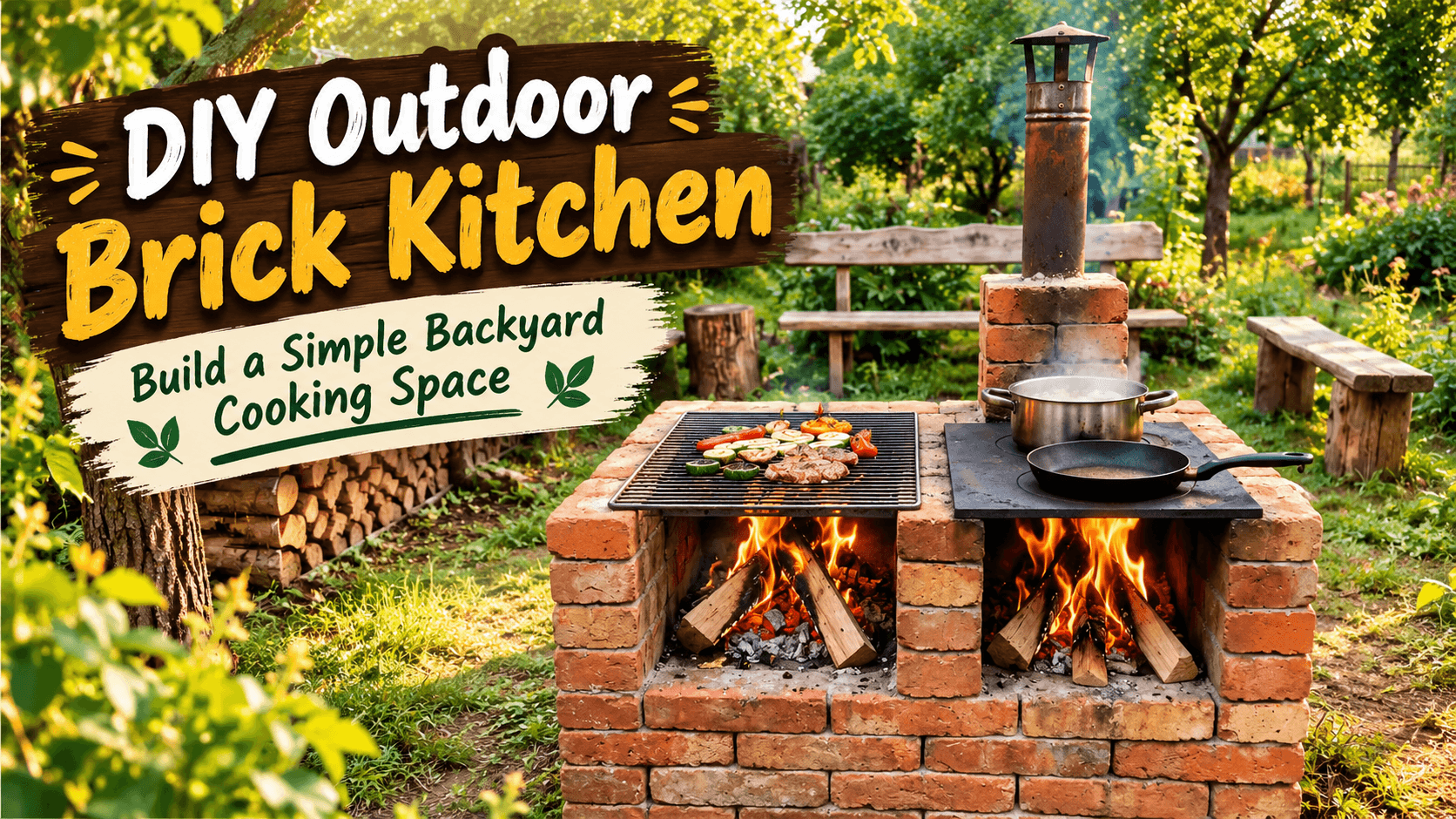
DIY Outdoor Brick Kitchen: The Backyard Project I Wish I Had Built Sooner
A DIY outdoor brick kitchen sounds like a big project, but it doesn’t have to turn into some giant fancy outdoor kitchen that costs more than your car. I’ve always liked the simple kind: a solid brick counter, a place for a stove or grill, somewhere to chop vegetables, and enough room to put down a hot pan without playing musical chairs.
There’s something really nice about cooking outside. Especially when you’ve got tomatoes from the garden, herbs growing in a pot, maybe some eggs from the chickens, and a pile of dishes you don’t want to wash inside.
That’s where a brick outdoor kitchen starts making sense.
I’ve seen people build these with reclaimed bricks, leftover pavers, old countertops and simple outdoor appliances. Some look rough around the edges, and honestly, I like that better. A backyard homestead doesn’t need to look like a showroom.
Why Build a DIY Outdoor Brick Kitchen?
The biggest reason is simple: it gives you another place to work.
During summer, cooking outside keeps heat out of the house. If you’re doing a big batch of vegetables, making sauce, grilling, or preserving garden produce, that can be a pretty big deal.
And if you’re into homesteading, the outdoor kitchen can become part of the whole backyard system.
You can wash vegetables near the garden, chop them outside, cook them, and carry the finished food inside. Less running back and forth. Less dirt on the kitchen floor. Usually.
One thing I would change from many outdoor kitchen plans, though, is trying to build everything at once. Start with the work area. Add the fancy stuff later.
Before You Lay the First Brick, Think About Location
This is the boring part, but don’t skip it.
You want the kitchen close enough to the house that you aren’t walking across the entire backyard carrying a pot of boiling water. But you also don’t want smoke blowing directly into your windows or sitting beside something that could easily catch fire.
Think about the sun too. A spot that looks perfect at 9 in the morning can feel like an oven at 3 in the afternoon.
Here’s what I’d look at first:
- Distance from the house and other structures
- Wind direction and smoke movement
- Level, stable ground
- Access to water if you’ll need it
- Access to electricity if required
- Room around the cooking area
- Where you’ll store wood, propane, tools and utensils
Also check your local rules before building. Some places have requirements for outdoor cooking areas, gas appliances, electrical work, setbacks or permanent masonry structures. A five-minute check can save a very annoying conversation later.
What Do You Actually Need?
You don’t need a truckload of expensive materials.
For a basic DIY outdoor brick kitchen, you’re looking at some combination of bricks or masonry blocks, mortar or another appropriate masonry system, a stable foundation, a countertop surface and your cooking appliance.
You may also want shelves, a sink, storage cabinets or hooks for tools.
If you preserve food from the garden, though, a larger prep counter can be extremely useful. That’s one area where I’d rather have extra workspace than an extra decoration.
Choosing the Right Bricks
Here’s where I would not try to save every penny.
Not all bricks are suitable for every outdoor cooking application. Standard decorative bricks aren’t automatically appropriate for areas exposed to high heat.
For the parts close to a firebox, grill or wood-burning cooking area, use materials specifically rated and designed for that application. Follow the appliance and masonry manufacturer’s requirements.
For the outside walls and decorative sections, you may have more options, including suitable reclaimed brick.
Reclaimed brick can look fantastic. Just inspect it first. Cracked or badly damaged pieces can become a headache later.
Build a Strong, Level Base First
This is probably the least exciting part of the whole project, but it’s also one of the most important.
Your brick kitchen needs a stable foundation that matches the structure you’re building. A small lightweight setup is different from a permanent masonry kitchen with a heavy countertop and appliances.
Don’t build on loose soil and hope everything settles nicely.
It probably won’t.
A level base also makes the brickwork much easier. If your first course is crooked, every course above it gets more annoying. Brick has a funny way of making a tiny mistake look much bigger as you go higher.
How I’d Lay Out a Simple Brick Outdoor Kitchen
A simple layout could look like this:
- Cooking zone: grill, burner or other properly rated outdoor appliance.
- Prep zone: a flat countertop for cutting vegetables and preparing food.
- Storage zone: shelves or weather-resistant cabinets for pans and tools.
- Serving zone: a small area where finished food can sit safely.
Keep the cooking area and prep area close together. There’s nothing worse than turning around ten times because the cutting board is on the other side of the kitchen.
Ask me how I know.
Don’t Forget the Countertop
The countertop is where your outdoor kitchen becomes useful instead of just looking pretty.
You need enough space to put down ingredients, cooking tools and hot cookware safely. A weather-resistant countertop is important because rain and temperature changes are going to happen whether you like it or not.
Concrete, properly installed masonry surfaces, stone and other outdoor-rated materials can all be options depending on your design and budget.
Wood can look beautiful too, but it needs the right outdoor treatment and maintenance, and it shouldn’t be used where heat from a grill or burner creates a fire hazard.
Should You Add a Sink?
A sink sounds like a luxury until you’ve got twenty pounds of tomatoes to wash.
Then suddenly it’s your favorite part of the kitchen.
For a simple backyard setup, you don’t necessarily need a complicated permanent plumbing system. But if you’re connecting a permanent sink to household water, wastewater, or a pressurized system, local plumbing requirements matter.
For food preparation, you also want to think about sanitation. An outdoor sink that drains into a muddy patch beside your garden isn’t exactly the dream.
If you’re doing a temporary setup, keep it simple and make sure wastewater is handled safely and legally.
What About a Wood-Fired Brick Kitchen?
This is where things get really fun, but also where you need to take fire safety seriously.
A brick oven or wood-fired cooking area can be amazing for pizza, bread and slow cooking. But fire creates high temperatures, smoke and sparks, so the construction needs to be designed specifically for that purpose.
Don’t assume a pile of ordinary bricks is automatically a safe oven.
Use appropriate refractory materials and follow a proven oven design or manufacturer’s instructions. Give the firebox, chimney and surrounding structure the attention they deserve.
And keep dry grass, wood piles and other combustible materials away from the cooking area.
My Favorite Part: Using Stuff You Already Have
One reason I like backyard homesteading is that not everything needs to be brand new.
Old bricks can sometimes be reused if they’re in good condition and suitable for the job. Salvaged stone can become a counter or decorative wall. Old hooks can hold cooking utensils. A sturdy outdoor shelf can become storage.
Just don’t reuse something because it’s free if it isn’t safe for the application.
That’s a lesson I learned from the general rule of homesteading: free isn’t free when you have to rebuild it twice.
Three Mistakes I’d Try to Avoid
1. Making it too small
A grill might fit perfectly on paper, but you also need room for plates, tools, ingredients and hot pans.
2. Putting it too far from the house
It sounds nice to put the kitchen at the back of the yard until you’re carrying a full tray across wet grass.
3. Forgetting drainage
Rain needs somewhere to go. Water sitting around the base of your masonry can cause problems over time, especially in areas with freezing weather.
Think about drainage before you start stacking bricks.
How Much Does a DIY Outdoor Brick Kitchen Cost?
There’s no honest single price I can give you because the range is huge.
A simple brick cooking station using materials you already have can cost relatively little. A permanent kitchen with a countertop, sink, refrigerator, gas appliance and custom masonry can become a major project.
The easiest way to control the budget is to build it in stages.
Start with:
- Foundation
- Brick structure
- Cooking appliance
- Basic countertop
Then add storage, lighting, sink space and other features later.
That’s much easier on the wallet, and you get to learn how you actually use the space before spending money on things you don’t need.
DIY Outdoor Brick Kitchen FAQ
Can I build an outdoor kitchen with regular bricks?
Some bricks may be suitable for exterior construction, but materials exposed to high cooking temperatures need to be specifically appropriate for that application. Check the appliance and masonry requirements before choosing materials.
Does an outdoor brick kitchen need a foundation?
A permanent masonry structure needs a properly designed stable base. The right foundation depends on the size, weight, soil and local conditions. Don’t assume a few patio pavers are enough for a heavy permanent structure.
Is a DIY outdoor brick kitchen worth it?
If you enjoy cooking outside and already spend time gardening or homesteading, it can be very useful. The trick is building for how you actually live instead of copying somebody else’s giant outdoor kitchen.
Start Small and Make It Yours
The best outdoor kitchen isn’t necessarily the biggest one.
Maybe yours is just a little brick counter beside the garden with a grill and a chopping board. Maybe you add a sink later. Maybe five years from now you build a proper wood-fired oven.
That’s the nice thing about DIY homesteading projects. They don’t have to be finished in one weekend.
Build the useful part first. Cook a few meals there. Notice what annoys you. Move things around. Add storage when you need it.
After a while, you’ll have a kitchen that fits your backyard instead of a picture-perfect kitchen that looks good online but drives you crazy in real life.
Got an Outdoor Kitchen Idea?
I’d love to hear what you’re planning. If you’re stuck on the layout, wondering what to build first, or trying to use old bricks you already have, leave a comment and tell me what you’ve got. Sometimes the simplest backyard setup ends up being the one you use the most.
And if you’re dreaming about a DIY outdoor brick kitchen, don’t wait until you have the perfect backyard or a huge budget. Start with the part you’ll actually use, build it safely, and let the rest grow from there.