Permaculture Outdoor Shower Design . I never thought an outdoor shower would become one of my favorite projects on the homestead. I originally wanted something simple where I could wash off after working in the garden. Ten years later, I’ve learned that a good Permaculture Outdoor Shower Design can do a lot more than give you a place to get clean.
It can help you use water smarter, take advantage of the sun, keep mud out of the house, add privacy to the backyard, and fit naturally into a permaculture garden.
And you don’t need a huge farm to build one.
A small backyard can work. Even an urban garden can work if you plan the water, drainage, privacy, and local rules first.
I’ve made a few dumb mistakes with outdoor projects over the years, so let me show you what I would do if I were starting this project again.
Why I Decided to Build an Outdoor Shower
One summer afternoon, I had been working in the vegetable garden for hours.
I was dirty.
Not a little dirty. I mean dirt on my arms, legs, shoes and somehow even in my ears. I have no idea how that happened.
I went inside to shower, changed clothes, came back outside and started working again.
Twenty minutes later, I was sweating all over again.
That was when I thought, Why am I walking through the house every time I get dirty?
An outdoor shower made sense.
For a homesteader, there are plenty of times when you need a quick wash outside. Gardening, chickens, composting, harvesting vegetables, working with soil, painting, cleaning tools… you name it.
The shower became especially useful during hot weather.
But I didn’t want one of those temporary plastic camping showers sitting in the corner of my yard. I wanted something that looked like it belonged there.
So I started thinking about it from a permaculture design point of view.
Where does the water come from?
Where does it go?
Can the sun help heat the water?
Can plants provide privacy?
Can the structure be made from simple or reclaimed materials?
Those questions completely changed the project.
What Is a Permaculture Outdoor Shower Design?
To me, a Permaculture Outdoor Shower Design is simply an outdoor shower designed to work with your backyard instead of fighting against it.
It doesn’t have to be fancy.
The idea is to think about the whole system.
For example, rain falls on your roof. Instead of letting all that water disappear into a drain, you may be able to collect some of it in a suitable storage system.
The sun can help warm water.
Plants can provide privacy.
A carefully designed drainage area can help manage used water.
The shower itself can be positioned near the places where you already spend time.
That’s permaculture thinking in a nutshell: look at what you already have and find ways for one part of the system to support another.
Where Should You Build Your Outdoor Shower?
This is one place where I messed up the first time.
I picked the location because it looked nice.
Bad idea.
The location should be chosen based on several things, especially sunlight, privacy, drainage, access, and plumbing.
Before building anything, I’d walk around the backyard at different times of the day.
Look at where the morning sun hits.
Then check the afternoon sun.
Think about wind too.
And please check what your neighbors can see.
You might think a fence gives you complete privacy until you stand inside the shower and realize someone two houses away has a better view than you do.
Yep. I learned that one the embarrassing way.
A simple privacy wall solved most of the problem.
If you have a small backyard, you can place the shower beside an existing fence or garden wall. That can save quite a bit of building material.
My Basic Outdoor Shower Setup
I like keeping things simple.
A basic backyard setup can include:
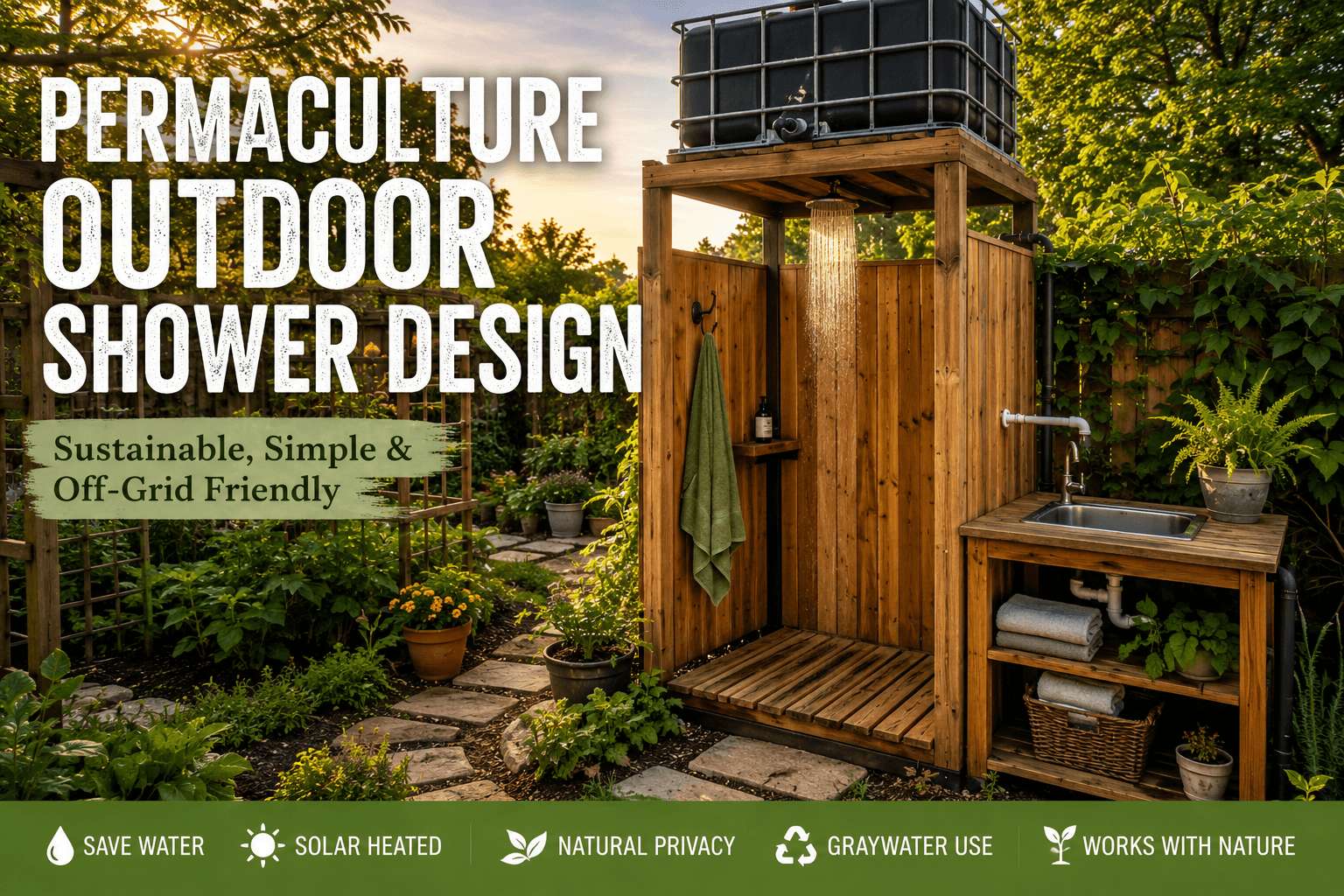
- A strong wooden frame
- Privacy walls
- A shower floor with good drainage
- A suitable water source
- Plumbing and a shower head
- A safe water-heating method
- Hooks for towels
- A small shelf for soap
- Plants around the outside
- A properly planned drainage or graywater system
You don’t need to build all of this at once.
Actually, I recommend doing the opposite.
Start with the water.
Figure out where the water comes from and where it will go before you build the shower walls.
That one step can save you a lot of frustration.
Can You Use Rainwater for an Outdoor Shower?
This is where I want to slow down for a minute.
Rainwater collection is fantastic for a permaculture garden, but using collected rainwater for bathing is not the same as using it for watering vegetables.
Rainwater can pick up dirt, roof material, bird droppings and other contaminants before it reaches your storage tank.
If you want to use collected rainwater for showering, the system needs to be designed appropriately for bathing water.
Depending on where you live, you may need filtration, disinfection, backflow protection, or other equipment.
And local plumbing and health rules matter too.
For simple homestead projects, I’m perfectly happy using collected rainwater for irrigation when that’s appropriate.
If you want a rainwater-fed shower, do your homework first.
Saving water is great.
Getting sick because you skipped the water-treatment part is definitely not worth it.
Let the Sun Do Some of the Work
One of my favorite parts of an outdoor shower is using solar water heating.
The sun is sitting up there doing its thing every day anyway.
Why not use some of that free heat?
There are simple solar shower systems available, and there are also more involved DIY setups using properly selected materials and plumbing.
The basic idea is to expose water to sunlight so it warms before you shower.
On a hot sunny day, the difference can be pretty impressive.
But here’s the catch.
The water can get too hot.
I learned this the hard way with a small solar-heating experiment. I thought, “That water should be nice and warm.”
It was not nice and warm.
It was more like, “Where is the emergency cold-water handle?”
So always think about temperature control and safety. If you’re building a more permanent system, use components that are actually rated for the water temperatures and pressures involved.
How I Think About Graywater
This is probably the most important part of the entire project.
People hear “graywater” and sometimes think it means perfectly safe water that can be dumped anywhere.
It doesn’t.
Shower water can contain soap, shampoo, skin oils and other materials.
If you plan to reuse that water around your garden, you need to think carefully about the products you’re using and where the water will go.
I prefer simple biodegradable products when appropriate, but even biodegradable soap doesn’t mean you can send water straight into every vegetable bed.
I would keep shower drainage away from:
- Drinking-water sources
- Wells
- Streams and ponds
- Areas where water can stand
- Places where children or animals could come into contact with contaminated water
And always check your local graywater regulations.
A good permaculture outdoor shower design should manage water carefully instead of simply moving the problem somewhere else.
Build the Shower Floor Carefully
A beautiful wooden shower floor looks great in pictures.
But here’s something nobody tells you until you’ve built one.
Wood gets wet.
Crazy, right?
If the floor can’t dry properly, it can eventually rot, become slippery, or start growing things you didn’t invite.
I like a slatted floor because water can pass through and air can circulate underneath.
But the floor still needs a good base and drainage.
Don’t put untreated wood directly on constantly wet soil and expect it to last forever.
Give it airflow.
Keep the structure off the ground where appropriate.
And make sure water isn’t collecting underneath.
A few extra minutes of planning here can save you a whole weekend of rebuilding later.
Use Plants for Privacy
This is where I think an outdoor shower can become part of the garden instead of looking like an ugly utility structure.
Plants are fantastic for softening the edges.
You can use shrubs, vines, tall containers, herbs, or other plants that grow well in your climate.
I especially like vines because they can climb a simple trellis and turn a plain wall into something that looks like it has been there forever.
Just don’t depend on plants alone for privacy.
Plants take time.
A six-foot plant doesn’t magically appear because you really need privacy on Saturday.
Use a proper privacy wall first, then let the plants fill in around it.
Don’t Forget the Path
Here’s another small thing that makes a surprisingly big difference.
Build a good path to the shower.
My first attempt was basically:
shower → wet feet → grass → mud → clean house.
It wasn’t exactly a brilliant system.
After a few days, I added stepping stones leading from the house and garden area to the shower.
Much better.
You can use stone, gravel, brick, pavers, reclaimed materials, or whatever works safely in your yard.
The goal is simple: don’t create a muddy mess every time someone takes a shower.
What About a Sink Beside the Shower?
If you have enough room, a small outdoor sink can be a really useful addition.
In the picture that inspired this project, I especially like the idea of having the sink right beside the shower.
It gives you a place to wash muddy hands, gardening tools, feet, or small items before going inside.
But again, think about the water.
Don’t connect everything together without understanding where the wastewater is going.
A sink can become another part of your backyard water system, but it should be planned rather than added as an afterthought.
My Biggest Mistakes With Outdoor Shower Projects
If I could go back and talk to myself ten years ago, I’d say a few things.
Don’t build before planning the water
I know I already said this, but it’s worth repeating.
Water is the heart of the project.
Don’t make the structure too weak
This becomes especially important if you’re supporting a water tank or other heavy equipment.
Water weighs a lot.
A full storage tank isn’t something you want sitting on a structure that was built like a garden shelf.
Don’t ignore winter
If you live somewhere that freezes, outdoor plumbing needs a winter plan.
Pipes can freeze and burst.
Drain what needs draining and protect the system appropriately for your climate.
Don’t forget mosquitoes
Standing water is bad news.
Keep water storage properly covered and make sure the shower area drains instead of becoming a tiny swimming pool for mosquitoes.
Don’t forget the towel
Seriously.
Put a hook near the shower.
You’ll thank me later.
Can You Build a Permaculture Outdoor Shower in a Small Backyard?
Yes.
You don’t need a giant homestead.
A compact shower can fit into a surprisingly small space.
In an urban backyard, you might use one side of a fence, build a narrow privacy enclosure, and connect it to an appropriate water and drainage system.
The smaller your space, the more important your planning becomes.
Watch where water naturally flows.
Look for sunny areas.
Use existing walls when possible.
Grow plants vertically.
Keep paths short.
That’s actually one reason I enjoy small-space permaculture. You start paying attention to things you might ignore on a big property.
My Simple Build Order
If I were building my outdoor shower again, here’s the order I’d follow.
1. Check the rules.
Look into outdoor shower, plumbing, rainwater, and graywater requirements where you live.
2. Choose the location.
Check sun, privacy, drainage, wind and access.
3. Decide on the water source.
Don’t start building until this is clear.
4. Plan drainage.
Know exactly where used water will go.
5. Choose your heating method.
Solar heating can be great, but make sure it’s safe and appropriate for your system.
6. Build a strong frame.
Especially if you’re supporting tanks or plumbing equipment.
7. Add the privacy walls.
8. Build the floor.
Focus on drainage and airflow.
9. Install the plumbing.
10. Test everything.
And please test the water system before you finish all the decorative work.
A leak is much easier to repair when you can still reach the pipe.
Ask me how I know.
A Few Cheap Ideas That Made Mine Better
You don’t have to spend a fortune.
I like using reclaimed wood when it’s suitable and safe for the project.
Old metal buckets can sometimes become planters.
Simple hooks make great towel holders.
A small shelf can hold soap and shampoo.
Potted plants can give you privacy while you wait for larger plants to grow.
And leftover stones from other garden projects can make a nice walkway.
The goal isn’t to make your outdoor shower look like a luxury hotel.
The goal is to make it useful.
That’s something I’ve learned after years of homesteading.
Pretty is nice.
Useful is better.
FAQ About Permaculture Outdoor Shower Design
Is a permaculture outdoor shower expensive?
It can be, but it doesn’t have to be. A basic design using simple materials can cost much less than a complicated custom installation. Your biggest costs will usually come from plumbing, water heating, structural materials, and whatever treatment or drainage system your setup requires.
Can I use an outdoor shower without a water tank?
Yes, depending on your water source and local setup. Some showers can connect to an appropriate pressurized water supply, while others use gravity-fed or pumped systems. The right choice depends on your property and how you want to use the shower.
Is an outdoor shower good for a homestead?
For me, absolutely. It’s useful after gardening, working with chickens, handling compost, harvesting vegetables, or doing messy outdoor jobs. It also keeps a surprising amount of dirt out of the house.
Can I reuse outdoor shower water in my garden?
Sometimes, but don’t assume it’s automatically safe. Soap and other products can affect soil and plants, and local regulations may control graywater reuse. Plan the drainage system carefully and use appropriate products.
What I Like Most About This Project
After more than a decade of growing food, composting, preserving vegetables, keeping up with garden chores and trying different homesteading projects, I’ve learned that the best projects are usually the ones that solve a boring everyday problem.
That’s exactly what this did for me.
It keeps dirt outside.
It makes hot summer days more comfortable.
It gives the backyard another useful feature.
And when designed properly, it can fit into a larger permaculture system where water, sunlight, plants and people all work together.
It doesn’t have to be perfect.
Mine certainly isn’t.
But that’s kind of the point.
You build something, use it, notice what doesn’t work, and fix it.
That’s how most of my best homestead projects happened.
So if you’ve been thinking about building a Permaculture Outdoor Shower Design, start small. Think about water first, then drainage, sunlight, privacy and safety. Use what you already have when it makes sense, and don’t be afraid to change the plan halfway through.
And whatever you do, put the towel hook somewhere you can actually reach it.
Trust me.
Your future wet self will appreciate it. 🌱
Have you built an outdoor shower in your backyard? Tell me what worked and what went wrong. I always like hearing about other people’s homestead projects — especially the ones that didn’t go according to plan.