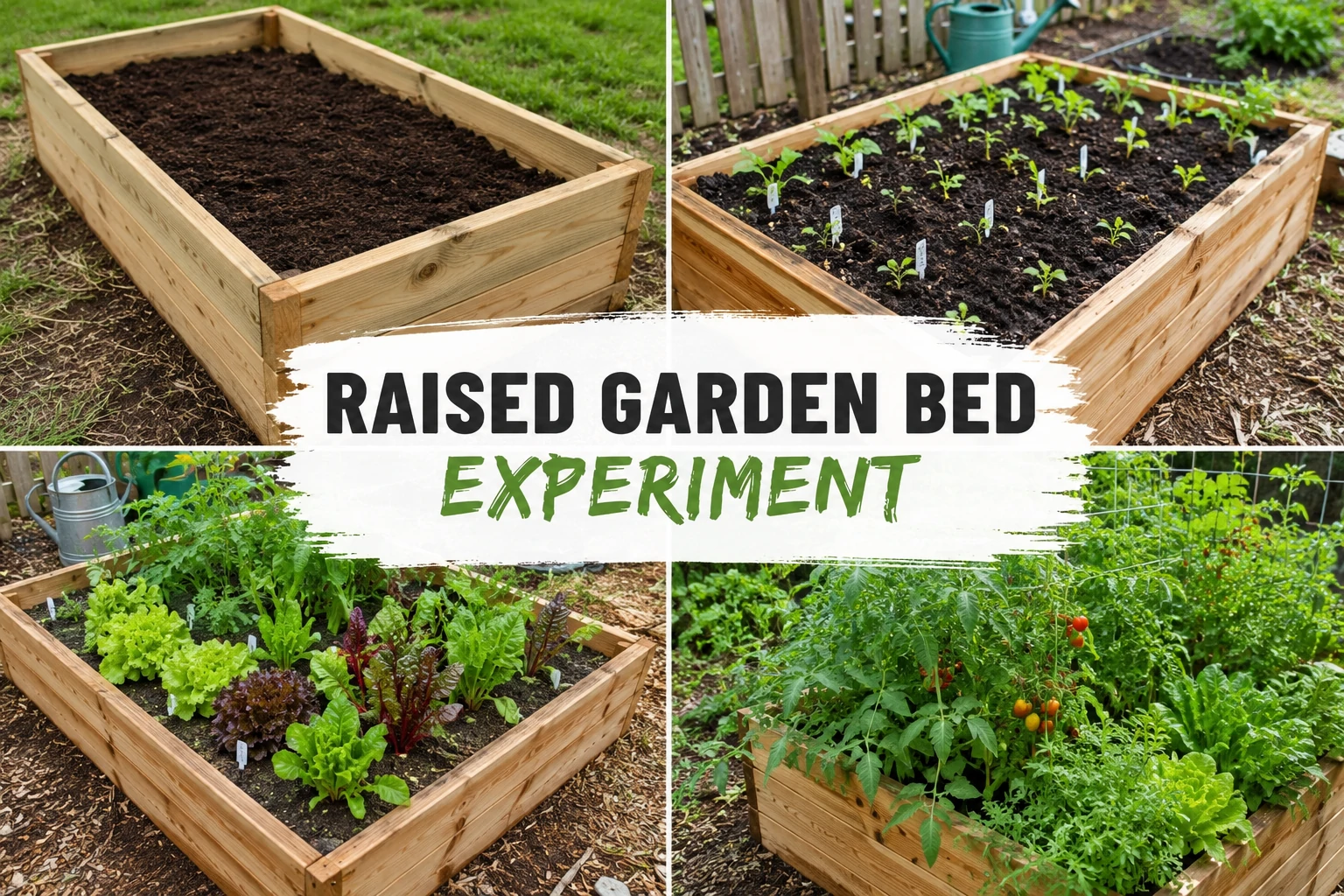
The first raised garden bed I ever built looked great for about two weeks.
Then the wood started leaning.
Then the soil settled.
Then weeds showed up around the edges like they had been invited to a party.
And somehow, the tomatoes in the middle were doing fantastic while the lettuce on the other side looked like it had given up on life.
That was my introduction to the wonderful world of the raised garden bed.
After more than ten years of backyard gardening and homesteading, I’ve built, moved, rebuilt, filled, emptied, and occasionally destroyed more garden beds than I care to count. Some worked beautifully. Others were expensive boxes full of dirt.
So if you’re thinking about building a raised garden bed, lemme save you some headaches.
You don’t need fancy materials or a perfect Pinterest garden. You need good soil, decent drainage, the right location, and a little common sense.
Why I Started Using Raised Garden Beds
I didn’t start with raised beds because they looked pretty.
I started because my backyard soil was terrible.
It was hard, compacted and full of rocks. Every time I tried planting carrots, I’d pull up something that looked more like a twisted little root than an actual carrot.
I finally got tired of fighting the ground.
My first raised garden bed was only about 4 feet by 8 feet. I filled it with a mixture of compost, topsoil, and some old garden soil I had laying around.
That little bed completely changed the way I gardened.
The soil was easier to work.
Drainage was better.
I could control what went into the soil.
And probably the biggest thing for me, I didn’t have to spend half the morning digging.
If you have poor backyard soil, limited space, or just want a more organized vegetable garden, a raised garden bed can make life a whole lot easier.
Where Should You Put a Raised Garden Bed?
This is where I messed up the first time.
I built the bed before thinking about sunlight.
Yep.
I had this beautiful wooden box sitting beside the shed, filled it with good soil, planted vegetables and then realized the shed blocked the afternoon sun.
Brilliant.
Before building anything, watch your yard for a full day if you can. Better yet, check it at different times during the season.
For most vegetables, I want a spot that gets plenty of direct sunlight.
I also try to stay away from large trees.
Tree roots are sneaky. You might not see them when you build the bed, but give them a year and they’ll find every bit of water and fertilizer you put in there.
My basic rule now is simple:
Sun first. Convenience second. Pretty location third.
Put the raised garden bed somewhere you’ll actually visit every day too. If it’s way behind the garage, you’ll forget about it.
Trust me, I’ve done that.
How Big Should a Raised Garden Bed Be?
I’ve experimented with several sizes, but I keep coming back to the same basic setup.
About 4 feet wide works really well for me.
Why?
Because I can reach the middle from either side without stepping into the bed.
That’s important.
You don’t want to climb inside your garden every time you need to pull a weed or pick a tomato.
Length is more flexible. You can make it 4 feet, 8 feet, 12 feet, or whatever fits your backyard.
But don’t make the bed ridiculously long if you’re just starting.
My first giant bed looked impressive, but maintaining it became a chore. And homesteading already has enough chores.
For a beginner, I’d rather have two small raised beds that are easy to manage than one giant bed that becomes a jungle.
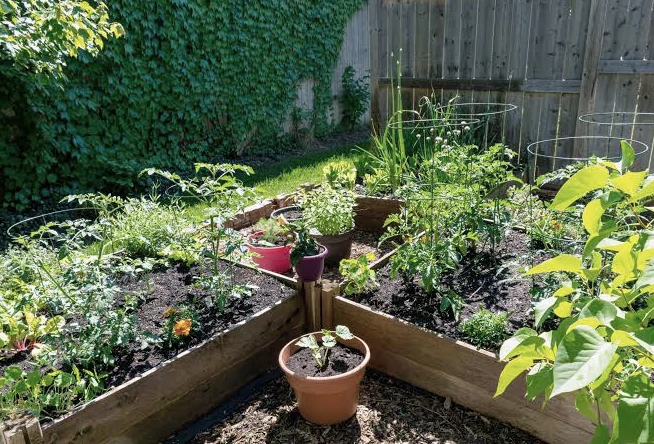
What I Use to Build My Raised Garden Bed
I’ve used old lumber, cedar, treated lumber and even some recycled materials over the years.
These days, I like simple construction.
For a basic bed, you can use:
- Cedar boards
- Exterior screws
- Corner brackets if needed
- A drill
- A level
- Cardboard or newspaper for the bottom
- Good-quality soil and compost
Cedar costs more, but it holds up pretty well.
If you’re trying to save money, look around for untreated scrap lumber that’s suitable for garden use. Just know what you’re getting before putting it around food crops.
I don’t like using mystery wood.
You don’t know where it came from, what chemicals it was exposed to, or what was spilled on it.
Sometimes saving five bucks isn’t worth wondering what you’re growing into your tomatoes.
How I Prepare the Ground Under My Raised Bed
Here’s another lesson I learned the hard way.
Don’t just drop a raised bed on top of grass and assume everything will be fine.
Grass is stubborn.
Very stubborn.
The first bed I built directly over lawn had grass growing up through the soil within a few months. I was pulling runners out of my vegetable bed all summer.
Now I usually clear the area first.
If there are serious weeds, I remove them as best I can.
Then I put down a layer of cardboard before adding soil. The cardboard helps block existing grass and weeds while breaking down naturally over time.
Make sure the cardboard is plain cardboard without glossy coatings or weird materials.
And don’t build the bed on top of a spot that stays soggy after rain.
A raised garden bed still needs drainage.
The Soil Mistake That Cost Me a Whole Season
This might be the biggest lesson I can give you.
Don’t fill a raised garden bed with cheap dirt just because it’s cheap.
I did that once.
The soil looked fine when I bought it. After watering, it turned into something resembling wet concrete.
My peppers hated it.
My beans hated it.
I think even the worms hated it.
Good soil makes a huge difference.
I usually like a mixture that includes quality topsoil, finished compost, and organic matter. The exact mix can depend on what you have available and what you’re growing.
Compost is especially useful because it adds organic matter and nutrients.
But don’t go crazy with fresh manure.
I learned that one too.
Fresh manure can be too strong for plants and can cause problems in the garden. If I use manure, I make sure it’s properly composted first and appropriate for the garden.
How Deep Should a Raised Garden Bed Be?
You don’t necessarily need a super-deep bed for everything.
A 6- to 12-inch bed can work well for many common vegetables.
But deeper beds are useful if you want to grow crops with longer roots.
Carrots, for example, appreciate more depth.
I’ve also found deeper beds easier to maintain because they hold more soil moisture.
But here’s the catch.
The deeper you make it, the more soil you’re going to need.
And soil isn’t free.
I once built a ridiculously deep bed because I thought deeper automatically meant better.
It didn’t.
I spent half a day hauling bags of soil around, and my back reminded me about it for three days.
Start with what makes sense for your crops and your budget.
What I Actually Grow in My Raised Garden Beds
I use raised beds mostly for vegetables and herbs.
Some of my favorites are:
- Tomatoes
- Lettuce
- Spinach
- Peppers
- Bush beans
- Carrots
- Radishes
- Cucumbers
- Basil
- Parsley
- Green onions
Leafy greens are especially nice because I can harvest them little by little.
I also like growing herbs along the edges.
One year I planted way too much basil.
I’m talking ridiculous amounts.
By August I had enough basil to feed a small Italian restaurant. So I started making pesto and freezing it.
That’s one of the things I love about growing food at home. A mistake can sometimes turn into something useful.
Don’t Pack Your Raised Garden Bed Too Tight
This is another beginner mistake I made.
I thought, “Well, I have all this space, so I might as well plant everything.”
Wrong.
I ended up with tomatoes touching peppers, cucumbers climbing over everything and lettuce disappearing underneath the leaves.
Plants need room.
They need airflow too.
Crowding can make harvesting harder and can create a damp environment around the leaves.
These days I leave more space than I think I need.
It looks a little empty at first.
Then everything grows.
And suddenly I’m glad I didn’t plant another 20 tomatoes.
My Favorite Trick: Mulch
If I could give one simple tip to someone building a raised garden bed, it would be this:
Use mulch.
I didn’t use enough when I first started.
Then summer arrived.
The soil dried out quickly, and I spent what felt like my entire life dragging a hose around the garden.
Now I use organic mulch around many of my plants.
It helps slow evaporation and can reduce the amount of weeds that pop up.
Straw, shredded leaves and other suitable organic materials can work depending on your garden.
Just don’t pile mulch directly against plant stems.
Leave a little breathing room.
Watering a Raised Garden Bed
Raised beds can dry out faster than the surrounding ground, especially during hot weather.
I learned that after planting a beautiful row of lettuce and forgetting to check it during one very hot week.
The lettuce went from “ready for salad” to “why is my garden full of green paper?” incredibly fast.
Now I check the soil regularly.
I don’t just look at the surface.
Stick your finger down into the soil a little and see what’s happening underneath.
For larger gardens, drip irrigation can make watering much easier.
I’ve also experimented with simple timers, but I still like checking the garden myself.
Sometimes a plant tells you something that a timer doesn’t.
The Biggest Raised Garden Bed Mistakes I Made
After years of doing this, these are the mistakes I’d avoid:
Building before checking sunlight.
Don’t repeat my shed mistake.
Using poor soil.
A cheap raised garden bed filled with terrible soil isn’t a bargain.
Making the bed too wide.
If you can’t comfortably reach the middle, you’ll eventually step inside it.
Forgetting drainage.
Plants don’t want to sit in a bathtub.
Planting too much.
You don’t need 30 tomato plants unless you have a serious tomato plan.
Ignoring weeds around the bed.
A raised bed doesn’t magically stop weeds from growing around it.
Making maintenance too complicated.
The best garden system is the one you’ll actually keep using.
Can You Build a Raised Garden Bed on a Small Backyard?
Absolutely.
This is one reason I like raised beds so much.
You can build a small 2-by-4-foot bed if that’s all you’ve got.
You can even use several small beds instead of one large garden.
If you’re gardening in an urban backyard, think vertically too.
Put a trellis on one end for cucumbers or climbing beans.
Grow herbs along the edges.
Use the space underneath or beside the beds for compost bins, tools or rainwater collection.
A small garden doesn’t have to be useless.
My most productive garden years weren’t always the years when I had the most land.
Sometimes having less space forced me to pay more attention.
What I Would Do Differently Today
If I were starting over with a raised garden bed tomorrow, I’d keep it simple.
I’d choose the sunniest practical spot.
I’d build a 4-foot-wide bed.
I’d use sturdy untreated or appropriate garden-safe materials.
I’d prepare the ground properly.
I’d spend more money on good soil and less money on fancy garden decorations.
I’d install easy watering from the beginning.
And I wouldn’t plant 47 different vegetables just because the seed packets looked interesting.
That last one took me a while to learn.
FAQ About Raised Garden Beds
Is a raised garden bed better than an in-ground garden?
Not always.
It depends on your soil, space, budget and what you want to grow.
For me, raised beds are easier to manage because I can control the soil and keep the garden organized.
How much does it cost to build a raised garden bed?
It can be very cheap if you use suitable reclaimed materials, or it can get expensive with cedar, hardware and purchased soil.
The soil is often the part people underestimate.
Can I grow vegetables in a raised garden bed every year?
Yes, but don’t just keep planting the same crops in the same spots forever.
I like rotating crops when practical and adding fresh compost or organic matter as the soil settles.
Do raised garden beds need a bottom?
Usually, no.
For a typical garden bed sitting on soil, I prefer leaving the bottom open so roots, worms and water can interact with the ground underneath.
If you’re building a raised bed on concrete or another hard surface, that’s a different situation.
My Raised Garden Bed Is Still One of My Best Garden Decisions
After all the mistakes, crooked boards, bad soil, forgotten watering and way-too-many tomato plants, I still love raised garden beds.
They make gardening feel manageable.
You can build one on a Saturday morning and start filling it that same weekend. You don’t need a huge backyard, expensive equipment or some perfect homestead.
Start small.
Build one good bed.
Fill it with decent soil.
Grow a few vegetables you actually eat.
Then see what happens.
That’s how I started, and more than ten years later, I’m still messing around in the garden.
If you’re planning your first raised garden bed, don’t worry about getting everything perfect. I sure didn’t. Build something simple, learn from it, and improve it next season.