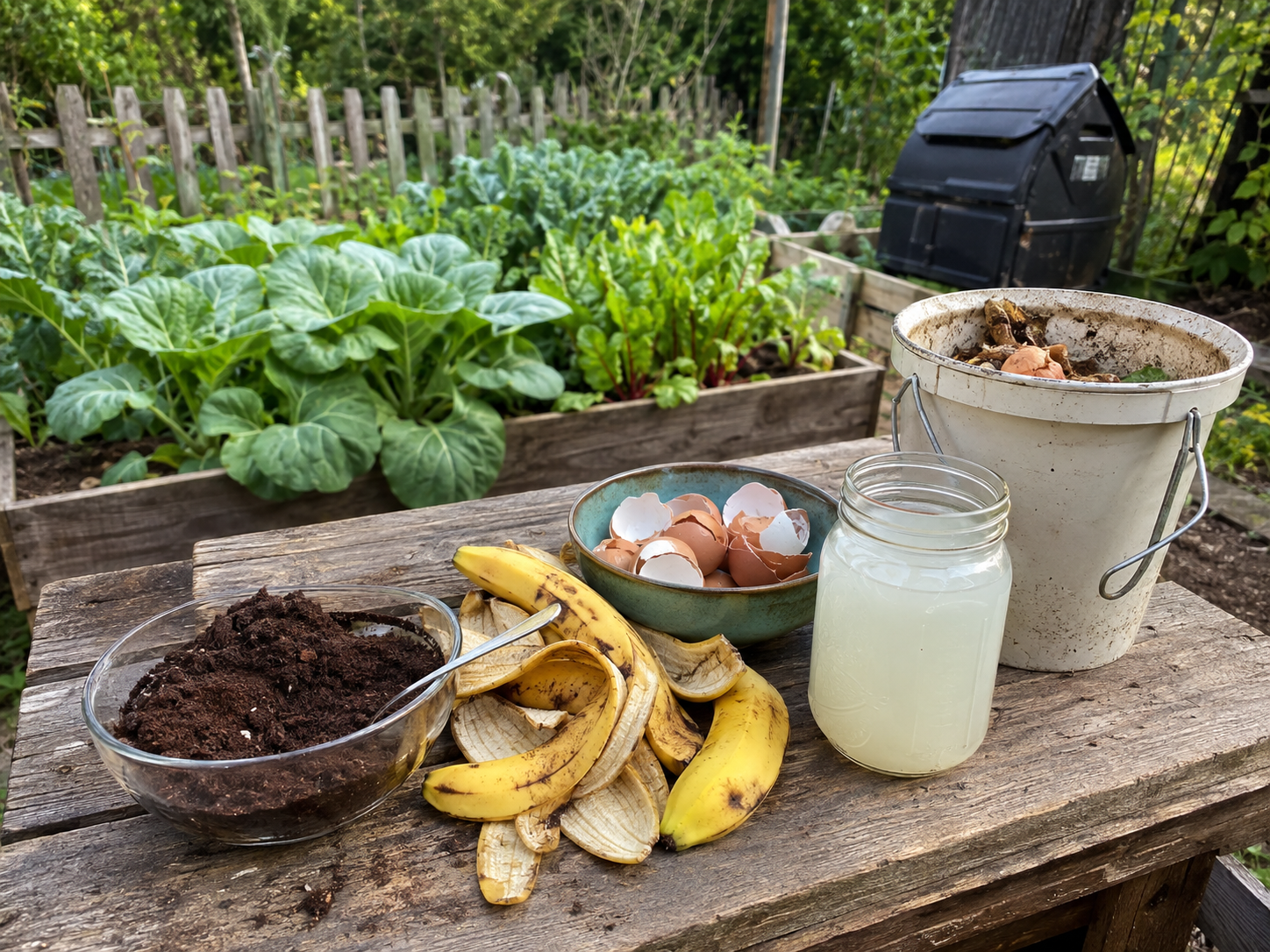
I’ve always liked the idea of making my own fertilizer.
It just makes sense when you’re growing a backyard garden.
Why throw away coffee grounds, banana peels, eggshells, cooking water, or leftover rice water when they might be useful in the garden?
But here’s the thing I learned after trying a bunch of homemade garden fertilizers:
Just because something comes from your kitchen doesn’t mean you should dump it straight on your plants.
I’ve made that mistake more than once.
I once put a thick layer of coffee grounds around a plant because I figured more must be better.
Another time, I buried fresh banana peels beside a plant and wondered why the area started smelling like something had gone wrong in the compost pile.
And then there were the eggshells.
I crushed them by hand, sprinkled the pieces around the garden, and proudly told myself I was adding calcium.
Turns out, those big chunks weren’t exactly doing much quickly.
That’s one of the biggest lessons I’ve learned with DIY fertilizers.
The ingredient isn’t always the problem. The way you use it is.
So let’s talk about some of the common kitchen scraps people use as homemade plant fertilizers, what can go wrong, and what I’d do differently now.
Why I Started Making DIY Fertilizers
Part of it is saving money.
If I’m already buying coffee, eating bananas, cooking rice, or boiling vegetables, it feels wasteful to throw everything into the trash.
The other part is that I like closing the loop in the garden.
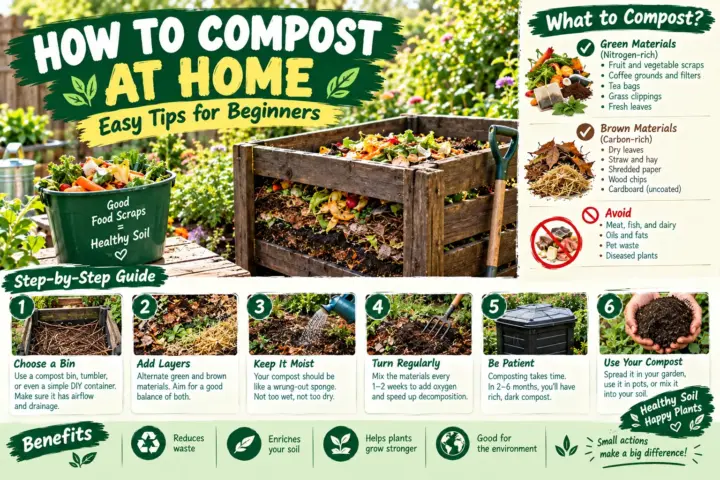
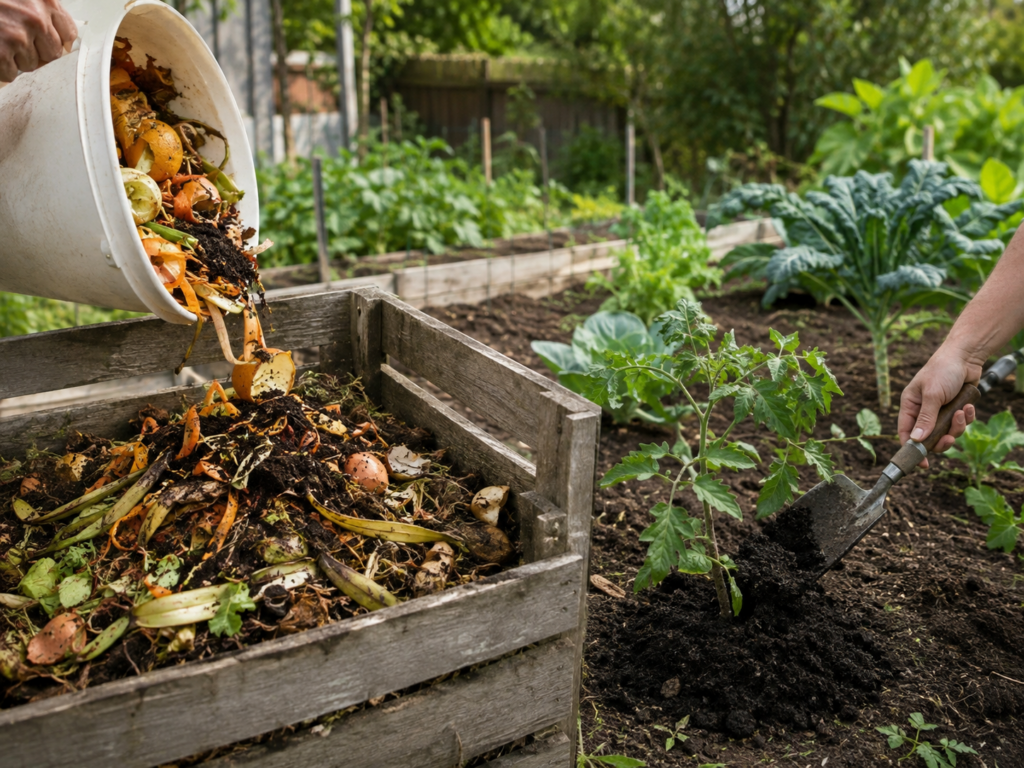
Kitchen scraps can become compost.
Compost feeds the soil.
Healthy soil feeds the plants.
That’s the basic idea.
But there’s an important difference between adding organic material to the soil and making a homemade fertilizer that immediately feeds a plant.
Some kitchen scraps break down slowly.
Some need to be composted first.
Some can be useful when prepared properly.
And some aren’t worth the trouble at all.
I’ve learned not to assume that every internet gardening trick is going to work just because somebody says it does.
The Biggest DIY Fertilizer Mistake: Thinking More Is Better
This is probably the first thing I’d tell anybody experimenting with homemade fertilizers.
Don’t dump a huge amount of anything around your plants.
Plants don’t need unlimited nutrients.
And a thick layer of organic material can create other problems, especially when it stays wet or decomposes slowly.
You can end up with:
- Mold
- Bad smells
- Pests
- Poor airflow around the soil
- Nutrient imbalances
- Root problems
- Slow decomposition
- Unwanted microbial activity
The garden isn’t a garbage can.
If you wouldn’t want to eat it in that form, I probably wouldn’t bury a giant pile of it beside a plant either.
Coffee Grounds: Don’t Dump a Thick Layer Around Plants
Coffee grounds are probably one of the most popular homemade garden amendments.
And yes, used coffee grounds contain organic matter and some nutrients.
But that doesn’t mean I want a six-inch layer of coffee grounds around my vegetables.
That’s where I went wrong.
I thought I was feeding the soil.
Instead, I created a thick, wet layer that didn’t break down as quickly as I expected.
What I Do Now
I use used coffee grounds more carefully.
Instead of dumping a thick layer around a plant, I’ll add a modest amount to my compost pile or mix it into other organic material.
If I put coffee grounds directly around plants, I keep the layer thin.
And I don’t treat coffee grounds as some kind of complete fertilizer.
They’re better thought of as one small part of a bigger soil-building system.
My Coffee Ground Mistake
The first time I used a lot of them, I basically made a coffee-ground blanket.
It looked great for about five minutes.
Then it rained.
The grounds became a wet, compact layer.
That’s when I learned that organic doesn’t automatically mean harmless in unlimited amounts.
Banana Peels: Don’t Just Bury Fresh Peels Everywhere
Banana peels are another popular DIY fertilizer.
You’ll often hear that banana peels are a great source of potassium.
There’s some truth to the idea that banana peels contain nutrients, but simply burying a fresh banana peel beside your tomato plant isn’t the same thing as giving the plant a balanced fertilizer.
The peel has to decompose before many of those nutrients become available.
And fresh organic material can attract pests or create unpleasant decomposition if you’re putting large amounts directly into the soil.
What I’d Do Instead
Compost the banana peels.
That’s my preferred method.
If you want to experiment with a banana-peel liquid, keep the process clean and don’t assume the resulting liquid is a complete fertilizer.
I’d rather put kitchen scraps into finished compost and let the soil benefit from a mixture of organic materials.
That’s much closer to how I like to garden.
Eggshells: Crush Them Fine
Eggshells are another one I’ve used for years.
The problem is that a few big pieces of eggshell aren’t going to dissolve overnight and suddenly give your tomato plant a calcium boost.
Eggshells are mostly calcium carbonate.
They break down slowly, especially when they’re left in large pieces.
My Old Method
I’d save eggshells, rinse them, crush them with my hands, and scatter the pieces around the plants.
It looked like I was doing something useful.
But those pieces could sit there for a long time.
What I Do Now
If I’m going to use eggshells, I clean and dry them and grind them into a much finer powder.
Then I add the powder to compost or use a small amount as a soil amendment.
But I don’t rely on eggshells to fix a calcium deficiency.
If a plant actually has a nutrient problem, I want to understand what is happening rather than throwing random kitchen scraps at it.
That’s a much better gardening habit.
Cooking Water: Salt Is the Big Problem
This one can be useful, but you’ve got to pay attention to what was in the water.
If you boiled vegetables or other foods in plain, unsalted water, the cooled water may contain small amounts of nutrients that came out of the food.
I sometimes use cooled, unsalted cooking water on suitable garden plants.
But if you’ve added salt?
I don’t use it.
Salt can build up in soil and cause problems for plants.
The same goes for cooking water containing sauces, oils, butter, or other ingredients.
I don’t dump mystery kitchen water onto the garden just because it came from cooking.
My Simple Rule
Plain and unsalted? Maybe.
Salty, oily, or heavily seasoned? Compost or drain it instead.
And always let the water cool completely before it gets anywhere near your plants.
Used Tea Bags: Don’t Overdo It
Used tea leaves can add organic matter, but I don’t treat tea bags like some magical plant-food delivery system.
First, check what the bag is actually made from.
Some tea bags contain plastic or synthetic materials, so I don’t want to bury the entire bag in my vegetable garden.
I’ll remove the tea leaves from the bag when possible and add the organic material to compost.
And I don’t pile large amounts of tea leaves around one plant.
A little organic material is one thing.
Creating a wet layer that stays around the plant is another.
What About Tannins?
You’ll sometimes hear that tea is harmful because of tannins.
I wouldn’t make the gardening decision that simple.
The type of tea, amount, soil conditions, and how it’s used all matter.
For me, the easier approach is to use used tea leaves as a small compost ingredient rather than constantly pouring concentrated tea onto my plants.
Rice Water: Keep It Fresh
Rice water is another homemade plant treatment that gets a lot of attention.
People save the water left from rinsing rice and use it on their plants.
I’ve experimented with it too.
The part I wouldn’t recommend is leaving homemade rice water sitting around at room temperature for days and assuming it’s automatically becoming a better fertilizer.
That’s when things can get unpredictable.
Microorganisms love water containing organic material.
And once you leave homemade mixtures sitting around, you don’t really know what microbial community you’re growing.
What I Prefer
If I’m going to use rice-rinse water, I use it fresh rather than keeping it around for a long time.
I don’t make a giant bottle and leave it on a warm shelf for a week.
If you need to store something temporarily, refrigeration is safer than leaving it warm, but I still prefer using fresh material rather than turning the kitchen into a homemade fertilizer laboratory.
And again, rice water isn’t a complete fertilizer.
It’s just one small addition.
Don’t Confuse Homemade Fertilizer With Compost
This is something I wish I’d understood earlier.
Compost and homemade fertilizer aren’t the same thing.
Compost is a controlled process where organic materials break down into a more stable soil amendment.
A banana peel buried beside a tomato plant isn’t compost.
A bucket of rice water isn’t compost.
A pile of coffee grounds isn’t compost.
And a handful of eggshells isn’t compost.
If I have a lot of kitchen scraps, I’d rather compost them properly and use finished compost throughout the garden.
It’s slower.
But it makes much more sense to me.
Don’t Put Fresh Kitchen Scraps Directly Against Plant Stems
Another mistake I’ve made is putting organic material too close to the plant.
Even something harmless can become a problem if it stays wet against the stem.
It can encourage pests, unpleasant decomposition, or other issues.
Now I leave some space around the base of my plants.
If I’m adding compost or an organic amendment, I spread it around the root zone instead of creating a wet pile directly against the stem.
That little bit of space makes a difference.
DIY Fertilizer Isn’t Always a Complete Fertilizer
This is probably the most important thing to understand.
Different plants need different nutrients.
And plants need more than just one nutrient.
A homemade fertilizer made from banana peels isn’t automatically a complete plant food.
Coffee grounds aren’t a complete fertilizer.
Eggshell powder isn’t a complete fertilizer.
Rice water isn’t a complete fertilizer.
Cooking water isn’t a complete fertilizer.
They’re individual materials.
If your soil needs something specific, you need to know what that is.
That’s why I like starting with healthy soil and compost instead of constantly trying to invent a new fertilizer from kitchen scraps.
What About Homemade Liquid Fertilizers?
This is where I get a little more cautious.
There are countless recipes online for soaking kitchen scraps in water for several days.
Some people call these mixtures fertilizer tea.
Others let them ferment.
The problem is that homemade liquid fertilizers can be inconsistent.
You don’t know exactly what nutrients you’re getting.
You don’t always know which microorganisms are growing.
And if the mixture is poorly prepared, it can smell terrible.
I’ve opened containers before and immediately regretted it.
If you want a reliable liquid fertilizer, I’d rather use a properly labeled commercial product or a well-understood compost-based method.
There’s nothing wrong with experimenting, but I don’t experiment on my entire tomato crop.
My Biggest DIY Fertilizer Mistakes
I’ve made enough of these to have a pretty good list.
Mistake #1: Using Too Much
This is the big one.
More isn’t automatically better.
A thin layer of organic material is very different from dumping a pile around one plant.
Mistake #2: Using Fresh Kitchen Scraps
Fresh banana peels and other food scraps can attract pests and don’t behave like finished compost.
Now I compost most of them instead.
Mistake #3: Using Large Eggshell Pieces
They break down slowly.
If I use eggshells, I grind them much finer.
Mistake #4: Using Salty Cooking Water
This one is easy to avoid.
If the water contains salt, I don’t put it on my garden soil.
Mistake #5: Letting Homemade Liquids Sit Too Long
Warm, nutrient-rich water can become a breeding ground for microorganisms.
I prefer fresh preparations rather than mystery liquid that’s been sitting in a bucket for several days.
Mistake #6: Assuming Every Plant Needs Fertilizer
Sometimes the plant isn’t hungry.
Sometimes it’s thirsty.
Sometimes the soil is too wet.
Sometimes there’s a pest.
Sometimes the plant is simply stressed.
Adding fertilizer to every problem can make things worse.
How I Use Kitchen Scraps in My Garden Now
These days, I keep things pretty simple.
Instead of trying to turn every kitchen scrap into a fertilizer, I send most of it toward the compost pile.
Coffee grounds?
Compost.
Banana peels?
Compost.
Vegetable scraps?
Compost.
Tea leaves?
Compost, after removing unsuitable tea bags.
Eggshells?
Dry them, crush them, and add them to compost or use them as a slow soil amendment.
That gives me one consistent system instead of six different buckets of homemade fertilizer sitting around the garden.
And honestly, I like that a lot better.
A Simple DIY Fertilizer Approach I’d Recommend
If you’re just getting started, don’t make this complicated.
Start with your soil.
Add finished compost.
Use mulch.
Grow healthy plants.
Watch how they respond.
If you suspect a nutrient deficiency, investigate before adding a homemade fertilizer.
You can also get your soil tested if you’re dealing with persistent problems.
That tells you much more than guessing based on the color of a leaf.
Once you understand what your soil actually needs, you’ll have a much better idea of whether an amendment is useful.
Can DIY Fertilizers Burn Plants?
They can, depending on what you’re using and how concentrated it is.
Some homemade mixtures can contain soluble salts or other compounds at concentrations that plants don’t tolerate well.
That’s another reason I don’t make highly concentrated kitchen-scrap liquids and pour them directly around young plants.
Young seedlings especially don’t need some homemade mystery cocktail.
They’re small.
Their root systems are small.
A little mistake can have a big effect.
What I’d Do Differently If I Were Starting Again
If I could go back to my first few years of gardening, I’d stop trying to find a fertilizer recipe for every single kitchen scrap.
I’d focus on building good soil.
I’d compost more.
I’d use smaller amounts of amendments.
I’d stop assuming that every homemade recipe online was tested properly.
And I’d pay more attention to what the plants were actually telling me.
Because gardening isn’t about feeding plants as much as possible.
It’s about giving them what they need, when they need it.
That’s a very different approach.
Final Thoughts: The Ingredient Isn’t the Whole Story
I still like DIY fertilizers.
I’m not against them.
I just don’t treat them like magic.
Coffee grounds can be useful.
Banana peels can be useful.
Eggshells can be useful.
Tea leaves can be useful.
Plain cooking water can sometimes be useful.
Rice-rinse water can be experimented with carefully.
But the way you prepare and use these materials matters.
A thick layer of coffee grounds isn’t better than a thin layer.
A whole banana peel buried beside a plant isn’t the same as finished compost.
Large eggshell pieces aren’t the same as finely ground material.
Salty cooking water definitely isn’t something I want in my garden.
And a homemade liquid that’s been sitting warm for days isn’t something I’d casually pour over my vegetables.
The biggest lesson I’ve learned is pretty simple:
Same ingredient. Different method. Completely different result.
If you’re trying DIY fertilizers in your backyard garden, start small.
Watch your plants.
Don’t overdo it.
And when in doubt, compost it.
Sometimes the simplest homesteading solution is still the best one.