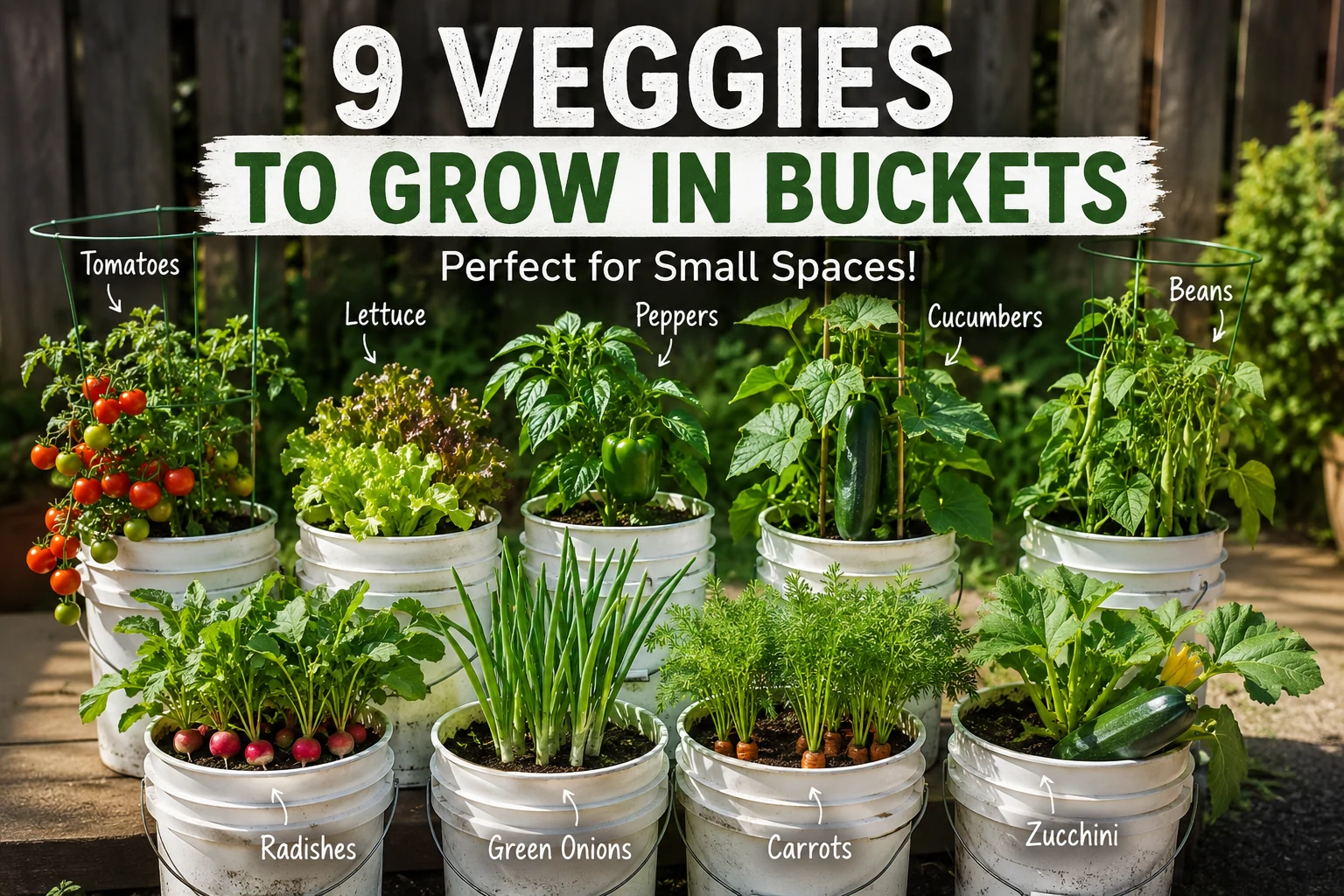
9 Veggies to Grow in Buckets. The first time I tried growing vegetables in buckets, I wasn’t expecting much.
I had a few old food-grade buckets sitting around, some leftover potting mix, and a small space where I couldn’t really put a proper garden bed.
So I figured, why not?
I drilled some drainage holes, filled the buckets with soil, and planted a few vegetables.
And honestly, I was surprised by how well it worked.
I used to think you needed a big backyard and a nice garden bed to grow a decent amount of food.
I don’t think that anymore.
Buckets can grow a surprising amount of food when you choose the right vegetables and give them what they need.
Over the years, I’ve experimented with different crops, and some definitely performed better than others.
So if you’re short on garden space, renting a house, working with a patio, or simply want to grow a few vegetables without digging up your yard, here are 9 vegetables I’d happily grow in buckets again.
Before You Start: Choose the Right Bucket
Before we get into the vegetables, let’s talk about the bucket itself.
This matters more than people think.
I use food-grade buckets or containers that are designed to hold food or plants.
I don’t use a bucket that previously held pesticides, solvents, paint, or other chemicals.
Free isn’t always free when it comes to gardening.
You also need drainage.
Lots of it.
I drill several holes in the bottom of my buckets so excess water can escape.
A bucket without drainage holes is basically a tiny swimming pool for your plant roots.
And most vegetables don’t appreciate that.
I also like putting the buckets somewhere that gets plenty of sunlight.
For most vegetables, around 6 to 8 hours of direct sunlight is a good target.
1. Tomatoes
Tomatoes are probably the first vegetable I’d recommend for bucket gardening.
Technically, tomatoes are fruits, but we’re putting that argument aside because nobody wants to call a tomato garden a fruit garden.
I’ve grown tomatoes in buckets for years.
The biggest advantage is that you can move the plants around if you need to.
If one spot gets too much shade, you can move the container.
If you’re expecting bad weather, you have a little more flexibility.
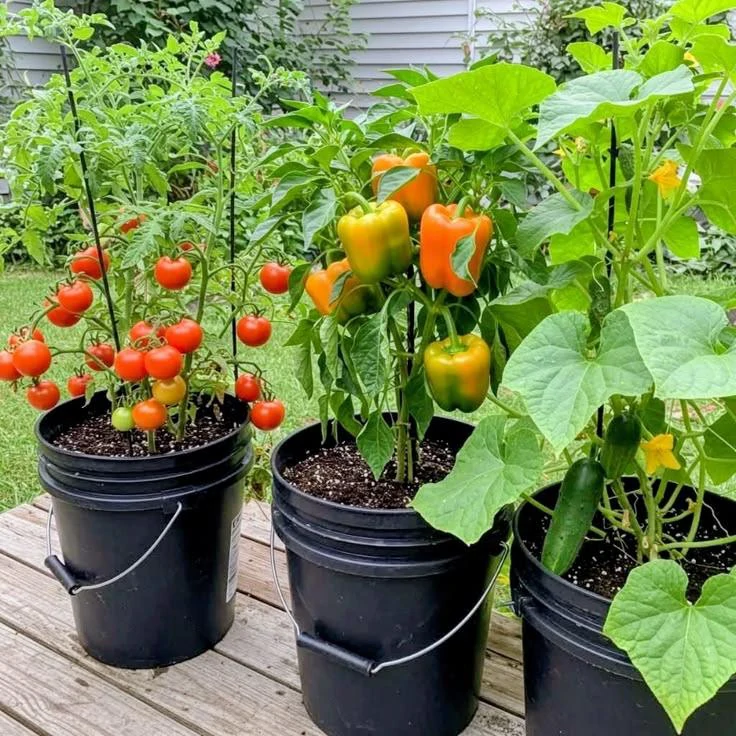
What Tomatoes Need
Tomatoes need:
- A large container
- Good drainage
- Fertile potting mix
- Plenty of sunlight
- Regular watering
- A sturdy support
Don’t use a tiny bucket for a large indeterminate tomato variety.
The bigger the plant, the more root space and support it needs.
I’ve made that mistake.
The plant looked perfectly happy until it became a giant tomato monster and started leaning sideways.
Now I install the cage or support early.
It’s much easier than trying to support a full-grown tomato plant later.
2. Bush Beans
Bush beans are another great choice for containers.
They’re fast-growing, don’t usually need a huge amount of space, and can give you a nice harvest from a relatively small area.
I like planting several seeds in a large bucket rather than trying to grow one lonely bean plant.
Just don’t overcrowd them.
Good airflow still matters.
One thing I love about beans is that they can give you a harvest without requiring a complicated setup.
You plant them.
Keep them watered.
Watch them grow.
Then suddenly you’re picking beans.
And once they start producing, check the plants regularly.
The beans can get bigger quickly.
3. Cucumbers
If you’ve read my other garden experiments, you already know I like growing cucumbers vertically.
They’re actually excellent candidates for bucket gardening if you give them something to climb.
A cucumber plant doesn’t necessarily need to spread across the ground.
Put a trellis beside the bucket and train the vines upward.
That saves a huge amount of space.
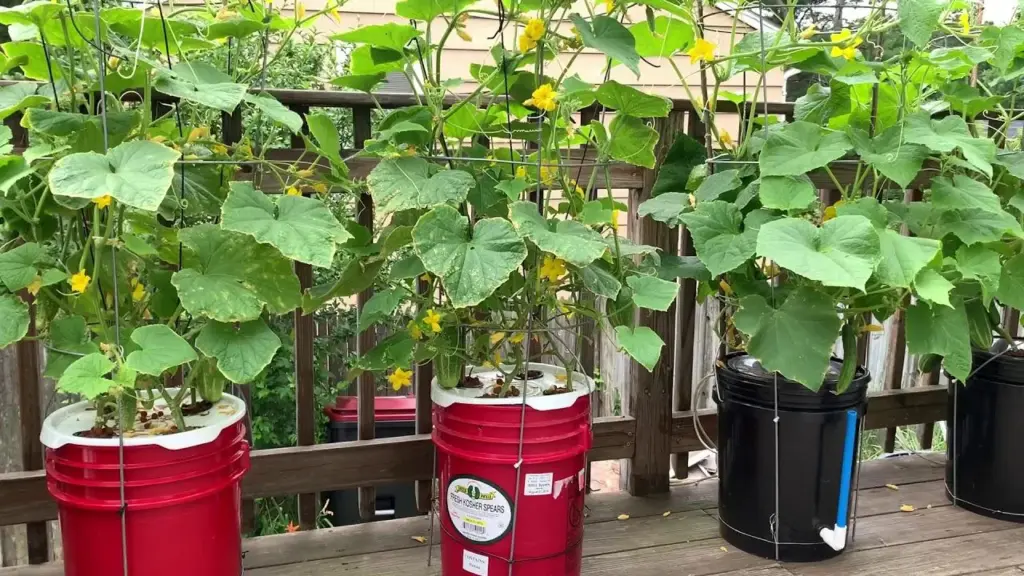
My Favorite Bucket Cucumber Setup
I use a reasonably large bucket with good drainage.
Then I place a sturdy trellis or support next to it.
As the vine grows, I guide it toward the support.
The tendrils usually take over from there.
This works especially well if you’re growing cucumbers on a patio or in a small backyard.
And there’s another bonus.
Vertical cucumbers are much easier to harvest.
The fruit hangs down where you can see it instead of hiding underneath a pile of leaves.
4. Peppers
Peppers and containers seem to get along very well.
I’ve grown everything from sweet peppers to hot peppers in containers.
They’re relatively compact compared with many other garden vegetables, and a healthy pepper plant can keep producing for quite a while.
I like growing several different varieties in separate buckets.
That way, if one variety doesn’t perform well, I still have others producing.
Peppers love warmth and sunlight.
Give them a sunny location and don’t let the soil constantly swing between bone-dry and soaking wet.
One thing I’ve learned with container peppers is that they can dry out faster than plants growing in the ground.
So during hot weather, I check them more often.
5. Lettuce
If you want something easy, lettuce is hard to beat.
You don’t need a huge container.
You don’t need a trellis.
And you don’t need to wait forever for a harvest.
I especially like growing lettuce in buckets during the cooler parts of the growing season.
You can sow several seeds, thin the seedlings as needed, and harvest the leaves gradually.
Instead of pulling out the whole plant, you can harvest outer leaves and let the plant continue growing.
That’s a pretty good deal when you’re trying to grow fresh food in a small space.
A Little Shade Can Help
Lettuce doesn’t love extreme heat.
If summer temperatures get brutal where you live, a little afternoon shade can help prevent it from bolting too quickly.
This is one reason containers are handy.
You can move them to a better location.
6. Radishes
Radishes are one of my favorite vegetables for beginners.
They’re quick.
They don’t need a giant container.
And they don’t require a complicated growing system.
The main thing you need to think about is the depth of the bucket.
You want enough soil depth for the variety you’re growing so the roots have room to develop.
Plant the seeds directly into the container.
Keep the soil moist.
Then wait.
Before long, you’ll have radishes ready to pull.
And because they grow quickly, they’re a great crop to squeeze into a small backyard garden.
7. Carrots
Yes, you can grow carrots in buckets.
I’ve actually found containers useful for carrots because I can control the growing medium.
Carrots don’t like rocky or heavily compacted soil.
If you’ve got hard clay soil in your backyard, trying to grow nice straight carrots can become an exercise in frustration.
A bucket filled with loose, stone-free growing mix gives the roots a much easier environment.
Choose the Right Variety
Some carrots grow very long.
Others are shorter and more suitable for containers.
For bucket gardening, I’d look for shorter or medium-length varieties.
The important thing is to give the roots enough depth.
Don’t plant long carrots in a shallow container and then wonder why you harvested a collection of orange thumbs.
I’ve done things like that.
8. Green Onions
Green onions are ridiculously useful in a kitchen.
And they’re one of the easiest crops to grow in a container.
You don’t need a huge bucket.
You can grow several plants together and harvest what you need.
I like having a container of green onions close to the kitchen because they’re one of those vegetables I use constantly.
Soups.
Eggs.
Salads.
Stir-fries.
Sandwiches.
They’re easy to grab when you need them.
You can also succession-plant them so you have a steady supply instead of harvesting everything at once.
9. Zucchini
Now, this one needs a little warning.
Yes, you can grow zucchini in a bucket.
But zucchini is not exactly a tiny plant.
I once planted one in a container thinking it would stay reasonably small.
It did not.
A few weeks later, it looked like it was trying to take over the entire patio.
So if you grow zucchini in a bucket, give it a large container and plenty of room.
Look for compact or bush varieties when possible.
And don’t forget to harvest the zucchini regularly.
They have a funny habit of going from “perfect size” to “baseball bat” when you aren’t looking.
How Big Should a Bucket Be?
This depends on the vegetable.
There’s no single bucket size that works perfectly for everything.
For smaller crops like lettuce, radishes, and green onions, a relatively shallow container can work.
For larger plants like tomatoes, cucumbers, peppers, and zucchini, I’d use a much larger container.
Think about the mature size of the plant.
A tiny seedling doesn’t tell you much about how large its root system and above-ground growth will eventually become.
My General Rule
The bigger the plant, the bigger the container.
Don’t try to squeeze a huge tomato variety into a tiny bucket just because the seedling fits perfectly today.
Future-you will regret that decision.
What Soil Should You Use?
This is one place where I wouldn’t cut corners.
Don’t just fill your buckets with heavy backyard dirt and expect everything to grow beautifully.
Container plants need a growing medium that drains well while still holding enough moisture.
I usually prefer a good-quality potting mix or container mix combined with organic matter such as finished compost.
The exact mix can vary depending on the crop.
But the basic idea is simple:
Good drainage + moisture retention + nutrients = happier container plants.
Don’t Forget the Drainage Holes
I can’t emphasize this enough.
You need drainage.
I’ve seen people put plants into decorative buckets with no holes because they don’t want water leaking onto the patio.
Then they wonder why the plant starts struggling.
Plants need water.
But roots also need oxygen.
If water has nowhere to go, the growing medium can stay saturated for too long.
So drill drainage holes before you add the soil.
Not afterward.
How Often Should You Water Bucket Vegetables?
Container vegetables usually need more attention than vegetables growing in the ground.
There’s simply less soil available to hold moisture.
On hot, windy days, containers can dry out surprisingly fast.
I don’t follow a rigid watering schedule.
Instead, I check the soil.
Stick your finger into the top couple of inches.
If the soil is dry where the roots are, it’s probably time to water.
Water deeply enough that some water drains from the bottom.
Then let the excess drain away.
Don’t let the buckets sit in trays full of standing water for long periods.
Feed Your Bucket Vegetables
One thing I’ve learned about container gardening is that nutrients can run out faster than they do in a large garden bed.
The plants are using nutrients from a relatively small amount of growing medium.
And every time you water heavily, some nutrients can move through the container.
That’s why I like starting with quality potting mix and finished compost.
During the growing season, you can also use an appropriate vegetable fertilizer according to the label.
Don’t assume that more fertilizer means more vegetables.
I’ve made that mistake too.
Sometimes it just gives you giant leaves and unhappy roots.
Put Your Buckets Somewhere Sunny
Most fruiting vegetables need plenty of sunlight.
Tomatoes.
Peppers.
Cucumbers.
Zucchini.
They all want a good amount of direct sun.
Leafy crops like lettuce can tolerate somewhat less light and may actually appreciate some protection from intense afternoon heat.
Before you fill 20 buckets with soil, figure out where the sunlight actually falls.
A bucket is easy to move when it’s empty.
A bucket full of wet soil?
Not so much.
Trust me.
I’ve tried.
The Biggest Bucket Gardening Mistakes I’ve Made
Mistake #1: Using Tiny Containers
The plant may look fine at first.
Then the roots run out of room.
Use a container appropriate for the mature plant.
Mistake #2: Forgetting Drainage
No drainage holes can lead to waterlogged soil and unhappy roots.
Always check before planting.
Mistake #3: Using Contaminated Buckets
Don’t reuse containers that previously held chemicals.
I would rather spend a few dollars on a food-safe container than take a chance with something unknown.
Mistake #4: Letting Containers Dry Out
A bucket can go from moist to bone-dry much faster than a garden bed.
Check regularly during hot weather.
Mistake #5: Overcrowding
A bucket may look like it has plenty of room when the plants are tiny.
Give them enough space for their mature size.
Mistake #6: Forgetting Support
Tomatoes and cucumbers can become heavy.
Install supports before the plants become difficult to manage.
Can You Grow Vegetables in 5-Gallon Buckets?
Yes, many vegetables can be grown successfully in 5-gallon buckets.
But don’t assume every vegetable will thrive in exactly the same size container.
Five gallons can work well for certain tomatoes, peppers, cucumbers, beans, and other crops, while larger plants may perform better with more root space.
The variety matters too.
A compact tomato and a huge indeterminate tomato are two very different plants.
Why I Like Bucket Gardening
The more I garden, the more I appreciate flexibility.
Not everybody has a huge backyard.
Some people have a tiny garden.
Some have a patio.
Some are renting.
Some don’t want to dig up their lawn.
And some people just want to grow a few vegetables without committing to a full garden bed.
Buckets solve a lot of those problems.
You can put them along a sunny fence.
On a patio.
Around a small backyard.
Near a shed.
And if you arrange them properly, you can grow a surprising amount of food in a very small area.
My Favorite 9 Bucket Vegetables
If I had limited space and wanted to start again, I’d probably begin with:
- Tomatoes – great for large containers and very productive.
- Bush beans – simple and relatively compact.
- Cucumbers – excellent when grown vertically.
- Peppers – compact and productive.
- Lettuce – easy and quick to harvest.
- Radishes – fast-growing and beginner-friendly.
- Carrots – perfect for loose container soil.
- Green onions – useful and easy to keep harvesting.
- Zucchini – productive, but give it a big bucket.
You don’t need to grow all nine.
Start with two or three.
See how they perform in your space.
Then add more.
That’s how I prefer to approach most homesteading projects.
Start small.
Learn what works.
Then expand.
Final Thoughts: Would I Grow Vegetables in Buckets Again?
Absolutely.
Bucket gardening isn’t going to replace a large garden for everybody.
But if you’re short on space, it can be a fantastic way to grow fresh food.
The biggest lesson I’ve learned is that the container is only part of the equation.
You need the right vegetable.
You need enough root space.
You need good drainage.
You need good soil.
You need sunlight.
And you need to remember that container plants usually need more attention to watering and feeding than plants growing in the ground.
Get those basics right, and you can grow a surprising amount of food from a few simple buckets.
And honestly, there’s something pretty satisfying about walking outside with a bucket, picking dinner, and walking back into the kitchen.
You don’t need acres of land to start growing your own food.
Sometimes, all you need is a few buckets and a sunny corner.