The first time I grew watermelons, I was pretty sure I had everything figured out.
I had good soil, plenty of sun, and what I thought was plenty of space.
Then those watermelon vines started growing.
And growing.
And growing.
Before long, they were crawling across the garden, through the walkway, and into places where I definitely didn’t want them. I remember looking at the vines thinking, “Well… I guess this is the watermelon garden now.”
The funny thing is, growing watermelon isn’t really that complicated. The hard part is giving the plants what they want without letting the vines take over your whole backyard.
Over the years, I’ve learned a few things about tips for growing watermelons that have made a big difference in my harvests.
Some years I get beautiful, sweet melons.
Other years, I get huge vines and fruit that never seems to ripen.
That’s gardening.
So let me show you what actually works for me, what mistakes I’ve made, and how I’d grow watermelons if I were starting over today.
Watermelons Need One Thing More Than Anything Else
Sun.
Lots of it.
If your watermelon plants don’t get enough sunlight, you’re going to have a hard time getting a good harvest.
I like choosing the sunniest part of the backyard for watermelon.
Not the spot that gets morning sun and shade all afternoon.
I’m talking about the place where the plants can soak up sunlight for most of the day.
The vines can tolerate a little less, but if you’re trying to grow large, sweet fruit, give them the best location you have.
I’ve made the mistake of planting watermelon where another crop eventually shaded it.
The vines looked healthy enough, but the fruit wasn’t impressive.
Now I plan the garden around the watermelon instead of squeezing it into whatever space is left.
Tips for Growing Watermelons Start With Warm Soil
Watermelon is a warm-season crop.
This is important.
I used to get impatient in spring and plant everything as soon as the weather started feeling nice.
Then we’d get a cold night.
The watermelon plants would just sit there.
No growth.
No excitement.
Just tiny sad plants waiting for summer.
Wait until the danger of frost has passed and the soil has warmed up.
Watermelon seeds germinate much better in warm soil, and young plants don’t appreciate cold conditions.
If you live somewhere with a short growing season, starting seeds indoors can give you a head start.
Just be careful when transplanting because watermelon roots don’t love being disturbed.
Give Watermelon Plenty of Space
Here’s something I wish somebody had told me when I first started.
Watermelon vines are not polite.
They don’t stay where you plant them.
They spread.
A lot.
Depending on the variety, vines can run many feet across the garden.
So before planting, look around and ask yourself:
Where are these vines going to go?
Not where are they going today.
Where will they be in two months?
That’s the question that matters.
I like giving watermelon its own section of the garden or allowing the vines to spread along an edge where they won’t interfere with other crops.
Can You Grow Watermelons in a Small Backyard?
Yes, but you need to get creative.
If you’re working with a small urban backyard, raised bed, or even a large container, look for bush or compact watermelon varieties.
Some varieties are much more manageable than the giant sprawling types.
You can also train smaller vines along the edge of a garden.
I’ve even grown watermelon in containers.
It worked, but I learned that the container needs to be large enough to support the plant and hold moisture.
A tiny pot isn’t going to make your watermelon happy.
Pick the Right Watermelon Variety
This is one of the biggest lessons I’ve learned.
Don’t choose a watermelon just because the picture on the seed packet looks good.
Think about your growing season.
If you have a long, hot summer, you’ve got more options.
If your season is short, look for a variety that matures relatively quickly.
And if you’re short on space, choose a compact or smaller-fruited variety.
There are also seedless varieties, but they can require a little more planning because seedless watermelons typically need a seeded variety nearby for pollination.
For my backyard, I like varieties that fit the space and the growing season.
That’s more important to me than growing the biggest watermelon on the block.
Plant Watermelon in Rich Soil
Watermelons aren’t terribly complicated about soil, but they do appreciate fertile, well-drained ground.
Before planting, I like working finished compost into the bed.
If your soil is poor, improving it before planting will save you trouble later.
Watermelon roots need moisture, but they don’t want to sit in soggy soil.
So I aim for soil that holds enough moisture while draining excess water.
I’ve grown watermelon in beds where the soil was too compact.
The plants survived, but they didn’t grow the way I wanted.
Once I improved the soil with compost and organic matter, the difference was obvious.
Don’t Overdo the Nitrogen
This one took me a while to learn.
I used to think that if a plant looked like it was growing slowly, more fertilizer must be the answer.
So I’d add more.
And more.
The watermelon vines loved it.
The fruit?
Not so much.
Too much nitrogen can encourage lots of leafy vine growth at the expense of fruit production.
If your soil is already fertile, don’t keep dumping fertilizer on the plants.
A balanced fertilizer or one appropriate for fruiting vegetables is a better approach.
And always follow the product instructions.
Water Consistently
Watermelon plants need water, especially while they’re growing and setting fruit.
But there’s a difference between deep, consistent watering and keeping the soil soaked all day.
I prefer watering deeply when the plants need it rather than giving them a tiny sprinkle every few hours.
Morning is usually my favorite time to water.
It gives the foliage time to dry during the day and gets moisture down into the root zone.
A layer of mulch can also help keep the soil from drying out too quickly.
Straw works nicely around watermelon plants.
Just keep mulch away from the stem itself.
Watermelon Needs More Water at Certain Times
The plants need consistent moisture during establishment and fruit development.
But once the fruit is getting close to ripe, I become more careful about watering.
I don’t completely stop watering.
That’s not what I’m saying.
But I avoid wildly changing the moisture level.
Big swings between very dry soil and heavy watering can contribute to problems like fruit cracking.
I learned this after one watermelon split open right when I thought it was ready to harvest.
You can imagine my face.
After waiting all those weeks, there it was.
Cracked.
Right down the middle.
Lesson learned.
Mulch Is One of My Favorite Watermelon Tricks
If you grow watermelon, mulch is your friend.
A good layer of organic mulch can help:
- Keep soil moisture more consistent
- Reduce weeds
- Keep fruit off bare soil
- Reduce mud splashing onto leaves
- Keep the root zone cooler
I especially like using straw under developing melons.
Once the fruit gets larger, I can gently move some straw underneath it.
That keeps the watermelon from sitting directly on wet soil.
And when you’re dealing with a melon that takes weeks to mature, keeping it clean and dry underneath can save you some headaches.
Do You Need to Prune Watermelon Vines?
This is one of those topics where you’ll hear different opinions.
Personally, I don’t aggressively prune healthy watermelon vines.
If the plant has plenty of space, I usually let it grow.
If a vine is running into a walkway or taking over another crop, I’ll carefully redirect it.
Sometimes I’ll move the vines by hand and place them where I want them.
Do it gently.
Watermelon vines can be surprisingly easy to damage.
I don’t go out there every morning with scissors trying to make the plant look tidy.
This isn’t a hedge.
It’s a watermelon.
Let it be a little wild.
What About Pollination?
Watermelons need pollinators to produce fruit.
Bees are especially important.
This is one reason I like having flowers around the garden.
Marigolds, sunflowers, herbs, and other flowering plants can help create a more welcoming environment for pollinators.
I don’t use broad-spectrum insecticides around flowering plants unless absolutely necessary.
If you’re not seeing fruit develop despite having flowers, pollination could be part of the problem.
You can hand-pollinate watermelon flowers if needed, but I’d first make sure your garden is attracting enough pollinators.
Why Do I Get Flowers But No Watermelons?
This is a common frustration.
You get beautiful flowers.
Then nothing.
It can happen for several reasons.
Sometimes the plant is still young.
Sometimes pollination wasn’t successful.
Sometimes environmental stress is slowing fruit development.
And sometimes you’ve got lots of male flowers before the female flowers appear.
That’s normal.
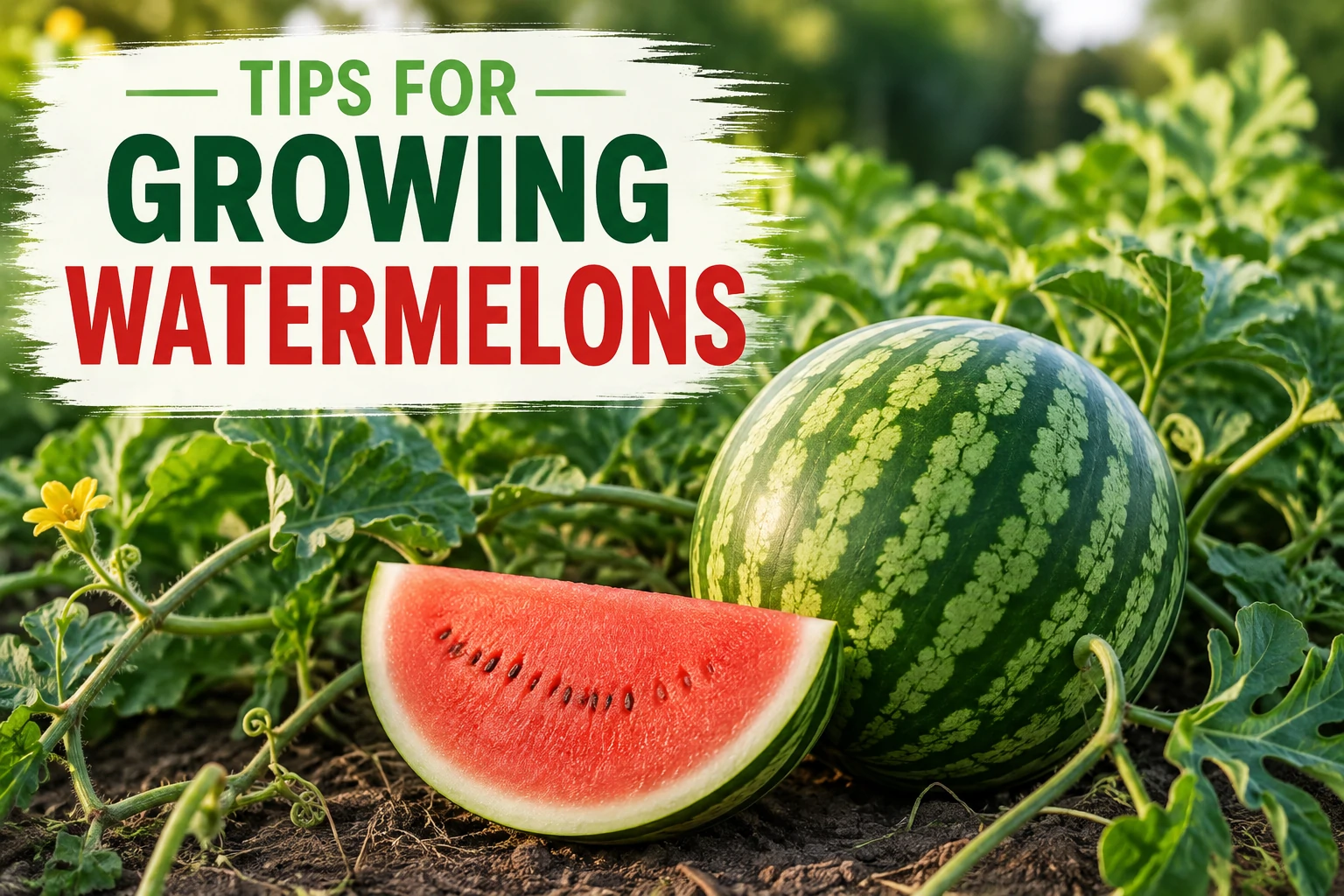
Female flowers have a small swollen area behind the flower that looks like a tiny watermelon.
When properly pollinated, that little fruit begins to grow.
Don’t panic if the first flowers don’t produce fruit.
Give the plant some time.
How Many Watermelons Should You Leave on One Plant?
This depends on the variety and growing conditions.
But if the plant sets a lot of fruit and you’re dealing with limited resources, you may want to focus on a smaller number of healthy melons.
I’ve experimented with this over the years.
Sometimes I let the plant do its thing.
Other times, if I see too many small fruits forming, I’ll remove some weaker ones.
That allows the plant to put more energy into the remaining fruit.
I don’t get obsessed with this.
If the plant looks healthy and has plenty of room, I let nature handle most of it.
Keep Weeds Away From Young Watermelon Plants
Young watermelon plants don’t compete well with aggressive weeds.
The vines eventually cover a lot of ground and can shade out some weeds themselves.
But early on, keep the area around the plants reasonably clean.
I like hand weeding and mulch instead of constantly disturbing the soil.
Be careful around the roots.
I’ve accidentally damaged young plants while trying to pull a stubborn weed too close to the stem.
Sometimes the weed wins.
I hate admitting that.
When Is a Watermelon Ready to Harvest?
This is probably the hardest part for beginners.
You don’t want to cut open a watermelon too early after waiting all summer.
And unlike some vegetables, watermelon doesn’t continue getting significantly sweeter after harvest.
So timing matters.
There are a few signs I look for.
Check the Tendril
Look at the tendril closest to the watermelon stem.
When that tendril starts drying out and turning brown, that’s a useful clue that the fruit may be getting close.
It isn’t a perfect method by itself, but I use it along with other signs.
Look at the Ground Spot
The part of the watermelon sitting on the soil usually changes color as it matures.
A pale or creamy yellowish spot is generally a better sign than a bright white one.
Again, don’t rely on one clue alone.
Look at the Skin
Depending on the variety, the skin can become duller as the watermelon matures.
The appearance varies a lot between varieties, so learn what your particular type should look like.
And yes, people love tapping watermelons.
I do it too.
But that sound isn’t enough by itself to tell me whether a watermelon is ripe.
My Biggest Watermelon Growing Mistakes
I’ve made quite a few.
Planting Too Early
Cold soil slowed everything down.
Now I wait for warm conditions.
Not Giving the Vines Enough Space
This one is almost funny now.
I planted watermelon between other crops and spent the summer moving vines around.
Give them room from the beginning.
Overfertilizing
Lots of vines don’t automatically mean lots of melons.
Letting the Soil Dry Out
Especially during hot weather.
The plants need consistent moisture.
Harvesting Too Early
This is the painful one.
Cutting open an underripe watermelon after you’ve spent months growing it is not fun.
Now I look for several maturity signs before harvesting.
Can You Grow Watermelon Vertically?
Yes, but I’d be careful.
Small-fruited varieties can sometimes be grown on strong trellises.
But the fruit needs support.
You can’t just let a heavy watermelon hang from a thin vine and hope for the best.
Use sturdy support and individual slings made from breathable material if you’re growing melons vertically.
For most backyard gardeners, though, letting the vines run along the ground is simpler.
If you have limited space, choose a compact variety first.
My Simple Watermelon Routine
Once my watermelon plants are established, I don’t fuss over them constantly.
Here’s what I usually do:
Morning: Check soil moisture.
A few times a week: Look for pests, disease, and damaged vines.
Weekly: Check the developing fruit and gently reposition vines if they’re heading somewhere they shouldn’t.
During fruit development: Keep watering consistent and watch for cracking.
Near harvest: Start checking the tendril, ground spot, and overall fruit appearance.
That’s about it.
You don’t need to stand over your watermelon plants all day.
Give them what they need and let them grow.
FAQ About Growing Watermelons
How much sun do watermelons need?
Give them a sunny location with plenty of direct sunlight. More sun generally means better growing conditions for warm-season watermelon plants.
How often should I water watermelon plants?
Water when the soil begins to dry, giving the plants a thorough watering rather than a light sprinkle. Keep moisture reasonably consistent, especially while the plants are establishing and fruit is developing.
Can I grow watermelon in a container?
Yes. Choose a large container, good-quality potting mix, plenty of sunlight, and a compact variety. Containers dry out faster than garden beds, so you’ll need to monitor moisture closely.
Why does my watermelon plant have flowers but no fruit?
Poor pollination is one possibility. Watermelons rely on pollinators to transfer pollen between flowers. Stress from heat, drought, or other growing conditions can also affect fruit development.
Final Thoughts
Growing watermelon is one of those backyard gardening projects that can be incredibly rewarding.
There’s something pretty satisfying about walking outside and seeing a watermelon sitting there that started as a tiny seed.
But don’t make my mistakes.
Give your plants plenty of sun.
Wait for warm soil.
Give those vines room.
Keep the soil consistently moist.
Don’t drown them.
Don’t go crazy with nitrogen fertilizer.
And don’t cut the watermelon open just because you’re impatient.
I’ve done that.
It’s disappointing.
If you’re growing watermelon for the first time, start with a variety that fits your climate and your available space. If you’ve got a tiny urban backyard, choose something compact. If you’ve got plenty of room, let the vines run.
And remember, the best tips for growing watermelons aren’t complicated.
Good soil, warm weather, plenty of sunlight, steady moisture, pollination, and a little patience will get you a long way.
Some years you’ll grow perfect melons.
Other years the bugs, weather, or your own bad decisions will win.
That’s gardening.