How Much to Plant for a Year’s Worth of Food: A Simple Garden Planning Guide
The first time I tried figuring out how much to plant for a year’s worth of food, I made one very simple mistake.
I planted way too much zucchini.
I mean WAY too much.
At the time, I was thinking like a beginner: more plants = more food = more self-sufficient.
That sounds logical, right?
Well, when six zucchini plants started producing at the same time, I was suddenly leaving bags of zucchini on the neighbors’ porches. I froze some, made zucchini bread, grilled it, put it in soup, and still had more.
My chickens even got tired of it.
That little disaster taught me something important about planning a self-sufficient garden.
Growing enough food for a year isn’t just about planting more. It’s about planting the right amount of the foods you actually eat.
Over the years, I’ve gotten much better at figuring out how many vegetables to grow, what to preserve, and what simply isn’t worth giving half my backyard to.
So lemme show you how I approach it now.
How Much Food Do You Actually Need for a Year?
Before you start counting tomato plants, there’s one question I think gets skipped way too often.
What does your family actually eat?
A garden plan from the internet might say you need 20 cabbage plants.
Maybe.
But if your family eats cabbage once every two months, why would you grow 20?
On the other hand, if you’re making sauerkraut, soups, slaws, and storing cabbage for winter, you may need a whole lot more.
I learned to start with my kitchen instead of the garden.
Look at what you buy during a normal year.
How many cans of tomatoes?
How many bags of potatoes?
How much onion?
How many carrots?
How many jars of pickles?
That information is much more useful than a generic chart.
My Basic Rule for Planning a Year’s Worth of Food
I don’t try to grow 100% of everything we eat.
That’s just not realistic for most backyard gardens, especially if you’re working with limited space.
Instead, I focus on the foods that:
- We eat regularly
- Grow well in my area
- Store well
- Can be canned, frozen, dried, or fermented
- Cost enough at the store to make growing them worthwhile
Potatoes are a good example.
They aren’t glamorous.
Nobody is putting a picture of a bucket of potatoes on the cover of a gardening magazine and calling it sexy.
But potatoes store well, fill you up, and can produce a lot from a relatively small area.
Tomatoes are another favorite because I can turn them into sauce, salsa, soup, and canned tomatoes.
That’s where the real value comes in.
How Much to Plant for a Year’s Worth of Food: My Starting Numbers
The numbers below are a starting point, not a magic formula.
I wouldn’t plant exactly this amount without looking at your family’s eating habits first.
For roughly one person, here’s a basic list I’d use when planning a productive backyard garden:
| Crop | Starting Amount |
|---|---|
| Broccoli | 10–15 plants |
| Cabbage | 8–12 plants |
| Carrots | 30–50 plants |
| Cucumbers | 4–6 plants |
| Garlic | 40–60 plants |
| Kale | 10–20 plants |
| Lettuce | 15–25 plants |
| Onions | 50–100 plants |
| Peppers | 6–10 plants |
| Potatoes | 30–50 row feet |
| Sweet potatoes | 6–10 plants |
| Tomatoes | 8–12 plants |
Now before somebody emails me saying, “That’s way too many onions!” hear me out.
Those numbers assume you’re preserving and storing some of the harvest, not eating everything fresh during summer.
And if you’re feeding four people, you obviously need to adjust.
But don’t simply multiply everything by four.
That’s another mistake I made.
Don’t Multiply Your Garden Plan by the Number of People
If one person eats 10 tomatoes a week, four people don’t necessarily need exactly 40 tomatoes every week.
Family eating habits aren’t that neat.
Maybe the kids hate tomatoes.
Maybe one person eats a mountain of potatoes.
Maybe everyone loves salsa.
Maybe nobody touches kale unless it’s hidden in soup.
Your garden should match your household.
That’s why I keep notes.
Nothing fancy.
A notebook works.
At the end of the season, I write down things like:
Too much: zucchini, cucumbers
Not enough: onions, carrots, potatoes
Plant more next year: tomatoes, garlic
Don’t bother with so much: lettuce
That little list has probably improved my garden more than any fancy garden planner I’ve bought.
Tomatoes: Grow More Than You Think You’ll Eat Fresh
Tomatoes are one crop where I usually plant extra.
Not because I want to eat 500 tomatoes fresh.
I don’t.
I want tomato sauce in January.
I want salsa in February.
I want canned tomatoes when I’m making chili in March.
That’s the difference between a summer garden and a food storage garden.
If you want tomatoes for preserving, 8–12 productive plants per person can be a reasonable place to start, but variety and yield make a huge difference.
Some plants produce buckets.
Others give you a handful and seem to take the rest of the summer off.
I prefer productive varieties that are good for preserving.
And yes, I still grow a few cherry tomatoes because my family eats them straight off the vine.
Those never make it into the pantry.
Onions and Garlic Are Worth the Garden Space
If I had to choose a few crops for a beginner homestead garden, onions and garlic would be near the top.
Why?
They store.
And I use them constantly.
Soups.
Stews.
Sauces.
Eggs.
Roasted vegetables.
Pickles.
Pretty much everything.
I like growing a lot of onions because they can be cured and stored for months under the right conditions.
Garlic is even easier for me.
Plant it in fall in many climates, let it grow, harvest it the following summer, cure it, and you’ve got garlic sitting around for months.
My biggest mistake was planting too little garlic one year.
By January, I was buying garlic at the store again.
I wasn’t happy about that.
Carrots: Great for Fresh Eating and Storage
Carrots don’t seem exciting until winter arrives.
Then you’re really happy to have a bucket of homegrown carrots stored away.
I usually plant carrots in batches instead of putting all the seeds in the ground on the same day.
That gives me a longer harvest.
If you have loose soil, carrots can be surprisingly productive.
If your soil is heavy clay like some gardens I’ve worked with, don’t fight it.
Improve the soil or grow shorter carrot varieties in raised beds or containers.
Crooked carrots still taste like carrots, by the way.
I’ve harvested some that looked like they belonged in a comedy show.
We ate them anyway.
Potatoes: One of My Favorite Crops for Food Storage
Potatoes are one of the crops I pay serious attention to when planning for a year’s worth of food.
They’re filling, versatile, and store well when properly harvested and cured.
I use them for:
- Mashed potatoes
- Roasted potatoes
- Soups
- Breakfast
- Stews
- Baked potatoes
- Hash
If you have limited garden space, don’t automatically assume potatoes aren’t worth growing.
Even a small potato patch can give you a useful harvest.
But here’s something I learned the hard way.
Don’t plant more potatoes than you have a plan to store.
Digging up 200 pounds of potatoes sounds wonderful until you’re standing there looking at 200 pounds of potatoes.
Ask me how I know.
Cucumbers: Great for Pickles, But Watch Yourself
Remember my zucchini problem?
Cucumbers can do the same thing.
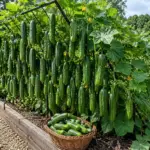
Four or five healthy plants can produce an amazing amount of food.
Especially if you grow them vertically.
I like using cucumbers for fresh eating during summer and pickling the extras.
If you’re growing cucumbers mainly for pickles, choose varieties suited to pickling and plan your planting around the amount of pickles your family actually eats.
There’s no prize for producing 50 jars if you only eat five.
Leafy Greens Don’t Need to Be Planted All at Once
This is one area where I changed my approach completely.
I used to plant a giant row of lettuce.
Then everything was ready at once.
We ate salads for what felt like six straight weeks.
Then the lettuce bolted.
Now I use succession planting.
I’ll plant a small amount.
Then another batch a couple weeks later.
Then another.
This works well for lettuce, radishes, some greens, and other quick crops.
It gives you food over a longer period instead of one giant harvest followed by nothing.
That’s much better for a backyard homestead.
Don’t Forget Food Preservation
Here’s the part I think gets missed when people talk about growing a year’s worth of food.
Growing the food is only half the job.
You need somewhere to put it.
If you grow 100 pounds of tomatoes and don’t preserve them, you’re going to have a very interesting week.
I use different methods depending on the crop.
Canning: tomatoes, salsa, pickles, sauces
Freezing: vegetables, berries, some prepared foods
Drying: herbs, some vegetables, fruit
Fermenting: cabbage, cucumbers, other suitable vegetables
Cool storage: potatoes, onions, garlic, winter squash
Preservation turns a summer harvest into food you can actually use throughout the year.
How Much Should You Plant for a Family of Four?
This is where I’d slow down before giving you a giant number.
If you’re feeding four people, take your one-person starting list and adjust based on your actual consumption.
But don’t blindly multiply every crop.
For example, you might want:
- More potatoes
- More tomatoes for sauce
- More onions
- More carrots
- More garlic
- More beans
- More cucumbers if you pickle
- Fewer crops nobody eats
And if you’re trying to become more self-sufficient, add storage crops before adding 20 different specialty vegetables.
A garden with 10 crops your family eats is usually more useful than a garden with 40 crops that look pretty on Instagram.
What About Chickens and Other Homestead Food?
If you’ve got chickens, don’t forget them when planning your garden.
Some garden leftovers can become useful chicken treats, depending on what you’re growing and what’s safe for poultry.
I also like growing herbs and plants that can support the whole homestead system.
This is where permaculture thinking helps me.
Instead of looking at each plant separately, I ask:
Can this crop feed us?
Can the scraps go into compost?
Can the compost improve next year’s soil?
Can the harvest be preserved?
Can anything useful go to the chickens?
That’s a much better system than thinking only about today’s dinner.
My Biggest Garden Planning Mistakes
I’ve made plenty.
I Planted Based on What Looked Good
Big mistake.
A beautiful seed catalog can make you want to grow everything.
Don’t.
Plant what you eat.
I Ignored Storage Space
Growing food is great.
Having nowhere to store it is not.
Before planting a huge crop, decide where the harvest will go.
I Didn’t Stagger Plantings
Now I succession-plant many quick crops.
It keeps the harvest manageable.
I Grew Too Many Different Vegetables
I wanted variety.
What I actually got was 15 tiny harvests of things we didn’t eat much.
Now I focus more.
I Didn’t Keep Good Records
This one cost me several years.
A notebook would have saved me a lot of guessing.
Write down what worked.
Write down what failed.
Next year’s garden will thank you.
How I Would Start a One-Year Food Garden Today
If I were starting from scratch with a modest backyard, I’d keep it simple.
I’d choose around 10–12 important crops.
Probably tomatoes, potatoes, onions, garlic, carrots, cucumbers, beans, peppers, greens, cabbage, and a few herbs.
Then I’d divide the garden into three jobs.
Fresh eating: things we eat during the growing season.
Storage: potatoes, onions, garlic, carrots, winter crops.
Preserving: tomatoes, cucumbers, peppers, beans, cabbage.
That makes the garden much easier to manage.
And I wouldn’t try to produce every calorie we eat.
That’s a huge project.
I’d work toward increasing our food independence year after year.
FAQ: Growing a Year’s Worth of Food
How many plants do I need to grow enough food for one person?
There’s no universal number. A practical starting point might be 8–12 tomato plants, 50 or so onions, 30–50 carrots, several cucumber plants, and a meaningful potato patch, then adjust based on what you actually eat and preserve.
Can a small backyard produce a year’s worth of food?
It can produce a surprisingly large amount, especially if you use vertical gardening, succession planting, raised beds, containers, and intensive growing methods. But a truly complete year’s food supply requires much more space and planning than simply growing vegetables.
Should I grow enough vegetables for the entire year?
I’d start with the crops you eat most and preserve well. Don’t try to grow everything at once. Build the garden slowly and increase the crops that consistently disappear from your pantry.
Final Thoughts: Plan the Pantry, Not Just the Garden
After more than 10 years of backyard gardening and homesteading, I don’t look at a garden the same way I used to.
I don’t ask, “How many plants can I squeeze in here?”
I ask, “How much food can I actually use?”
That’s a much better question.
If you’re trying to figure out how much to plant for a year’s worth of food, start by looking at what your family already eats. Check your grocery receipts. Count how many jars you use. Think about what you can preserve and store.
Then plant a little more than you think you’ll need and keep notes.
You will mess something up.
I guarantee it.
Maybe you’ll grow too many cucumbers like I did. Maybe the rabbits will eat your lettuce. Maybe your tomato plants will get some horrible disease you’ve never seen before.
That’s gardening.
You learn, adjust, and plant again.
And after a few seasons, you’ll have something much more useful than a perfect garden plan.
You’ll have your garden plan.