How Long Vegetables Take to Grow . One of the first things I learned when I started gardening was that vegetables do not care about my schedule.
I’d plant lettuce and check it every morning like I was waiting for a package. “Come on, buddy, grow already.”
Then I’d plant radishes and suddenly they were ready before I had even figured out where I put the seed packet.
That’s when I started paying more attention to how long vegetables take to grow. Knowing roughly when a crop will be ready makes a huge difference, especially if you’re trying to grow enough food for your family, save money, or keep a steady supply coming from a small backyard garden.
The funny thing is, the number on the seed packet is only a starting point. Weather, soil, sunlight, variety, watering, and whether you start from seed or transplant can all change the harvest date.
So let me show you how I look at vegetable growing times after years of making plenty of mistakes.
How Long Do Vegetables Actually Take to Grow?
If you want the quick answer, some vegetables are ready in a few weeks while others need several months.
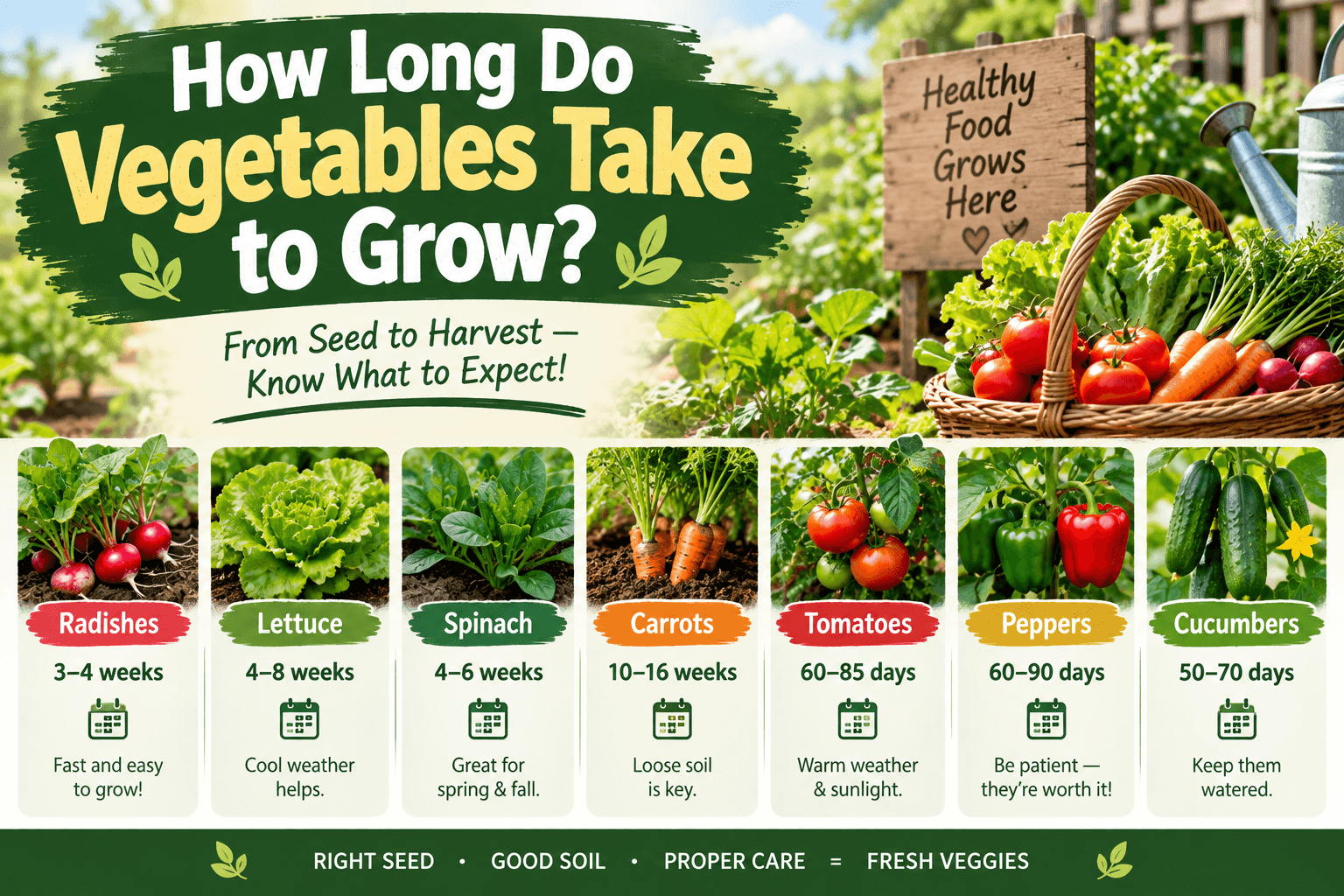
Here’s a rough idea of what I normally expect in a backyard garden:
| Vegetable | Approx. Time to Harvest |
|---|---|
| Radishes | 20–30 days |
| Baby lettuce | 25–40 days |
| Green onions | 50–60 days |
| Spinach | 30–50 days |
| Bush beans | 50–65 days |
| Peas | 55–70 days |
| Beets | 50–70 days |
| Carrots | 60–80 days |
| Cucumbers | 50–70 days |
| Zucchini | 45–60 days |
| Broccoli | 60–100 days |
| Cabbage | 60–100 days |
| Summer squash | 45–60 days |
| Turnips | 30–60 days |
| Kale | 50–70 days |
| Tomatoes | 60–100+ days |
| Peppers | 60–100+ days |
| Sweet corn | 60–100 days |
| Potatoes | 70–120 days |
| Winter squash | 80–120+ days |
These are general ranges, not promises.
Your particular variety could be faster or slower.
And that’s important when you’re planning a food garden.
Fast-Growing Vegetables I Plant When I’m Impatient
Sometimes I want food from the garden quickly.
That’s when I reach for radishes, lettuce, spinach, turnips, and green onions.
Radishes
Radishes are probably one of the easiest vegetables for impatient gardeners.
Some varieties can be ready in around three to four weeks.
I like planting a small row every couple weeks instead of planting the entire packet at once.
I made that mistake once.
I planted what felt like a million radish seeds.
A few weeks later I had enough radishes to feed the whole neighborhood.
Nobody wanted any more.
Now I succession plant them.
Small amount.
Wait a little.
Plant again.
Much better.
Lettuce
Leaf lettuce can also give you an early harvest.
You don’t always have to wait for a full head.
I often pick the outside leaves while the plant is still growing.
That’s one of my favorite tricks for keeping fresh greens coming without harvesting everything at once.
For an urban garden, lettuce is especially handy because it doesn’t require a huge amount of space.
Medium-Speed Vegetables Are the Workhorses
This is where most of my backyard garden lives.
Beans, cucumbers, beets, carrots, peas, zucchini, and kale generally take longer than radishes but don’t require an entire season like some large crops.
Bush Beans
Beans are one of my favorites because once they start producing, they can really produce.
Depending on the variety and conditions, you might start harvesting around 50 to 65 days from planting.
But don’t wait too long.
Young beans are usually more tender.
I check my bean plants every couple days once they get going.
Miss a few days and suddenly you’ve got bean pods that look like little baseball bats.
I exaggerate.
But not by much.
Cucumbers Can Surprise You
Cucumbers can grow incredibly fast once the weather gets warm.
Some varieties may produce their first harvest around 50 to 70 days from seed, sometimes sooner under good conditions.
The mistake I used to make was planting too many at once.
One cucumber plant can give you a surprising amount of food.
Now I grow them vertically whenever I can.
A simple trellis saves space, keeps fruit off the ground, and makes harvesting easier.
That’s especially useful in a small backyard or urban garden.
Zucchini: The Vegetable That Won’t Stop
If you’ve grown zucchini, you know exactly what I’m talking about.
You plant one.
Then another.
Then suddenly you’re leaving zucchini on your neighbor’s porch because you can’t eat it fast enough.
Zucchini can begin producing in roughly 45 to 60 days depending on the variety and growing conditions.
Harvest young fruits regularly.
The plants usually keep producing as long as conditions remain good.
And if you have chickens, don’t worry too much about having too much.
Those birds will eat just about anything.
Carrots Take Longer Than You Think
Carrots aren’t difficult, but they’re not exactly instant food.
Many varieties take around 60 to 80 days, sometimes longer.
And here’s the thing nobody told me when I started:
You can’t really judge a carrot by looking at the leaves.
The carrot is hiding underground.
I like pulling one test carrot when I think they’re close.
If it’s the size I want, I harvest more.
If it’s still tiny, I give them more time.
That’s much better than pulling the whole row too early.
Tomatoes Need Patience
Tomatoes can take anywhere from roughly two months to more than three months to produce ripe fruit, depending heavily on the variety and whether you’re starting from seed or a transplant.
Starting with a nursery transplant can save a lot of time.
That’s why I don’t feel guilty buying a few tomato plants.
Sure, starting from seed is cheaper.
But sometimes I want tomatoes now, not four months from now.
Cherry tomatoes can also be a great choice because some varieties mature relatively quickly and keep producing over a long period.
Peppers Are Slow But Worth It
Peppers can be a little frustrating.
You plant them.
You wait.
You wait some more.
Then you wonder if they’re actually growing.
Some pepper varieties need a long warm season, particularly if you’re growing them from seed.
This is one vegetable where starting healthy transplants can really help.
They also like warmth, so planting them too early can slow them down badly.
I’ve made that mistake.
I put peppers outside because the calendar told me it was time.
The weather apparently did not read the calendar.
Potatoes Take More Time, But They’re Fun
Potatoes can take roughly 70 to 120 days depending on the type and whether you’re harvesting new potatoes or waiting for mature storage potatoes.
One thing I love about potatoes is that you don’t need a perfect-looking vegetable.
You dig around the plant and discover food underneath.
It’s like gardening and treasure hunting mixed together.
For a small garden, you can also grow potatoes in containers or grow bags.
Just make sure they have adequate drainage and enough room for the tubers.
Why Your Vegetables Might Take Longer Than the Seed Packet Says
This is important.
If your seed packet says 60 days and you’re at day 65 with no harvest, don’t panic.
Those numbers are generally estimates under suitable conditions.
Your garden isn’t a laboratory.
Maybe spring was cold.
Maybe you had several cloudy weeks.
Maybe the soil dried out.
Maybe pests chewed on the seedlings.
Maybe you planted a different variety.
Or maybe you just planted the seeds a little deeper than you should have.
Yep, I’ve done that too.
Temperature Makes a Huge Difference
Vegetables have different temperature preferences.
Cool-season crops like peas, spinach, lettuce, and some brassicas can struggle when temperatures get very hot.
Warm-season crops like tomatoes, cucumbers, peppers, squash, and beans generally prefer warmer conditions.
If you plant a warm-season crop too early, it may just sit there looking miserable.
That’s why I pay more attention to the actual weather than the calendar.
Sunlight Can Change Everything
One of the biggest differences between my best garden years and my disappointing ones has been sunlight.
Most fruiting vegetables need plenty of direct sunlight to grow and produce well.
That includes:
- Tomatoes
- Peppers
- Cucumbers
- Squash
- Melons
- Corn
- Beans
Leafy crops like lettuce and spinach are generally more tolerant of some shade.
So if you’ve got an urban backyard with limited sunlight, don’t give up.
Use the sunny spots for tomatoes and peppers.
Use the slightly shadier areas for greens.
That little bit of planning can make a big difference.
Watering Is About Consistency
You don’t have to drown your vegetables.
Actually, please don’t.
I used to think more water meant faster growth.
It doesn’t work that way.
Plants need enough moisture to grow, but constantly waterlogged soil can cause root problems. On the other hand, repeated drought stress can slow growth and hurt yields.
I check the soil regularly, especially with containers.
And I put mulch around many of my garden plants.
Mulch helps the soil hold moisture and can reduce how often I need to water during hot weather.
What I Do When I Want a Continuous Harvest
Here’s probably my favorite trick for getting more food from the same garden space.
I don’t plant everything on the same day.
I stagger it.
For example, instead of planting all my lettuce on April 1, I might plant a small batch, then another batch a couple weeks later.
You can do the same thing with:
- Radishes
- Lettuce
- Beans
- Carrots
- Beets
- Peas
- Some herbs
This is called succession planting, and it’s one of those simple techniques that makes a small garden feel much bigger.
Instead of getting 20 heads of lettuce all at once, you get smaller harvests over a longer period.
That’s much more useful in my kitchen.
Don’t Forget the Difference Between Seed and Transplant
This trips up a lot of beginners.
If a tomato seed packet says 75 days, that doesn’t necessarily mean you’ll be eating tomatoes 75 days after you buy the packet.
The clock on many seed packets starts from sowing.
A transplant that’s already several weeks old is obviously much further along.
That’s why I use both.
I’ll start some vegetables from seed to save money, while buying a few transplants for crops that take longer.
It gives me a nice balance.
My Simple Vegetable Harvest Plan
When I’m planning the garden, I divide vegetables into three groups.
Fast:
Radishes, baby greens, lettuce, turnips.
Medium:
Beans, cucumbers, beets, carrots, zucchini, peas.
Slow:
Tomatoes, peppers, potatoes, winter squash, some cabbage and broccoli varieties.
Then I make sure I have something from each group.
That way, I’m not standing in the garden for six weeks waiting for something to happen.
The fast crops keep things interesting.
The medium crops keep food coming.
The slow crops are the ones I’m patiently waiting for while drinking coffee and complaining about the weather.
Frequently Asked Questions
What vegetable grows the fastest?
Radishes are among the fastest common garden vegetables, with some varieties ready in around three to four weeks. Baby lettuce and some salad greens can also provide an early harvest.
What vegetables take the longest to grow?
Long-season tomatoes, peppers, winter squash, some pumpkins, and certain storage crops can take several months. Variety selection makes a big difference.
How can I make vegetables grow faster?
Start with varieties suited to your climate, give plants appropriate sunlight, maintain consistent soil moisture, use healthy soil, control weeds and pests, and plant at the right time. Starting certain crops from transplants can also shorten the wait for harvest.
My Best Advice After Years of Growing Vegetables
Don’t get obsessed with the exact number of days.
Seriously.
How long vegetables take to grow is useful information, but your garden isn’t going to follow a stopwatch.
Use those days as a guide.
Watch the plant.
Learn what a mature cucumber looks like. Learn how big your favorite radish variety gets. Learn when beans become too large. Learn how tomato color changes as it ripens.
After a few seasons, you’ll start knowing when something is ready without constantly checking the seed packet.
And that’s when gardening gets really fun.
You stop treating the garden like a science project and start paying attention to what’s actually happening out there.
If you’re planning a backyard or urban garden this year, mix fast-growing vegetables with medium and long-season crops. Plant a little, harvest a little, and keep something growing whenever you can.
That’s how I approach how long vegetables take to grow these days: don’t wait for one giant harvest. Build a garden that keeps giving you little wins all season.
And if you end up with too many zucchini, well… you know where my house is.
Got a vegetable that’s taking forever to grow? Leave a comment and tell me what you’re growing. Sometimes we can figure out what’s slowing it down.