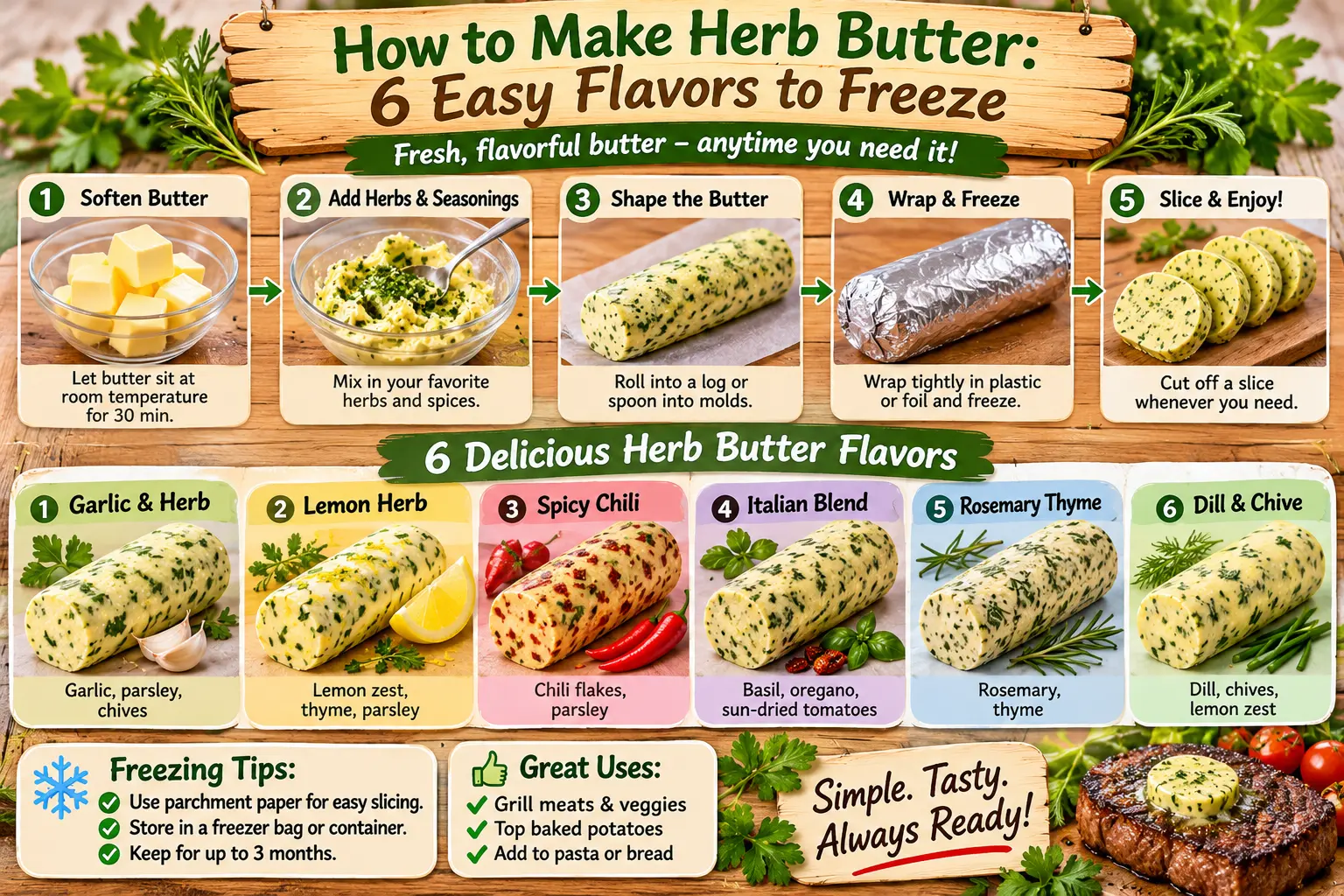
When parsley, basil, rosemary, dill, or chives start producing faster than you can use them, herb butter is one of the easiest ways to turn that fresh harvest into something useful.
Also called compound butter, it is simply softened butter mixed with herbs and other seasonings, then chilled or frozen until you need it.
A few slices can finish roasted vegetables, fish, potatoes, pasta, bread, steak, chicken, rice, or grilled corn without opening six spice jars every time you cook.
Quick answer
Start with softened butter, mix in finely chopped clean herbs and seasonings, shape the mixture into a log or small portions, then refrigerate or freeze. Herb butter containing fresh herbs or garlic should not be treated as a shelf-stable pantry product.
Why Herb Butter Works Well for a Garden Harvest
Fresh herbs often arrive all at once.
You may need only two basil leaves for dinner while the plant outside is producing dozens. The same thing happens with parsley, chives, dill, thyme, and rosemary.
Freezing is a legitimate way to preserve many culinary herbs. Penn State specifically lists parsley, dill, basil, chives, mint, tarragon, rosemary, and thyme among herbs that can be frozen for later cooking.
Frozen herbs lose their crisp texture, but that does not matter much when they are already mixed into butter for cooked dishes.
The Basic Herb Butter Formula
For a small batch, start with:
- 1 stick (1/2 cup) unsalted or salted butter, softened
- 1 to 2 tablespoons finely chopped fresh herbs
- Salt, pepper, citrus zest, spices, honey, miso, or other flavorings as needed
Treat that as a starting point rather than a strict formula. Rosemary is much stronger than parsley, fresh garlic is stronger than chives, and miso already adds plenty of salt.
Prepare Fresh Herbs First
Use healthy leaves without mold, decay, or heavy insect damage.
Penn State recommends rinsing fresh herbs under cool running water without soap or detergent, then removing excess moisture before use.
- Harvest or select fresh herbs.
- Remove damaged leaves and tough stems.
- Rinse gently under cool water.
- Shake off the water.
- Pat thoroughly dry.
- Chop only when you are ready to mix.
Do not mix dripping-wet herbs into the butter. Drying the surface first gives you a better texture and reduces unwanted water in the finished mixture.
1. Lemon-Dill Butter
This is one of the freshest combinations and works especially well with fish, corn, potatoes, peas, and roasted vegetables.
For 1 stick of butter
- 1/2 cup softened butter
- 1 tablespoon finely chopped fresh dill
- 1 teaspoon finely grated lemon zest
- Small pinch of salt if using unsalted butter
- Black pepper to taste
Use zest rather than a large amount of lemon juice if you want the butter to stay firm and easy to slice.
2. Garlic-Parsley Butter
Classic garlic-parsley butter works with bread, mushrooms, steak, chicken, potatoes, pasta, and grilled vegetables.
For 1 stick of butter
- 1/2 cup softened butter
- 1 tablespoon finely chopped parsley
- 1 small garlic clove, finely minced or grated
- Black pepper to taste
- Pinch of salt if needed
Fresh garlic changes the storage advice. Keep garlic herb butter refrigerated and freeze portions you will not use promptly. Do not treat fresh-garlic compound butter as a shelf-stable product.
3. Chili-Honey Butter
This sweet-spicy butter works especially well with sweet potatoes, cornbread, toast, roasted carrots, squash, and grilled corn.
For 1 stick of butter
- 1/2 cup softened butter
- 1 to 2 teaspoons honey
- 1/4 teaspoon crushed red pepper or chili flakes
- Small pinch of salt
Start with less chili than you think you need. You can always add more after tasting.
4. Basil-Citrus Butter
Basil butter is especially useful when summer plants start producing faster than you can harvest them.
For 1 stick of butter
- 1/2 cup softened butter
- 1 tablespoon finely chopped basil
- 1 teaspoon lemon or orange zest
- Small pinch of salt
Try it on rice, zucchini, green beans, pasta, corn, chicken, or warm bread.
5. Chive-Miso Butter
Miso adds savory depth, while fresh chives add a mild onion flavor.
For 1 stick of butter
- 1/2 cup softened unsalted butter
- 1 tablespoon chopped fresh chives
- 1 to 2 teaspoons miso
- Black pepper if desired
Taste before adding salt because miso is already salty.
This version is good with noodles, asparagus, mushrooms, rice, roasted cabbage, and green beans.
6. Rosemary-Smoked Salt Butter
Rosemary has a much stronger flavor than tender herbs, so you need less.
For 1 stick of butter
- 1/2 cup softened unsalted butter
- 1 to 2 teaspoons very finely chopped rosemary
- Small pinch smoked salt
- Fresh black pepper
Use it on potatoes, chicken, roasted squash, carrots, mushrooms, or warm bread.
How to Mix Herb Butter
- Allow the butter to soften enough to stir easily.
- Add the prepared herbs and seasonings.
- Mash or stir until evenly distributed.
- Taste a small amount.
- Adjust salt, herbs, citrus, or spices.
You do not need a food processor for a small batch. A fork, spoon, or small spatula works well.
How to Shape Compound Butter Into a Log
A log makes it easy to cut off one or two slices whenever you cook.
- Spoon the butter onto parchment or suitable freezer wrap.
- Form it roughly into a line.
- Roll the paper around the butter.
- Gently tighten it into an even cylinder.
- Twist or fold the ends.
- Chill until firm.
You can also freeze small portions in a suitable freezer container if you prefer not to make a log.
Can You Freeze Herb Butter?
Yes. Freezing is the part of this Pinterest idea that makes it especially useful for a homestead kitchen.
Penn State recommends freezing as a practical way to preserve both butter and many fresh herbs. Plain frozen butter maintains its best flavor for about four months, while frozen herbs are generally best used within several months.
For good quality, I would label homemade herb butter and aim to use it within roughly 3 to 4 months.
For freezing
- Wrap the log tightly.
- Add an outer freezer-safe bag or container.
- Remove excess air.
- Label the flavor.
- Add the freezing date.
USDA recommends airtight, freezer-safe packaging to reduce freezer burn and protect food quality.
Do You Need to Thaw It First?
Not always.
A small frozen slice can go directly onto:
- Hot vegetables
- Freshly cooked potatoes
- Warm rice
- Grilled meat
- Fish
- Pasta
The heat from the food will melt the butter quickly.
Herb Butter Is Not a Canning Recipe
This is important if you found the idea through a preservation board.
Butter is a dairy product, and homemade herb butter containing fresh plant ingredients is not something you should put into jars and process for pantry storage.
Penn State specifically recommends freezing butter rather than attempting to home-can it.
Safe storage rule: Chill herb butter for short-term use or freeze it for longer storage. Do not store homemade fresh-herb butter in the pantry.
Fresh Herbs vs. Dried Herbs in Butter
| Type | Flavor | Amount |
|---|---|---|
| Fresh herbs | Bright, fresh flavor | Use the full recipe amount |
| Dried herbs | More concentrated | Use roughly one-third as much as fresh |
Penn State and Oregon State both use a useful kitchen conversion of approximately 1 tablespoon fresh herb = 1 teaspoon dried herb.
Which Herbs Freeze Well?
Penn State lists several herbs that retain useful flavor after freezing, including:
- Basil
- Chives
- Dill
- Parsley
- Rosemary
- Thyme
- Mint
- Tarragon
Most become limp after thawing, which makes compound butter an ideal use because appearance matters much less than flavor.
Herb Butter Flavor Pairing Cheat Sheet
| Butter | Try It With |
|---|---|
| Lemon + Dill | Fish, corn, peas, potatoes |
| Garlic + Parsley | Bread, mushrooms, steak, chicken |
| Chili + Honey | Sweet potatoes, corn, toast, carrots |
| Basil + Citrus | Rice, zucchini, pasta, green beans |
| Chive + Miso | Noodles, mushrooms, asparagus, cabbage |
| Rosemary + Smoked Salt | Potatoes, chicken, squash, carrots |
5 Common Herb Butter Mistakes
1. Using wet herbs
Wash fresh herbs when needed, but remove surface moisture before chopping.
2. Using too much rosemary
Strong woody herbs can overpower an entire batch. Start small.
3. Adding salt before tasting miso
Miso and smoked salt can quickly make compound butter too salty.
4. Leaving fresh garlic butter on the counter
Keep fresh-garlic compound butter refrigerated and freeze extra portions.
5. Freezing without labels
After a few weeks, basil-citrus and parsley-garlic logs can look surprisingly similar. Add the flavor and date before freezing.
Herb Butter FAQ
Can homemade herb butter be frozen?
Yes. Freezing is an excellent option for longer storage. Wrap it well or place it in an airtight freezer-safe container to reduce freezer burn and odor transfer.
How long does herb butter keep in the freezer?
For best flavor, aim to use homemade compound butter within about three to four months. Penn State lists about four months as a good quality window for frozen butter.
Can I use dried herbs instead?
Yes. Because dried herbs are more concentrated, start with about one-third of the amount you would use fresh.
Can I can herb butter for shelf storage?
No home-canning method is recommended here. Refrigerate or freeze homemade herb butter instead.
What is the difference between herb butter and compound butter?
Herb butter is a type of compound butter. “Compound butter” simply means butter mixed with herbs, spices, aromatics, sweeteners, or other flavorings.
Can I make herb butter with salted butter?
Yes. Just reduce or omit additional salt, especially in miso or smoked-salt combinations.
The Bottom Line
Homemade herb butter is one of the easiest ways to make a small garden harvest useful later.
Parsley, dill, basil, chives, rosemary, and other herbs can all become freezer-ready compound butter with only a few minutes of preparation.
Dry the herbs well, balance strong flavors carefully, keep fresh herb butter refrigerated, and freeze whatever you will not use soon.
That turns extra garden herbs into easy portions you can use months after the growing season ends.
Have even more herbs to preserve?
See FarmSolo’s How to Dry Herbs at Home guide for rosemary, thyme, sage, parsley, basil, mint, oregano, and other garden herbs.
Sources
- Penn State Extension — Freezing Herbs
- Penn State Extension — Enhance the Flavor of Food With Herbs
- Penn State Extension — Canning and Freezing Questions and Answers
- Oregon State University Extension — Drying Herbs
- USDA / FoodSafety.gov — Freezer Packaging and Cold Food Storage Guidance