An underground greenhouse can use surrounding soil, solar gain, insulation, and thermal mass to create a more stable growing space than an exposed greenhouse. But burying part of a greenhouse does not automatically make it warm enough for tomatoes in January. Good drainage, winter sunlight, strong retaining walls, ventilation, glazing, and realistic crop choices matter just as much as the soil around it.
Plan these before digging
- Watch the winter sun path before choosing the location.
- Avoid low areas with a high water table or standing water.
- Design retaining walls and the roof for local soil, wind, and snow loads.
- Plan drainage outside and below the structure before building beds.
- Use greenhouse glazing designed for outdoor exposure.
- Add enough ventilation to control overheating and humidity.
- Grow crops suited to the light and temperatures you can realistically maintain.

What Is an Underground Greenhouse?
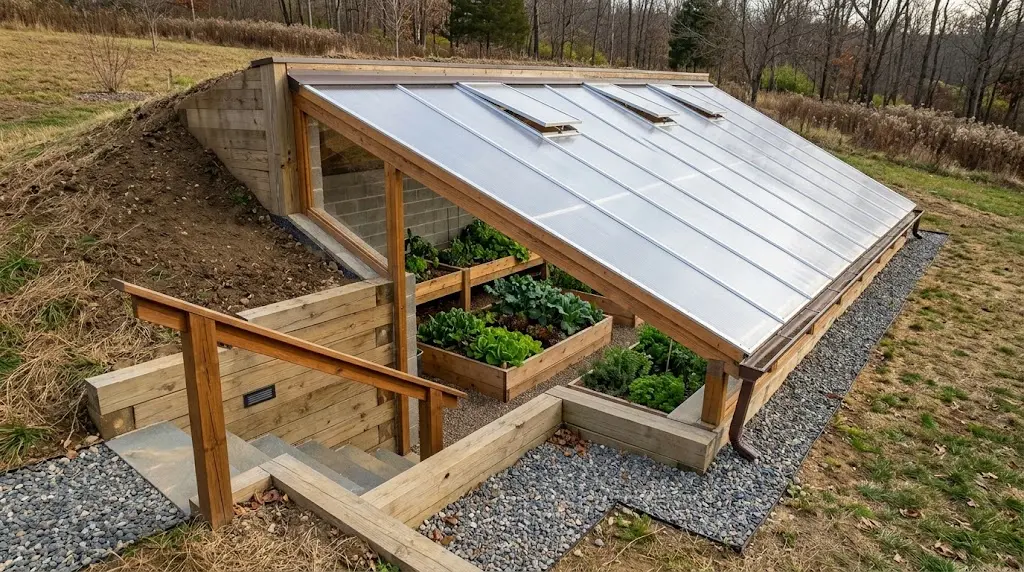
An underground greenhouse is a growing structure built partly below the surrounding ground level.
The surrounding soil helps shield part of the greenhouse from wind and rapid outdoor temperature changes, while a transparent roof or upper wall brings sunlight into the growing space.
You may also see the word walipini used online for this type of greenhouse.
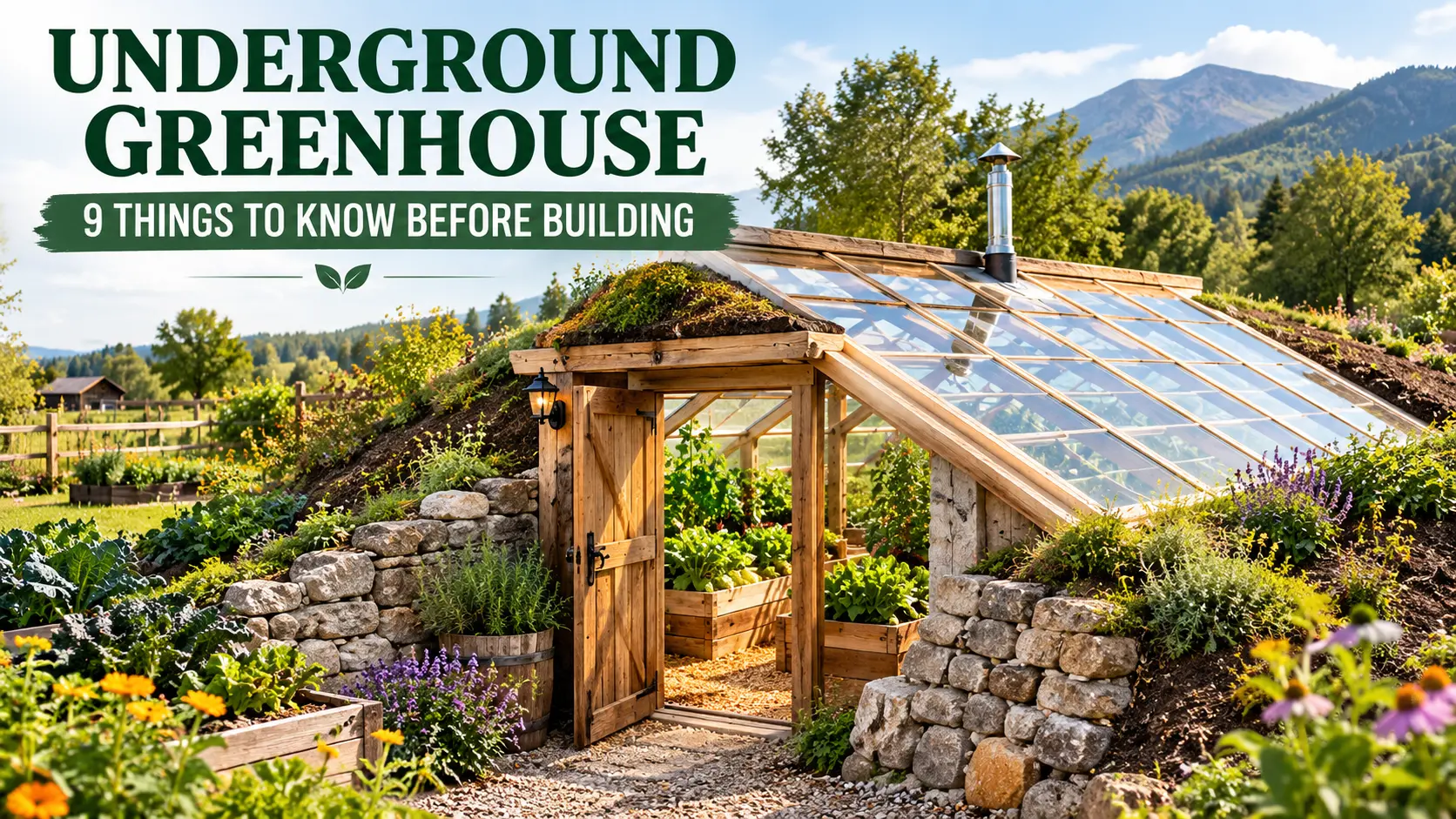
In practice, many projects called walipinis are really different forms of pit greenhouse or earth-sheltered greenhouse. Some are almost completely below grade. Others, like the Pinterest inspiration, combine earth berms, masonry or timber walls, and a glazed roof above the growing area.
The exact label matters less than whether the design works with your climate, soil, sun, and water conditions.
Do not copy the Pinterest photo as a construction plan. The image does not show the retaining-wall design, foundation, waterproofing, drainage system, glazing specifications, snow-load calculations, ventilation sizing, or structural connections hidden below the finished surfaces.
9 Things to Know Before Building an Underground Greenhouse
1. Winter Sun Matters More Than Summer Sun
The greenhouse needs sunlight when the sun is lowest in the sky, not just when the garden looks bright in June.
Before excavating, watch how nearby houses, fences, hills, and evergreen trees shade the site during late fall and winter.
In much of the Northern Hemisphere, a passive solar greenhouse is commonly designed so its main glazing receives strong southern winter exposure. The ideal angle and exact orientation still depend on latitude, slope, local climate, and surrounding shade.
Colorado State University Extension notes that greenhouse orientation has a major effect on winter solar gain. In its northern Colorado example, an east-west passive solar greenhouse receives substantially more winter solar energy than a north-south orientation.
That is why the first tool for this project should be a sun study, not an excavator.
2. Drainage Can Make or Break the Entire Project
This is the biggest practical risk in many underground-greenhouse ideas.
When you dig a pit, you create a place where water may want to collect.
Rain running downhill, roof runoff, saturated soil, groundwater, or an impermeable soil layer can turn the greenhouse into a wet basement instead of a productive garden.
USDA NRCS recommends avoiding greenhouse and high-tunnel sites where the water table is close to the surface or where soil conditions cause water to puddle.
For an underground greenhouse, that concern is even more important because the floor is lower than the surrounding landscape.
Plan surface grading, roof drainage, perimeter drains where appropriate, waterproofing, and a safe outlet for water before building the growing beds.
If your property already has standing-water problems, review FarmSolo’s backyard drainage system guide before considering a below-grade structure.
3. The Earth Helps Buffer Temperature, but It Is Not a Free Heater
Earth sheltering can reduce exposure to wind and rapid air-temperature swings.
That is useful, especially compared with a thin greenhouse standing completely above ground.
But the soil around the greenhouse does not magically stay at vegetable-growing temperatures all winter.
The indoor temperature still depends on solar energy entering through the glazing, heat stored during the day, insulation, nighttime losses, outdoor weather, and the amount of ventilation.
A poorly insulated greenhouse with large areas of glazing can lose heat surprisingly quickly after sunset.
Think of the earth as one part of the energy strategy rather than a replacement for good greenhouse design.
4. Insulate the Parts That Do Not Need to Collect Sunlight
In a passive solar greenhouse, every transparent surface creates both an opportunity and a problem.
Glazing lets solar energy enter during the day, but it also loses more heat than a well-insulated opaque wall.
Colorado State University Extension recommends substantial insulation on the non-solar walls of passive greenhouse designs and notes that double glazing can significantly reduce heat loss compared with a single layer.
That principle fits an underground greenhouse well.
Use transparent material where sunlight is genuinely useful. Insulate other areas according to the design and climate instead of making every wall transparent just because it looks like a greenhouse.
5. Design the Glazed Roof for Weather, Not Just Sunlight
The roof in the inspiration image is the most exposed part of the greenhouse.
It may have to handle wind, rain, hail, and snow while remaining watertight and allowing useful sunlight through.
Use glazing intended for greenhouse or exterior structural applications rather than random salvaged plastic sheets.
Snow deserves special attention in cold climates.
USDA NRCS warns that greenhouse-like structures can be damaged or collapse when they are not designed for expected snow and wind loads.
The roof slope, framing size, glazing system, fasteners, and local design loads should come from a suitable structural plan.
6. Retaining Walls Are Structural, Not Decorative
The soil around an underground greenhouse pushes sideways on the walls.
Wet soil can add even more pressure.
That means the below-grade walls are doing more than holding up shelving or raised beds. They may be acting as retaining walls.
The correct wall, footing, reinforcement, drainage layer, and waterproofing depend on excavation depth, soil type, groundwater, frost conditions, and local construction requirements.
For a deep excavation or substantial retaining wall, use a design appropriate to the site rather than copying timber, block, or stone dimensions from an online photograph.
7. Ventilation Is Still Essential in Winter
An insulated greenhouse can become surprisingly hot on a sunny winter day.
USDA guidance for protected growing structures emphasizes managing temperature and humidity because excessive heat stresses crops while very high humidity can increase disease problems.
An underground greenhouse therefore needs controllable vents, doors, fans, or another ventilation strategy appropriate to its size and climate.
Do not make the structure airtight simply because the goal is to save heat.
The best winter greenhouse holds useful heat when needed and releases excess heat and moisture when conditions become too warm or humid.
8. Thermal Mass Can Help Smooth Temperature Swings
Thermal mass stores some daytime heat and releases it later as temperatures fall.
Soil, masonry, stone, and water can all contribute thermal mass depending on the design.
But thermal mass does not create energy.
If the greenhouse receives too little winter sunlight for several cloudy days, a barrel of water cannot keep adding heat forever.
Use thermal mass to reduce temperature swings, not as a promise that the greenhouse will never freeze.
9. Grow the Crops That Match the Greenhouse You Actually Built
Winter sunlight is weaker and the days are shorter, even when the greenhouse stays above freezing.
University of Minnesota’s deep winter greenhouse program focuses on cold-hardy crops such as lettuce, herbs, brassicas, Asian greens, and sprouts.
That is a more realistic starting point than expecting a passive underground greenhouse to produce summer tomatoes, peppers, cucumbers, and melons through every cold winter.
Colorado State Extension similarly notes that winter vegetable production is heavily limited by low light and that cool-season crops are better suited to passive winter greenhouse conditions.
If you are still deciding what to grow, FarmSolo’s vegetable garden guide can help you build the crop list around food you will actually use.
Can an Underground Greenhouse Grow Vegetables All Winter?
It can extend the growing season significantly, and a well-designed system in the right climate may support winter production.
But “all winter” means different things in different places.
A sunny site with moderate winter temperatures may need relatively little supplemental heat.
A northern site with long periods of cloud, very short days, and severe subzero weather has a much harder energy problem.
University of Minnesota has demonstrated deep winter greenhouse production in a very cold climate, but the structures are specifically designed for energy efficiency and winter solar collection, and the crop list focuses on plants suited to those conditions.
So the useful claim is not “grow anything regardless of weather.”
A better claim is: a well-designed earth-sheltered greenhouse can create a more protected environment and extend the season for suitable crops.
Underground Greenhouse vs. Deep Winter Greenhouse
| Design | Main idea | Main challenge |
|---|---|---|
| Underground greenhouse | Uses below-grade space and earth sheltering to reduce exposure | Drainage, retaining walls, groundwater, and light access |
| Earth-bermed greenhouse | Uses soil around one or more walls while keeping more structure above grade | Waterproofing and balancing insulation with sunlight |
| Deep winter greenhouse | Highly insulated passive-solar design optimized for winter crops | Careful orientation, construction cost, and winter light |
| Conventional greenhouse | Transparent structure above grade with active or passive climate control | Greater exposure to outdoor temperatures and heating costs |
| High tunnel | Simple protected growing structure over natural soil | Less environmental control and vulnerability to severe weather |
Should the Beds Be Raised or In-Ground?
Both can work.
Raised beds can create clearer paths, improve access, and let you build a controlled growing mix where the native subsoil is poor.
But filling deep raised beds also requires more material and can reduce valuable interior height in a low greenhouse.
If the existing soil is suitable and drainage is good, growing directly in the ground can be simpler.
If you want raised beds, FarmSolo’s raised bed garden layout guide can help with width, paths, trellis placement, and access.
What About a Wood Stove or Other Heater?
The Pinterest image appears to show a chimney, but the photograph does not tell us what heating system is being used.
A properly installed heater can provide backup heat, but combustion inside an enclosed greenhouse introduces fire, ventilation, and carbon-monoxide concerns.
Use equipment designed for the location, follow its clearances and venting requirements, and comply with local building and fire rules.
Do not install an improvised stove simply because the greenhouse is mostly surrounded by earth.
Before adding heat, first reduce unnecessary losses through good insulation, glazing, air sealing, and passive solar design.
Does an Underground Greenhouse Need Irrigation?
Yes.
Once a greenhouse roof blocks natural rainfall, the crops depend on the water you provide.
Drip irrigation can be useful because it delivers water to the root zone without raising leaf humidity as much as frequent overhead watering.
Remember that winter plants often use less water than summer crops because growth is slower.
Water according to the crop, soil, temperature, and light rather than following the same irrigation schedule all year.
Common Underground Greenhouse Mistakes
- Digging in the lowest part of the property. Below-grade structures need excellent drainage.
- Choosing the location in summer. Winter shade can be completely different.
- Assuming surrounding soil provides unlimited heat. Earth buffering reduces swings but does not replace solar gain or heating when conditions are severe.
- Using too much glazing. Transparent surfaces collect sunlight but also lose more heat than insulated walls.
- Copying a roof from Pinterest. Snow, wind, and glazing loads need a suitable structural design.
- Treating retaining walls as garden edging. Below-grade soil creates real lateral pressure.
- Making the greenhouse airtight. Heat and humidity still need active management.
- Trying to grow summer crops in weak winter light. Cold-hardy greens are often a better fit.
- Building before checking local rules. Excavation, retaining walls, permanent structures, electrical work, and heaters may require permits or code compliance.
Underground Greenhouse FAQ
What is a walipini greenhouse?
Walipini is a term commonly used for a pit or earth-sheltered greenhouse that places the growing space partly below grade while allowing sunlight to enter through transparent glazing above.
Does an underground greenhouse stay warm in winter?
Earth sheltering can reduce temperature swings and exposure to wind, but indoor temperature still depends on sunlight, insulation, glazing, outdoor conditions, thermal mass, and any supplemental heat.
Can you grow tomatoes all winter in a walipini?
Possibly in a sufficiently warm, bright, and well-controlled greenhouse, but it should not be assumed. Tomatoes need much more heat and light than cold-hardy winter greens, so lettuce, herbs, brassicas, and Asian greens are often more realistic passive-winter crops.
How deep should an underground greenhouse be?
There is no universal depth. Excavation depth affects daylight, drainage, groundwater risk, retaining-wall loads, access, frost conditions, and construction cost. It should be based on the specific site and structural design rather than a standard Pinterest measurement.
Does a walipini need drainage?
Yes. Drainage is one of the most important parts of any below-grade greenhouse. Surface runoff, roof water, groundwater, and saturated soil must be kept from collecting inside or against the walls.
Does an underground greenhouse need ventilation?
Yes. Sunny winter days can overheat an enclosed greenhouse, while high humidity encourages crop and condensation problems. Use controllable ventilation appropriate to the structure and climate.
Is an underground greenhouse cheaper to heat?
Earth sheltering and insulation can reduce heat loss compared with some exposed greenhouse designs, but excavation, retaining walls, waterproofing, drainage, and structural work can increase construction cost. Compare the complete system rather than looking only at heating.
Build Around Winter Sun and Water, Not the Pinterest Photo
The underground greenhouse in the inspiration image is a smart idea because it combines earth sheltering with a large solar roof and protected growing beds.
The mistake would be thinking that digging a greenhouse into the ground automatically creates a year-round growing climate.
Start by watching the winter sun and understanding where water moves across your property.
Then solve drainage, retaining walls, roof loads, insulation, glazing, ventilation, and access.
After the structure works, choose crops that fit the temperatures and winter light you can actually maintain.
If the bigger goal is year-round food production on a more self-sufficient property, FarmSolo’s off-grid home essentials guide can help you place the greenhouse alongside water, energy, food storage, compost, and other homestead systems.
That creates something much more useful than a dramatic hole in the ground: a greenhouse designed around your real climate and garden.