
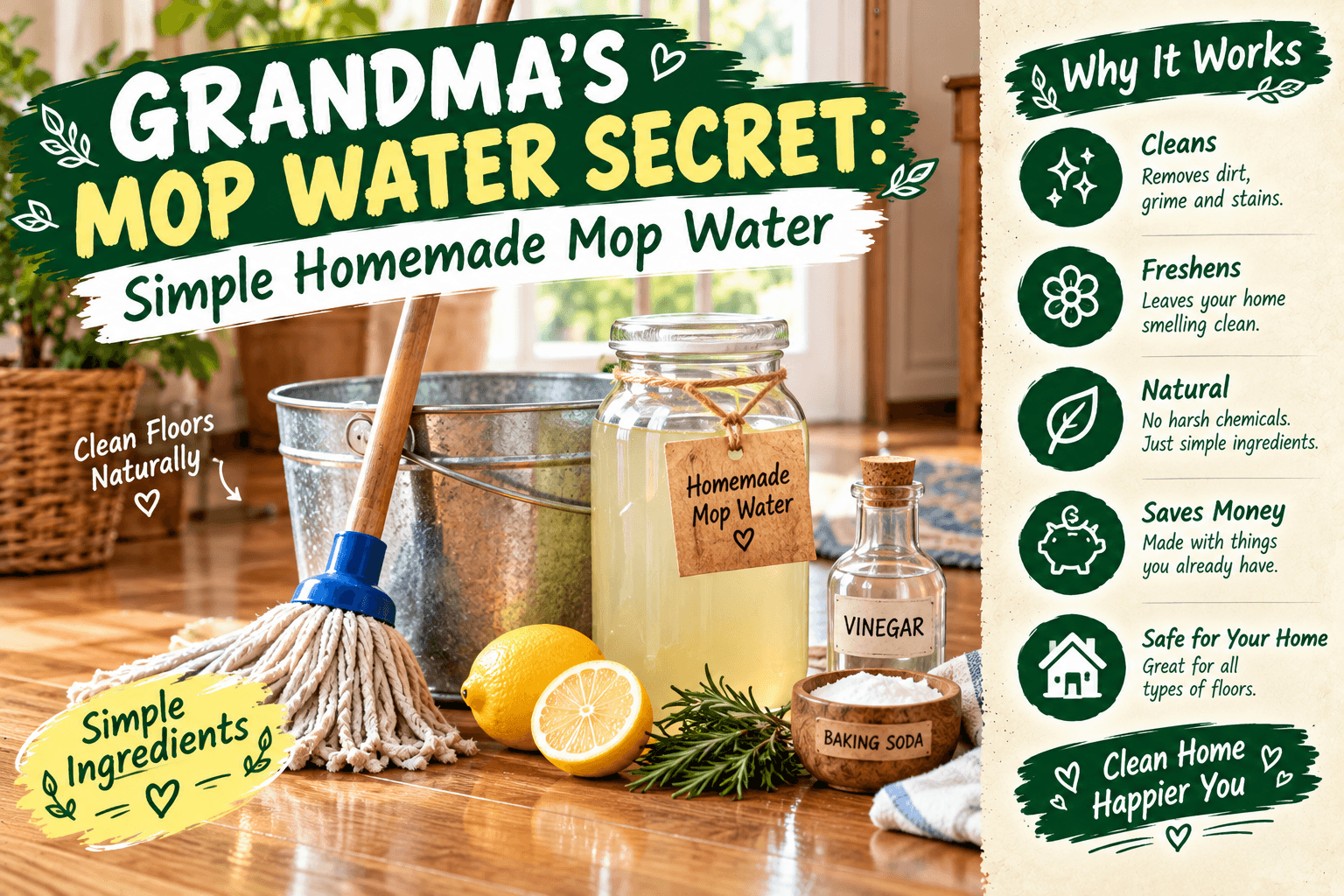
Grandma’s Mop Water Secret: The Simple Homemade Floor Cleaner I Still Use
There’s something about Grandma’s mop water secret that makes me smile. Maybe it’s because my grandmother didn’t have a cabinet full of fancy cleaning products. She had a bucket, a mop, a few simple ingredients, and somehow the whole house smelled clean afterward.
I’ve tried plenty of store-bought floor cleaners over the years. Some worked great. Some smelled so strong that I wanted to open every window in the house.
But when I want a simple floor-cleaning mix, I still think about those old-fashioned methods.
Lemme show you what I use, what I learned from the older generation, and a few things you really should not put in your mop bucket.
What Is Grandma’s Mop Water Secret?
When people talk about Grandma’s Mop Water Secret, they’re usually talking about a simple homemade floor-cleaning mixture instead of a cabinet full of commercial cleaners.
The exact recipe wasn’t the same in every house.
Some people used vinegar and water. Others used a small amount of soap. Some added lemon peels or another simple ingredient for a fresh smell.
The basic idea is pretty simple: don’t use more cleaner than you need.
I learned this the hard way. When I was younger, I thought more soap meant cleaner floors.
So I made a bucket of mop water that looked like somebody had poured a bottle of shampoo into it.
The floor looked shiny for about five minutes.
Then it felt sticky.
My socks actually stuck to the floor a little. You’re gonna laugh at this, but I had to mop the floor again just to remove the cleaner from the first mopping.
That’s when I learned that more isn’t always better.
My Simple Grandma-Style Mop Water
For a basic cleaning mix, I like keeping things simple.
Simple Mop Water Recipe
- About 1 gallon of warm water
- About 1/2 cup of white vinegar, if suitable for your floor
- A very small amount of mild dish soap, if needed for greasy dirt
Mix the water and vinegar in your bucket. If you’re using soap, use only a small amount. You don’t want a bucket full of suds.
That’s it.
No complicated recipe. No ten different ingredients.
And honestly, that’s one thing I like about old-fashioned cleaning methods. They’re usually pretty straightforward.
But Wait — Vinegar Isn’t Right for Every Floor
This part is important.
Don’t assume a vinegar floor cleaner is safe for every surface in your house.
Vinegar is acidic, so I don’t use vinegar-based cleaners on surfaces where the manufacturer says acidic cleaners should be avoided.
Natural stone such as marble, limestone, and some other stone surfaces can be damaged or dulled by acids.
Some wood floors also need special care.
Before using vinegar: Check the flooring manufacturer’s cleaning instructions. If you’re unsure, test your cleaner on a small hidden area first. Never assume a homemade cleaner is safe just because the ingredients are common household products.
For some floors, plain warm water and the correct microfiber mop may be the better choice.
Why Grandma Didn’t Need a Ton of Soap
This is probably the biggest lesson I took from old-fashioned cleaning.
Soap helps remove dirt and grease, but too much soap can leave a film behind.
That film can attract more dirt and make the floor look dull.
That’s especially annoying on floors where you can see every footprint.
So when I add soap to mop water, I go very light.
If the bucket is producing a mountain of bubbles, you’ve probably gone too far.
My rule: The mop water should clean the floor, not look like you’re washing a truck.
Grandma’s Trick Was Often About Hot Water and a Good Mop
Here’s something people forget when talking about homemade cleaners.
The cleaning solution isn’t doing all the work.
A good mop, warm water, and actually picking up the dirt matter a lot.
I’ve had days where I thought my cleaner wasn’t working. Then I changed the mop head and suddenly the floor looked much better.
Sometimes the “secret cleaner” isn’t the secret at all.
It’s using a clean mop.
Don’t Mop With a Dirty Mop Head
This sounds obvious, but I’ve seen it happen.
You start with dirty floors. The mop picks up dirt. Then you keep pushing that same dirty mop around the house.
Now you’re basically giving the floor a wet tour of everything that was already on it.
I like rinsing the mop head often and using a clean one when the old one gets too dirty.
For microfiber mop pads, wash them properly after use and let them dry completely.
My Easy Floor-Cleaning Routine
I don’t make floor cleaning complicated anymore.
Here’s what I usually do:
- Pick up the loose dirt first. Sweep or vacuum the floor.
- Fill the bucket. Use warm water, not boiling water.
- Add the cleaner. Use a small amount of the appropriate cleaner for your floor.
- Start with the cleaner areas. Don’t drag a filthy mop across the whole house.
- Rinse the mop often. Especially if the floor is really dirty.
- Don’t soak the floor. Use enough moisture to clean it, not enough to create puddles.
- Let the floor dry. Good airflow helps.
That’s about as fancy as my floor routine gets.
What About Lemon in Mop Water?
People sometimes add lemon juice or lemon peels to homemade cleaning mixes because they like the fresh smell.
I understand the appeal.
Walking into a clean kitchen with a light lemon smell is much nicer than smelling a chemical perfume for three hours.
But I don’t treat lemon as some magical cleaning ingredient.
If I want a floor cleaner, I want it to be suitable for the floor first. The nice smell comes second.
Also, just because something smells fresh doesn’t mean the surface is disinfected.
Can You Add Essential Oils?
You can find plenty of homemade cleaning recipes that include essential oils.
If you use them, remember that they’re mainly being added for scent. They aren’t a replacement for an appropriate cleaning or disinfecting product.
And be careful if you have pets.
Some essential oils can be harmful to animals, especially when concentrated. I don’t dump essential oils into mop water without checking whether they’re appropriate for my home and pets.
One big safety rule: Never mix bleach with vinegar, ammonia, or other household cleaners. Dangerous gases can form. Keep homemade cleaning recipes simple instead of trying to make a super-strong chemical mixture.
Grandma’s Mop Water Secret for Greasy Kitchen Floors
The kitchen is a different animal.
Especially after cooking bacon.
Or frying something.
Or having one of those days where you somehow manage to spill half the dinner on the floor.
For greasy dirt, warm water and the right amount of a mild dish soap can help break down the grease.
Again, don’t pour half the bottle into the bucket.
Use a little.
Then rinse the floor as appropriate for your flooring and cleaning product.
Some floors should not be left wet for long, so don’t walk away from a puddle thinking it will take care of itself.
What I Do for Really Dirty Floors
Here’s another lesson from years of gardening and backyard work.
Sometimes a normal mop isn’t enough.
After working in the garden, I can bring in dirt, little pieces of mulch, and who knows what else.
When the floor is really dirty, I clean it in stages.
First, I sweep or vacuum.
Then I mop.
If there are sticky spots, I deal with those separately instead of making the entire bucket stronger.
One time I came inside after working in the garden and tracked mud across the kitchen.
I tried mopping it while it was still wet.
Bad idea.
I basically turned the kitchen floor into a giant mud painting.
Now I let heavy dirt dry enough to sweep or scrape up first when appropriate. It saves a lot of work.
Do You Need to Mop Every Day?
Not every floor needs the same cleaning schedule.
In a busy homestead house, though, some areas definitely get dirty faster than others.
The kitchen, entryway, mudroom, and areas around back doors usually get the most traffic.
Instead of mopping the entire house every single day, I focus on the areas that actually need it.
That’s another old-fashioned lesson I like.
Don’t create more work than necessary.
My Top 5 Grandma-Style Cleaning Lessons
- Use less cleaner. More product doesn’t always mean a cleaner floor.
- Clean before you mop. Sweep or vacuum loose dirt first.
- Use the right cleaner for the floor. Don’t assume one recipe works everywhere.
- Keep your mop clean. A dirty mop can spread dirt around.
- Don’t mix household chemicals. Simple is safer.
Is Grandma’s Mop Water Secret Really Worth Trying?
For me, the useful part isn’t some magical secret ingredient.
It’s the simple approach.
Use the right amount of cleaner. Don’t waste money. Don’t make a complicated mixture when a basic one will do. And most importantly, know what kind of floor you’re cleaning.
That’s what I think Grandma was really teaching us.
She didn’t need a different bottle for every little job.
She knew what worked in her house.
Grandma’s Mop Water Secret FAQ
What is Grandma’s mop water secret?
There isn’t one universal recipe. The phrase usually refers to simple homemade mop water made with basic household ingredients, often water with vinegar or a small amount of mild soap. The right cleaner depends on your flooring.
Can I use vinegar in my mop water?
Vinegar can be useful for some hard surfaces, but it isn’t suitable for every floor. Avoid using acidic cleaners on surfaces such as many natural stone floors unless the manufacturer says they’re safe.
Does more soap make floors cleaner?
No. Too much soap can leave a sticky film behind. Start with a very small amount when soap is appropriate for your floor and cleaning job.
Can I mix bleach and vinegar?
No. Never mix bleach with vinegar. The combination can produce dangerous chlorine gas. Keep household cleaning products separate and follow their labels.
The Simple Way I Clean My Floors Now
After all these years, I’ve stopped chasing the newest cleaning trick.
I sweep first. I use the right cleaner for the floor. I don’t drown the floor in water. I keep my mop clean, and I don’t add ten ingredients just because somebody online says it makes the floor sparkle.
That’s the real lesson I took from Grandma’s Mop Water Secret.
Keep things simple. Don’t waste what you don’t need to waste. Learn your house. And when somebody tells you that you need twelve ingredients to clean a kitchen floor, maybe grab the mop first and think about it.
Got Your Own Old-Fashioned Cleaning Trick?
I’d love to hear it. Maybe your grandma had a floor-cleaning trick that everybody in your family still uses. Leave a comment and tell me what it was. Some of the best homestead tips are the simple ones we almost forgot.