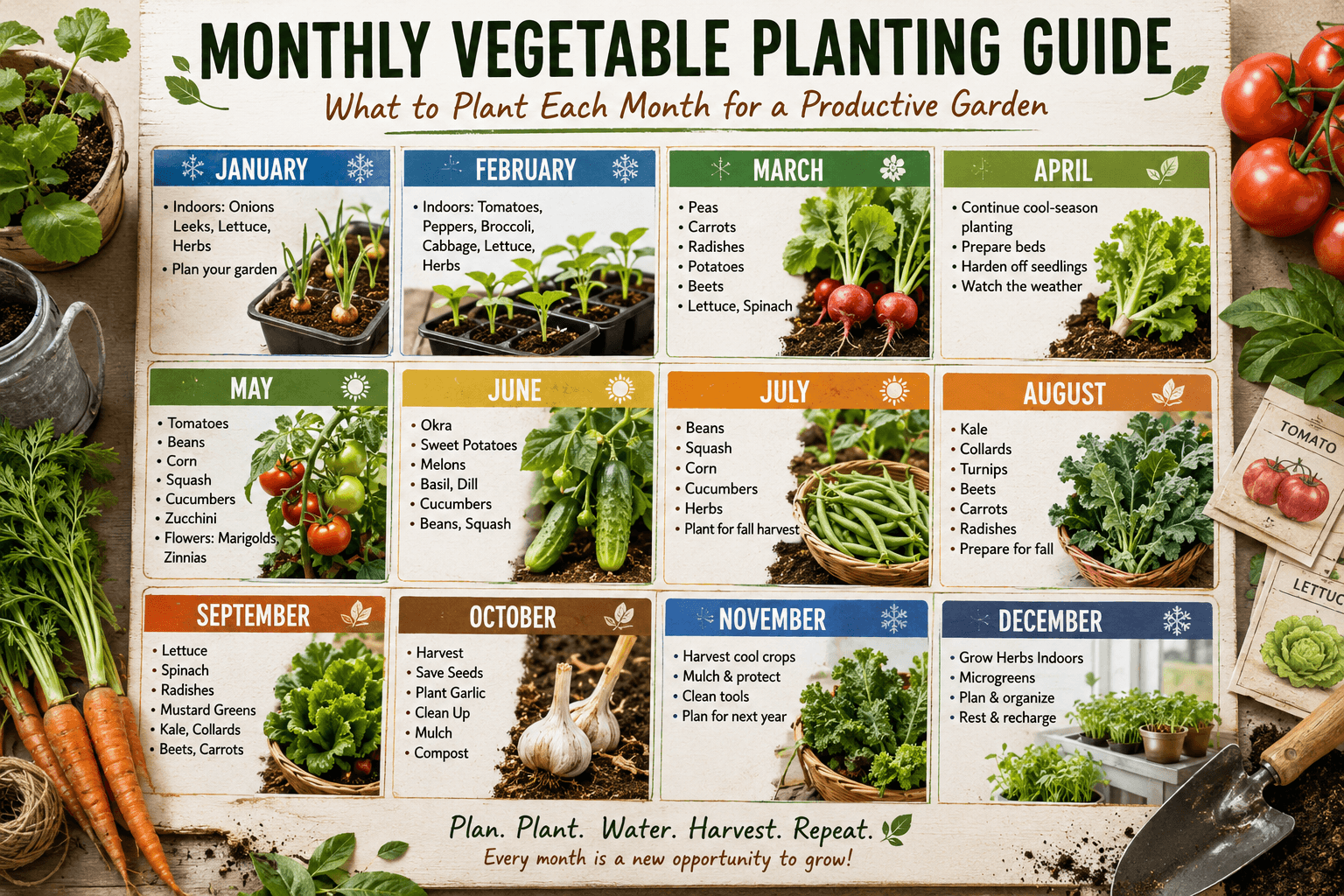
Monthly Vegetable Planting . I used to think gardening was mostly about putting seeds in the dirt and remembering to water them.
Boy, was I wrong.
After more than 10 years of growing vegetables in backyard gardens, containers, and small urban spaces, I’ve learned that when you plant can matter just as much as what you plant. Put tomatoes outside too early and you may spend the night covering them with buckets. Plant lettuce too late and the heat can turn it bitter before you get much for dinner.
I’ve made pretty much every mistake you can imagine.
So I started keeping a simple monthly vegetable planting guide for my garden. It isn’t fancy. It changes a little depending on the weather, but it gives me a good idea of what I should be starting indoors, planting outside, or getting ready for the next season.
And that’s what I’m sharing here.
Just remember, your exact planting dates will depend on your growing zone, frost dates, and local weather. The calendar below is a general guide for many U.S. backyard gardens.
Why a Monthly Vegetable Planting Guide Makes Gardening Easier
One year I bought a pile of seeds in February and thought I was being very organized.
Then March came.
I planted too many things at once, forgot what I’d planted where, and ended up with seedlings all over the house.
My wife was not impressed.
Now I prefer a simple monthly routine.
Each month I ask myself three questions:
- What can I plant now?
- What should I start indoors?
- What should I prepare for next month?
That’s it.
This keeps the garden moving without making it feel like another full-time job.
January: Start Small and Plan the Garden
January is usually more about planning and starting seeds indoors than running outside and digging up the frozen garden.
This is when I pull out my seed boxes, check what I have left from last year, and make a rough garden plan.
Depending on your climate, you can start some crops indoors.
What I like to start in January:
- Onions
- Leeks
- Lettuce
- Some herbs
- Other cool-season crops suited to your area
If you live somewhere with mild winters, you may be able to grow more outside.
For the rest of us, January is also a great time to clean seed-starting trays, repair garden beds, add finished compost, and make sure the watering cans haven’t mysteriously disappeared.
Mine always do.
Monthly Vegetable Planting
February: Get Those Indoor Seeds Going
February is when I start getting more serious.
The garden might still look pretty sleepy outside, but inside the house, things can get busy.
Depending on your local last frost date, this is a good month to start crops such as:
- Tomatoes
- Peppers
- Broccoli
- Cabbage
- Lettuce
- Herbs
Tomatoes and peppers usually need a decent head start before they go outside.
I learned not to rush them, though.
One year I started tomato seedlings way too early. By the time the weather was warm enough to plant them, they were tall, thin and practically leaning against the window.
Not my finest gardening moment.
If you’re starting seeds indoors, give them plenty of light and don’t drown them with water. I know that sounds obvious, but I’ve killed more seedlings with too much love than neglect.
March: Cool-Season Vegetables Can Finally Go Outside
March is one of my favorite months because the garden starts waking up.
In many areas, you can begin planting cool-season vegetables outdoors.
Depending on your climate, you may be able to plant:
- Peas
- Carrots
- Radishes
- Potatoes
- Beets
- Lettuce
- Spinach
Radishes are especially nice for impatient gardeners.
They grow quickly, so you don’t have to wait forever to see something happening.
Carrots are another good choice, but don’t bury those tiny seeds too deeply. Keep the soil moist while they’re getting started.
For peas, I like to get them in early enough that they can grow before the weather becomes too hot.
April: The Garden Really Starts Moving
April can be a funny month.
One day feels like summer.
The next morning you’re scraping frost off the car.
So I don’t get too excited about warm-season crops until I’m confident the danger of frost has passed in my area.
This is a good month to continue cool-season planting and prepare your garden beds.
You can also start many warm-season crops indoors if you haven’t already.
April garden jobs:
- Prepare garden beds
- Add finished compost
- Thin seedlings
- Harden off indoor plants
- Plant cool-season vegetables
- Watch the weather
- Keep weeds under control
That last one sounds boring.
Trust me, don’t ignore the weeds.
A small weed problem in April can become a jungle by June.
May: Time for Tomatoes, Beans and Corn
May is when I finally feel like the real gardening season has arrived.
Once the last frost has passed and the soil is warm enough, many gardeners can start planting warm-season vegetables.
Some of my favorites are:
- Tomatoes
- Beans
- Corn
- Squash
- Cucumbers
- Zucchini
I also like planting flowers such as marigolds and zinnias around the garden.
They make the place look better, and having flowers around the vegetable garden is good for attracting pollinators.
My biggest May warning
Don’t rush tomatoes.
I know.
You bought the plants.
They’re sitting there looking beautiful.
You want them in the ground.
But if your nights are still cold, waiting a little longer can save you a lot of headaches.
I’ve learned this one the hard way more than once.
June: Heat-Loving Crops Take Over
By June, things usually start growing fast.
Really fast.
You can almost watch the zucchini getting bigger.
If your weather is warm, June is a good time for crops such as:
- Okra
- Sweet potatoes
- Melons
- Basil
- Dill
- Cucumbers
- Beans
- Squash
Sweet potatoes need a long warm season, so they’re much happier when the soil is properly warmed up.
This is also the month when I start paying serious attention to watering.
A small seedling might survive a missed watering.
A big cucumber plant loaded with fruit?
Not always.
July: Keep Planting Instead of Giving Up
Here’s something I wish I’d understood when I first started gardening.
July isn’t the end of the garden.
You can still plant things.
Depending on your climate and how long your growing season is, July can be useful for:
- Beans
- Squash
- Corn
- Cucumbers
- Some herbs
- Crops for a fall harvest
I like succession planting during summer.
Instead of planting all my beans at once, I’ll plant another small batch later.
That way I don’t get 400 beans on the same weekend and then spend the next three weeks asking neighbors if they want some.
Although my neighbors probably appreciate it.
August: Start Thinking About the Fall Garden
August is when I start looking forward instead of only looking at what’s growing right now.
The summer garden is producing food, but I’m also preparing for fall.
Depending on your climate, you can start crops such as:
- Kale
- Collards
- Turnips
- Beets
- Carrots
- Radishes
- Other cool-season greens
This is also a good time to start thinking about where fall crops will go.
Don’t wait until September and then realize every garden bed is still packed with tomatoes and zucchini.
Yep.
I’ve done that.
September: Fall Gardening Gets Good
I really like fall gardening.
The temperatures start cooling down, some pests disappear, and vegetables like greens seem much happier.
September can be a great month for:
- Lettuce
- Spinach
- Radishes
- Mustard greens
- Kale
- Collards
- Beets
- Carrots
The exact timing matters here because you want crops to have enough time to mature before serious cold arrives.
One trick I learned is to think about the harvest date, not just the planting date.
If a vegetable needs 50 days to mature and you’ve only got 30 good growing days left, you might be wasting your garden space.
October: Harvest, Protect and Clean Up
October looks different depending on where you live.
Some gardeners are still harvesting tomatoes and peppers.
Others are already dealing with frost.
I don’t try to make October the same everywhere. Instead, I focus on harvesting what is ready and protecting crops that can handle cooler temperatures.
This is also a good month to:
- Save seeds
- Harvest herbs
- Clean up diseased plants
- Add compost
- Mulch garden beds
- Plant garlic where appropriate
- Store garden tools properly
And please don’t leave rotten vegetables lying around.
I once found a forgotten squash under a plant that had turned into something that looked like a science project.
I won’t describe the smell.
November: Slow Down a Little
November is usually a quieter gardening month for me.
If you live in a mild climate, you may still be growing plenty of vegetables.
Cool-weather crops like kale, spinach and some root vegetables can continue producing.
In colder areas, the focus is more on:
- Harvesting
- Mulching
- Composting
- Cleaning tools
- Protecting perennial plants
- Planning next year’s garden
I also like looking back at my garden notes.
What grew well?
What didn’t?
Which variety gave me lots of food?
Which one took up half the garden and gave me three vegetables?
Those notes are worth more than any fancy gardening gadget.
December: Rest, Plan and Get Ready Again
December is my garden’s quiet month.
Well, mostly.
This is when I check my seed collection, think about next year’s crops, and plan what I want to grow.
If you’re growing indoors, you may still be able to grow:
- Herbs
- Microgreens
- Lettuce
- Small greens
Microgreens are especially fun during winter.
You don’t need a big backyard, either. A sunny window and a shallow container can give you something fresh to grow when the outdoor garden is sleeping.
And honestly, seeing something green in the middle of winter feels pretty good.
My Simple Monthly Vegetable Planting Routine
After all these years, I’ve stopped trying to make my garden perfect.
Here’s what I actually do at the beginning of each month.
First: I check the weather.
Second: I look at my seed packets.
Third: I walk through the garden and see what’s happening.
Fourth: I decide on only a few jobs that really need doing.
That’s important.
You don’t need to finish your entire garden in one weekend.
Gardening works better when you do a little bit often.
What About Frost Dates?
This is one thing you really shouldn’t ignore.
A calendar might say it’s time to plant tomatoes, but if your local frost date hasn’t passed, you could lose them.
The same goes for fall crops.
Your planting schedule depends heavily on your local climate.
So use this monthly vegetable planting guide as a starting point, then adjust it for your growing zone and local weather.
If your neighbor has been gardening for 30 years and tells you, “Don’t plant those tomatoes yet,” maybe listen to him.
I’ve ignored that advice before.
I regretted it.
Mini FAQ about Monthly Vegetable Planting
What vegetables can I plant all year?
That depends heavily on where you live. In mild climates, some greens, herbs and root vegetables can be grown through much of the year. In colder areas, winter gardening is more limited.
When should I plant tomatoes ?
Usually after the danger of frost has passed and the soil and nighttime temperatures are warm enough for tomatoes. Don’t rely only on the calendar. Your local weather matters.
Can I start a vegetable garden with very little space for Monthly Vegetable Planting?
Heck yes.
I’ve grown vegetables in containers and small backyard spaces. Beans, lettuce, herbs, peppers, tomatoes, radishes and many other crops can work well in containers when you choose the right varieties and give them enough sunlight.
The Garden Doesn’t Have to Be Perfect for Monthly Vegetable Planting
If there’s one thing 10+ years of gardening has taught me, it’s this:
Don’t wait until you know everything.
Start.
Plant something.
Kill a plant.
Learn why.
Try again.
That’s how I learned.
A monthly vegetable planting guide isn’t supposed to be a strict rulebook. It’s more like a friend reminding you, “Hey, it’s probably time to start those seeds.”
Some years spring arrives early.
Some years it seems like winter refuses to leave.
Some years the bugs win.
Other years you get more tomatoes than you know what to do with.
That’s normal.
Keep notes, pay attention to your weather, and adjust your planting calendar every year. Your garden will teach you more than any calendar ever could.
And if you get stuck, just ask. I’ve messed up plenty of gardens myself. You’re definitely not alone.
Happy planting, friend. Monthly Vegetable Planting 🌱