An outdoor brick cooking station can combine a grill, wood-fired firebox, prep counter, and firewood storage into one permanent backyard feature—but it needs to be planned as a heat-producing masonry structure, not just as decorative brickwork.
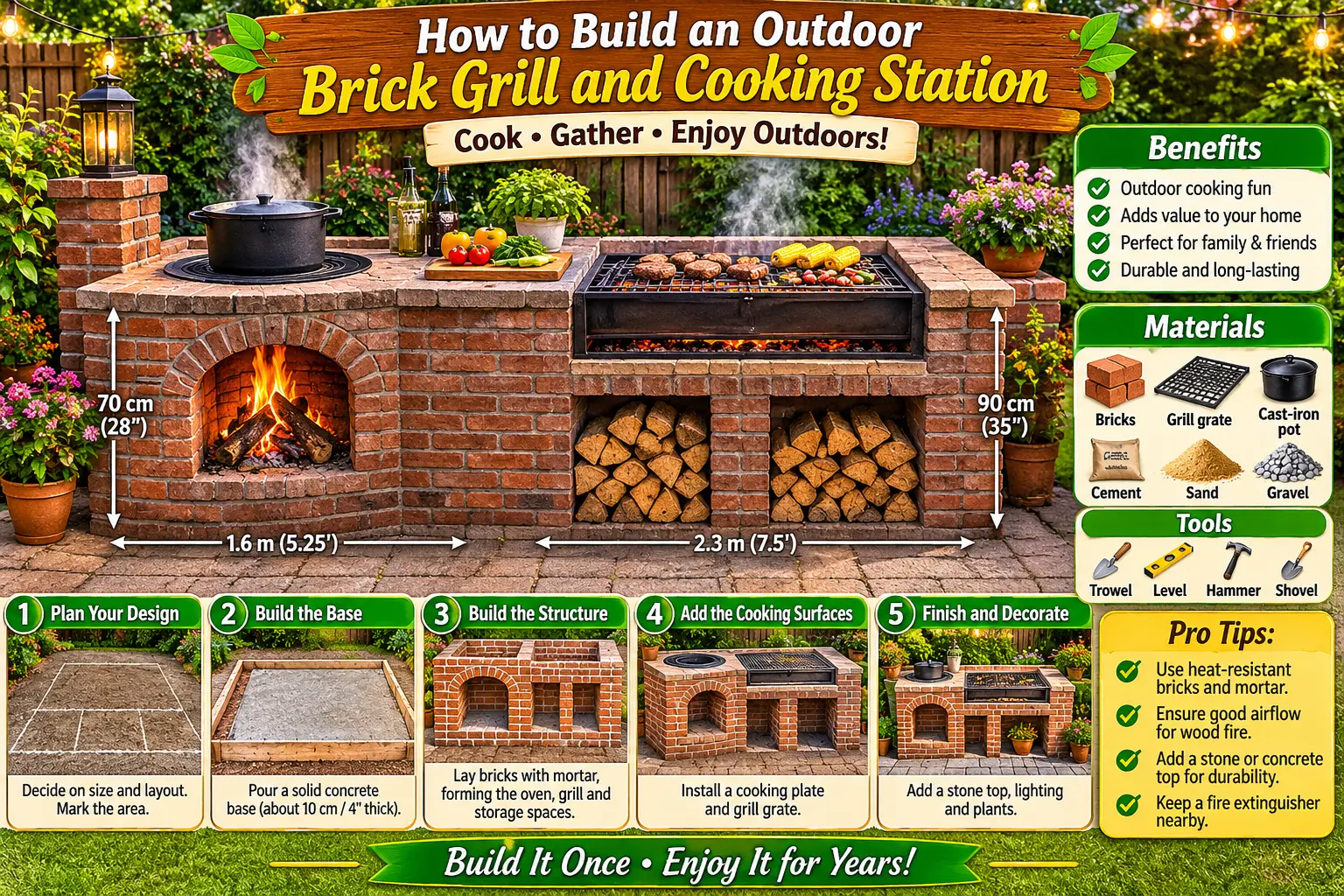
The Pinterest design shows a compact L-shaped masonry station with a wood fire on one side, a grill on the other, and a central prep surface. It is a useful layout concept, but the measurements shown in the image should be treated as inspiration rather than universal building dimensions.
Important: ordinary masonry, firebox materials, chimney design, grill clearance, foundations, and nearby combustible materials all have different requirements. Do not copy the image dimensions and assume the finished structure will automatically be safe.
1. Decide What Type of Outdoor Cooker You Are Building
The first question is not what brick color you want. It is what type of fire and cooking system you plan to use.
Your station might include:
- A charcoal grill
- A wood-burning grill
- A separate outdoor fireplace
- A removable metal grill insert
- A pizza or bread oven
- A gas grill module
- A combination of two systems
Each option changes the required firebox, ventilation, clearances, fuel storage, and maintenance.
2. Choose the Location Before the Dimensions
A permanent masonry cooking station is difficult to move later, so location matters more than exact counter length.
Look for a location that provides:
- Safe separation from the house
- Clearance from fencing and sheds
- No low tree branches above
- Good access from the kitchen
- A noncombustible working surface
- Room for people to move around safely
- Good drainage
3. Keep the Cooking Station Away From Combustibles
USFA recommends using outdoor fireplaces and fire pits at least 10 feet away from the home or anything that can burn.
For grills, USFA and NFPA both advise keeping the cooking appliance well away from siding, deck railings, eaves, and overhanging branches.
Manufacturer instructions and local fire rules can require even more clearance.
4. Do Not Treat the Pinterest Measurements as Universal
The illustration shows dimensions such as approximately 70 cm, 75 cm, 90 cm, 1.6 m, and 2.3 m.
These may describe that specific visual concept, but safe dimensions depend on:
- Grill insert size
- Firebox type
- Brick and block dimensions
- Chimney design
- Counter material
- User height
- Local building requirements
- Required combustible clearances
5. Build the Foundation First
A brick grill station is heavy.
Masonry walls, countertop material, grill components, stored firewood, and chimney mass can create a substantial permanent load.
Do not construct the entire station directly on loose soil, decorative gravel, or thin patio pavers unless the foundation system was designed for the load.
6. Account for Frost and Soil Movement
In climates with freezing soil, an inadequate foundation can move unevenly during freeze-thaw cycles.
That movement can crack mortar joints, countertops, firebrick, or chimney sections.
Foundation depth and type should match local soil and climate conditions.
7. Use Fire-Rated Materials Inside the Firebox
The visible outer masonry and the surface directly exposed to flame are not necessarily the same material.
Direct flame zones may require firebrick, refractory mortar, a listed metal firebox, or another system specifically intended for high-temperature use.
Do not assume standard landscape block or ordinary decorative brick is automatically suitable for repeated direct-fire exposure.
8. Plan the Firebox Before Laying the Exterior Brick
The firebox determines where heat, smoke, ash, and flame will go.
Plan:
- Opening dimensions
- Internal fire-resistant lining
- Ash removal access
- Air supply
- Smoke path
- Chimney or flue if required
9. Smoke Needs a Controlled Exit
The Pinterest image shows smoke rising from the cooking areas, but a real built-in wood-burning structure may need a correctly designed chimney or hood system.
A poorly designed smoke path can send smoke directly into the cook’s face or toward neighboring windows and seating areas.
10. Consider Prevailing Wind
Before construction, observe how wind normally moves through the backyard.
Do not position the main fire opening so prevailing wind regularly pushes smoke toward:
- The house
- Doors and windows
- Dining tables
- Neighbors
- Children’s play areas
11. Separate the Prep Zone From Direct Flame
The central counter in the Pinterest design is useful because it separates food preparation from the most intense heat.
Keep cutting boards, paper towels, oil bottles, utensils with combustible handles, and food packaging away from open flame.
NFPA recommends keeping anything that can burn at least three feet from open flames and the grill area.
12. Make the Counter Comfortable to Use
The image shows a roughly 90 cm work surface height, which is close to many kitchen counters, but comfort varies by user.
Mock up the counter height before building permanent masonry.
You should be able to prep food without constantly bending or reaching upward.
13. Use a Countertop That Handles Heat and Weather
Outdoor counters face sun, rain, food stains, grease, and occasional hot cookware.
Potential materials include properly installed:
- Concrete
- Suitable natural stone
- Exterior-rated porcelain or tile systems
- Other outdoor countertop products
Check heat resistance and installation requirements before placing hot cookware directly on the surface.
14. Keep Raw and Cooked Food Separate
A beautiful outdoor station still needs normal food-safety habits.
Use separate plates and utensils for raw and cooked meat, keep prep surfaces clean, and do not place cooked food back onto a board that held raw meat without cleaning it first.
15. Wood Storage Needs Airflow
The lower wood-storage niches in the image are practical, but firewood needs ventilation.
Avoid sealing damp wood inside a closed masonry cavity where moisture can build up.
Keep stored firewood dry and organized, but away from sparks and excessive heat.
16. Do Not Store Excess Fuel Beside Open Flame
The convenience of having wood directly underneath a grill must be balanced against fire safety.
Store only a practical amount in the immediate cooking area and keep larger reserves farther from flame and sparks.
17. Keep Grease Under Control
Grease buildup is one of the main hazards around grills.
NFPA reports that failure to clean grills contributes to grill fires and recommends removing grease and fat buildup from grill surfaces and collection trays.
18. Make Ash Removal Easy
A wood or charcoal station needs a safe way to remove ash without dragging hot debris across the patio.
USFA and NFPA recommend allowing coals to cool completely and disposing of them in a metal container with a lid.
19. Keep Children and Pets Out of the Working Zone
USFA and NFPA recommend maintaining a three-foot safe zone around grills to keep children and pets away from burns and hot surfaces.
Design paths so people do not have to pass directly behind the cook.
20. Do Not Place the Grill Under Low Branches
The Pinterest setting is surrounded by mature landscaping, which looks attractive but needs maintenance.
Trim branches and vegetation so heat and sparks do not reach combustible plant material.
21. String Lights Need Safe Placement
Outdoor string lights can make the cooking area much more usable after dark, but they should remain outside hot smoke and spark zones.
Use outdoor-rated equipment and keep cords away from walking routes and hot masonry.
22. Give Rainwater Somewhere to Go
The paving shown around the station is practical only when the base drains properly.
Slope the surrounding hardscape so water does not collect:
- Inside the firewood openings
- Against the masonry
- Beside the foundation
- In the cook’s standing area
23. Provide a Safe Standing Surface
Outdoor cooking often involves carrying hot pans, knives, and food.
Use a stable, reasonably level, slip-resistant surface rather than loose stepping stones immediately in front of the grill.
24. Leave Room for Maintenance
Built-in grill parts eventually need cleaning, replacement, or repair.
Do not permanently mortar removable metal components into the structure unless that is exactly how the system is designed to be installed.
25. A Removable Grill Insert Can Simplify Future Repairs
A masonry shell can last decades while a metal grate or grill assembly may wear out much sooner.
Designing the grill portion around replaceable components can prevent a future rebuild of the entire kitchen.
26. Plan Water Before Adding a Sink
A future sink is convenient, but it creates potable-water supply and wastewater questions.
Do not simply drain greasy food-prep water into nearby soil or a vegetable bed.
27. Keep Utilities Accessible
If the finished station includes electrical outlets, lighting, water, gas, or drainage, make shutoffs and service points accessible.
Do not bury utility connections behind permanent masonry where they cannot be inspected or repaired.
28. Gas Changes the Design Completely
If you replace the wood or charcoal grill with propane or natural gas, follow the listed appliance installation instructions and applicable fuel-gas requirements.
NFPA advises checking propane systems for leaks and never operating a leaking grill.
29. Do Not Enclose a Grill That Requires Ventilation
Some built-in gas grills require specific ventilation openings around the appliance or fuel-storage area.
Follow the appliance installation instructions instead of copying a fully enclosed Pinterest cabinet.
30. Keep a Fire-Control Method Nearby
Before lighting the fire, make sure an appropriate way to control or extinguish it is immediately available.
Never leave an active grill, wood fire, or outdoor fireplace unattended. Both USFA and NFPA emphasize continuous supervision of outdoor cooking fires.
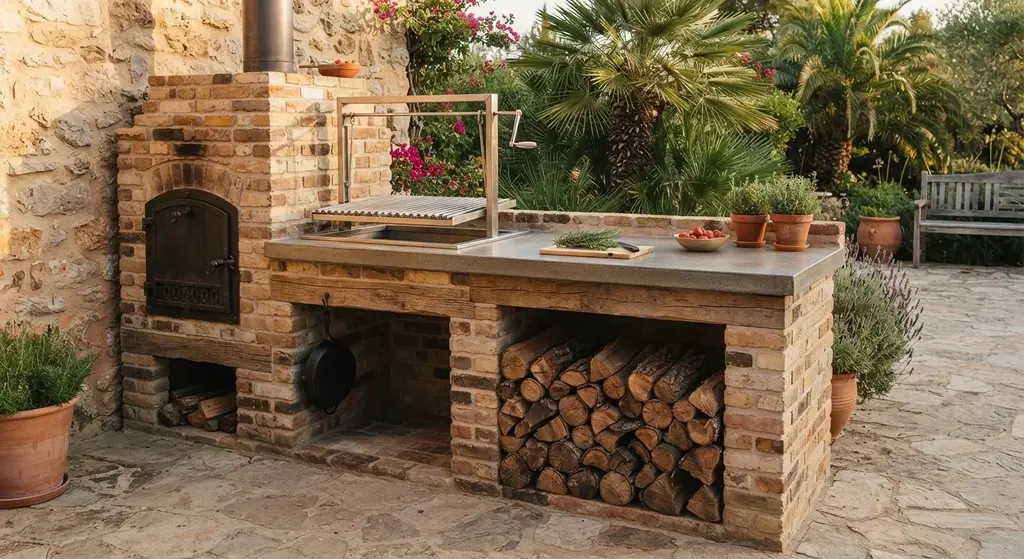
A Better Layout for a Small Backyard Cooking Station
| Zone | Purpose |
|---|---|
| Fire zone | Wood fire, charcoal or approved cooking insert |
| Grill zone | Main food-cooking area |
| Prep zone | Cutting, plating and utensils |
| Fuel zone | Limited dry firewood stored away from sparks |
| Safety zone | Clear path with no children, pets or combustible clutter |
What This Pinterest Design Gets Right
- Separates the grill and firebox into different working areas.
- Provides a central prep counter.
- Uses noncombustible masonry around heat-producing zones.
- Includes convenient firewood storage.
- Creates a compact L-shaped work triangle.
- Provides a hardscape surface around the cooking area.
- Keeps the cook facing an open outdoor space rather than an enclosed room.
What I Would Change Before Building It
- Do not copy the illustrated dimensions as structural or fire-safety requirements.
- Use fire-rated materials in direct flame zones.
- Design the chimney, hood, or smoke path correctly for the specific firebox.
- Keep the station well away from fences, buildings, eaves, and branches.
- Do not store a large quantity of firewood immediately beside active flame.
- Provide a stable foundation for the masonry mass.
- Keep metal grill parts removable where practical for maintenance.
- Plan drainage around the entire station.
- Keep a clear three-foot safety zone around active grilling areas.
Outdoor Brick Grill FAQ
Can I build a grill from ordinary bricks?
The exterior can use suitable masonry, but areas directly exposed to high heat may require firebrick, refractory mortar, or another high-temperature system. Do not assume all brick is suitable for the firebox.
Does a brick grill need a concrete foundation?
A permanent masonry grill needs a stable foundation capable of supporting the full weight and resisting settlement. The exact design depends on soil, frost, structure size, and local requirements.
How far should an outdoor grill be from the house?
Follow the appliance or firebox manufacturer’s instructions and local rules. USFA recommends outdoor fireplaces and fire pits at least 10 feet from the home or anything combustible, while grills should be kept well away from siding, deck railings, eaves, and branches.
Can I store firewood below the grill?
It can be incorporated into the structure when the design protects the storage area from direct heat and sparks, but avoid storing excessive fuel immediately beside an active fire.
Should an outdoor grill have a chimney?
That depends on the design. Some wood-burning fireboxes require a properly designed flue or chimney to manage smoke and draft, while an open grill may use a different ventilation approach.
Can I put a brick grill under a pergola?
Do not assume an open pergola makes it safe. Grills and open flames need clearances from combustible overhead framing, roofing, plants, and other materials. Follow the appliance/firebox requirements and local fire rules.
How high should the outdoor prep counter be?
Around normal kitchen-counter height may be comfortable for many people, but mock up the work surface first. The 90 cm dimension shown in the Pinterest image is not a mandatory standard.
The Bottom Line
The Pinterest station is a smart layout concept because it combines cooking, preparation, and fuel storage in a compact masonry structure.
Copy the functional zones, not the measurements. Start with fire clearance and foundation design, use materials intended for direct heat where required, control smoke, keep grease and fuel managed, preserve a three-foot working safety zone, and build the masonry around the actual grill or firebox system you intend to use.
Sources
- U.S. Fire Administration — Outdoor Fire Safety
- National Fire Protection Association — Grilling Safety