Pickling is one of the easiest ways to turn an abundant garden harvest into something bright, tangy, and useful—but refrigerator pickles and shelf-stable canned pickles are not the same thing.
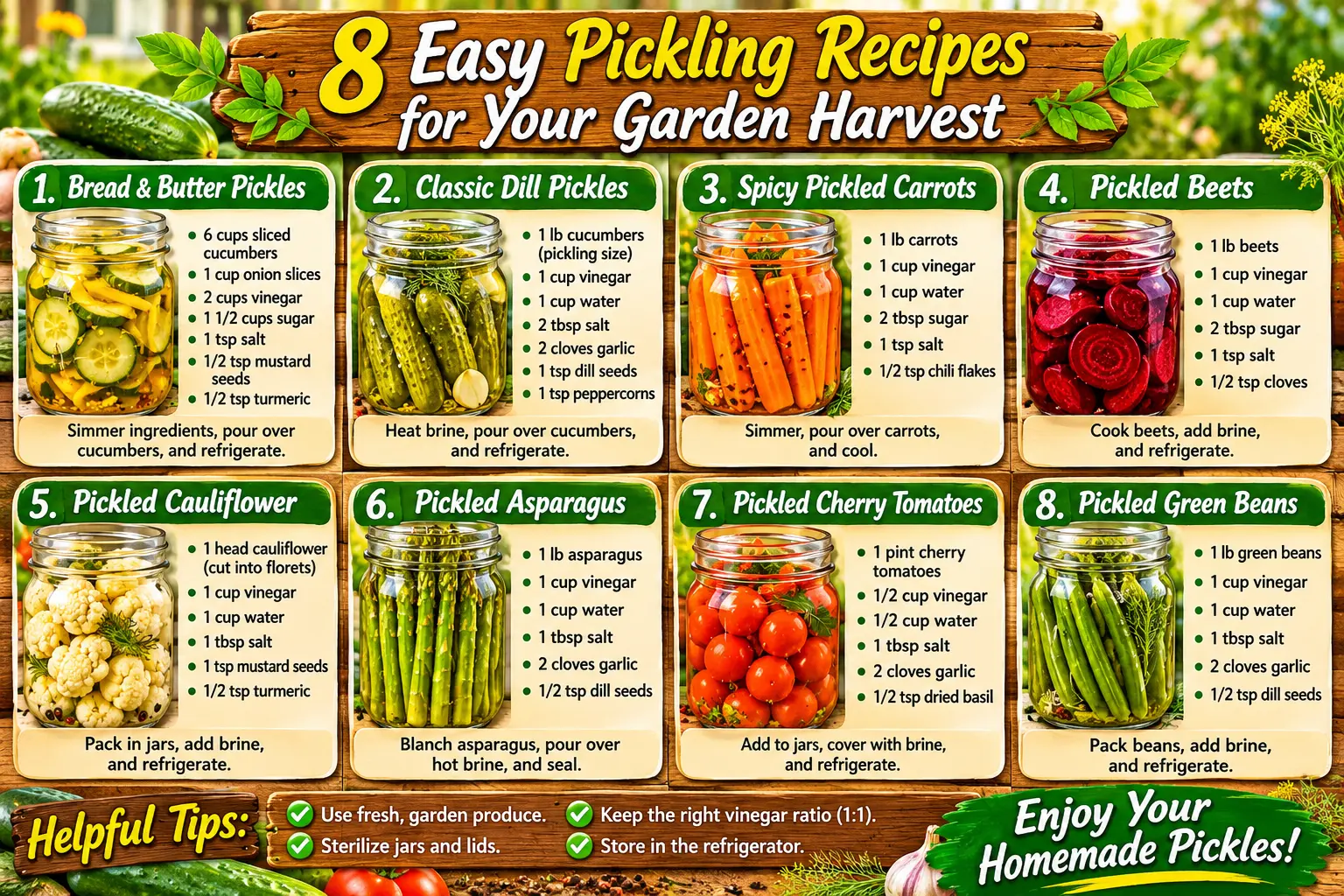
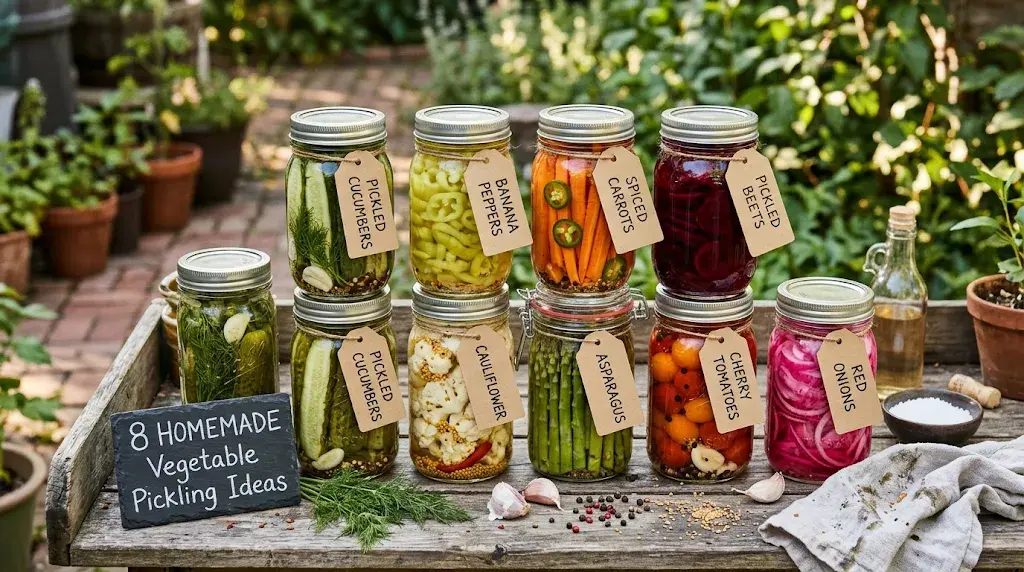
The Pinterest graphic shows eight appealing combinations, including bread-and-butter cucumbers, banana peppers, carrots, beets, cauliflower, asparagus, quick cucumbers, and cherry tomatoes. The flavor ideas are useful, but several are presented without the tested processing instructions required for safe home canning.
Important: the quick recipes below are refrigerator pickles unless a tested canning recipe is specifically referenced. Do not place a homemade vinegar-and-vegetable mixture on a pantry shelf simply because the jar sealed.
Refrigerator Pickles vs. Canned Pickles
A refrigerator pickle is prepared with an acidic brine and then kept cold. It is not intended for room-temperature storage.
A shelf-stable canned pickle must follow a research-tested recipe that specifies:
- The exact vegetables and quantities
- The type and strength of vinegar
- The vinegar-to-water ratio
- Jar size
- Headspace
- Preparation method
- Processing time
- Altitude adjustments
For home canning, use vinegar labeled 5% acidity when a tested recipe calls for it and do not reduce the amount of vinegar.
1. Bread-and-Butter Pickles
Sweet, tangy bread-and-butter pickles are one of the classic ways to preserve cucumbers.
For shelf-stable canning, use the tested National Center for Home Food Preservation recipe rather than the simplified Pinterest ratio.
Tested NCHFP Formula
- 6 pounds pickling cucumbers
- 8 cups thinly sliced onions
- ½ cup canning or pickling salt
- 4 cups 5% vinegar
- 4½ cups sugar
- 2 tablespoons mustard seed
- 1½ tablespoons celery seed
- 1 tablespoon ground turmeric
Follow the complete NCHFP preparation and boiling-water processing instructions, including the correct processing time for your altitude.
2. Quick Pickled Banana Peppers
For an easy refrigerator version, sliced banana peppers can be covered with a hot vinegar brine and chilled.
Simple Refrigerator Version
- About 1 pound banana peppers, sliced
- 1½ cups 5% vinegar
- 1 cup water
- 1 tablespoon pickling salt
- 1–2 teaspoons sugar, optional
- 1 garlic clove, optional
- ½ teaspoon dried oregano, optional
- Pack the clean sliced peppers into a clean heat-safe jar.
- Bring the vinegar, water, salt, and optional sugar to a boil.
- Pour the hot brine over the peppers.
- Cool, cover, and refrigerate.
- Keep refrigerated rather than storing at room temperature.
For pantry storage, use a tested pickled-pepper recipe from NCHFP instead of this refrigerator method.
3. Spicy Refrigerator-Pickled Carrots
- 1 pound carrots, cut into sticks
- 1¼ cups 5% vinegar
- 1 cup water
- 2 teaspoons pickling salt
- 1 garlic clove
- ½–1 teaspoon red pepper flakes
- Place the carrot sticks, garlic, and pepper flakes in a clean jar.
- Bring the vinegar, water, and salt to a boil.
- Pour the hot brine over the carrots.
- Cool and refrigerate.
- Allow the flavor to develop before serving.
Canning note: carrots are naturally low-acid vegetables. If you want shelf-stable pickled carrots, use the tested NCHFP pickled-carrot recipe rather than improvising from this refrigerator formula.
4. Pickled Beets
Beets are another low-acid vegetable, so a random jar of beets plus vinegar should not automatically be treated as a safe canned product.
For shelf-stable pickled beets, follow the tested NCHFP recipe and its complete processing instructions.
For a refrigerator version, cooked sliced beets can instead be covered with an acidic sweet-sour brine and kept continuously refrigerated.
5. Refrigerator-Pickled Cauliflower
- 1 small head cauliflower, cut into bite-size florets
- 1½ cups 5% vinegar
- 1 cup water
- 1 tablespoon pickling salt
- 1 teaspoon mustard seed
- ½ teaspoon turmeric, optional
- Pack the cauliflower into clean jars.
- Bring the vinegar, water, salt, and spices to a boil.
- Pour over the cauliflower.
- Cool, cover, and refrigerate.
NCHFP also publishes a tested recipe for pickled cauliflower or Brussels sprouts when shelf-stable canning is the goal.
6. Pickled Asparagus
Pickled asparagus is excellent when spring production arrives all at once, but asparagus is a low-acid vegetable and requires a tested formula for safe boiling-water canning.
NCHFP provides a specific tested Pickled Asparagus recipe. Follow that exact recipe for shelf-stable jars rather than copying the short Pinterest ingredient list alone.
Garlic, dill, and spices can create great flavor, but the acid ratio and processing procedure are the safety-critical parts.
7. Quick Refrigerator Cucumber Pickles
This is the easiest option when you want crunchy pickles without running a canner.
Ingredients
- 3 cups sliced cucumbers
- 1 cup 5% vinegar
- ½ cup water
- 1 tablespoon pickling salt
- 1 tablespoon sugar
- ½ teaspoon red pepper flakes, optional
- Dill, garlic, or mustard seed, optional
Method
- Place sliced cucumbers and optional spices in a clean jar.
- Heat the vinegar, water, salt, and sugar until dissolved.
- Pour over the cucumbers.
- Cool before covering.
- Refrigerate and keep cold.
These are refrigerator pickles—not canned pickles.
8. Quick Pickled Cherry Tomatoes
Cherry tomatoes make an attractive refrigerator pickle, but they deserve extra caution if someone wants pantry storage.
Refrigerator Version
- 1 pint firm cherry tomatoes
- 1 cup 5% vinegar
- ½ cup water
- 1 tablespoon pickling salt
- 1 garlic clove, optional
- ½ teaspoon dried basil or another culinary herb
- Wash the tomatoes and remove stems.
- Place them in a clean container.
- Bring the vinegar, water, and salt to a boil.
- Pour the brine over the tomatoes.
- Cool and refrigerate.
Do not turn this refrigerator tomato pickle into a shelf-stable canned recipe by simply processing it for an arbitrary amount of time. Tomatoes and mixed vegetable recipes need a tested canning formula.
Why Vinegar Strength Matters
When a tested canning recipe specifies vinegar, it commonly calls for vinegar standardized to 5% acidity.
Do not substitute weaker vinegar or dilute the vinegar beyond the tested recipe. Acidification is one of the main safety barriers in pickled vegetables.
Can You Reduce the Sugar?
In many pickle recipes, sugar primarily affects sweetness and flavor, while vinegar is the critical acid ingredient.
However, when home canning, follow the tested recipe unless the source specifically states which ingredients may safely be adjusted.
Can You Reduce the Vinegar?
No—not in a tested home-canning recipe.
Reducing vinegar, increasing low-acid vegetables, or increasing water changes the acidity of the finished product and can make the published processing method unsafe.
Use Pickling or Canning Salt When a Tested Recipe Calls for It
Pickling salt dissolves cleanly and does not contain the anti-caking agents found in some table salts.
For fermented pickles, salt concentration can also affect safety and fermentation, so do not casually reduce it.
Always Adjust Canning Time for Altitude
Boiling temperatures decrease as elevation increases, which means boiling-water processing instructions may require longer processing at higher elevations.
Use the altitude table included with the tested recipe rather than applying one universal processing time everywhere.
Never Use a Jar Seal as Proof of Safety
A lid can seal even when the recipe or process was unsafe.
A vacuum seal only tells you that the lid sealed. It does not prove that the jar was sufficiently acidified or processed.
The Simplest Way to Choose a Method
| Goal | Best Approach |
|---|---|
| Eat soon | Refrigerator quick pickles |
| Store on pantry shelf | Research-tested canning recipe |
| Traditional fermented flavor | Tested fermentation recipe with correct salt concentration |
| Experiment with flavors | Make refrigerator pickles rather than improvising a canned recipe |
What This Pinterest Pickling Guide Gets Right
- Cucumbers, peppers, carrots, beets, cauliflower, and asparagus can all be pickled.
- Vinegar, salt, sugar, and spices are common pickle ingredients.
- Pickling is a practical way to use seasonal garden abundance.
- Different vegetables work with different herbs and spices.
What Needs to Be Corrected
- Do not call every short ingredient list a home-canning recipe.
- Separate refrigerator pickles from shelf-stable canned pickles.
- Use tested vinegar ratios for canning.
- Use 5% acidity vinegar when the tested recipe specifies it.
- Follow tested jar size, headspace, and processing times.
- Adjust processing for altitude.
- Do not invent canning processes for cherry tomatoes or mixed vegetables.
Pickling FAQ
Are refrigerator pickles shelf stable?
No. Refrigerator pickles must remain refrigerated unless you use a separately tested canning recipe and processing method.
Can I use any vinegar for canning pickles?
Use the type and acidity specified by the tested recipe. Many research-based recipes call for vinegar labeled 5% acidity.
Can I add extra vegetables to a canned pickle recipe?
Do not increase low-acid vegetables beyond the tested recipe because doing so can change the final acidity.
Can I add extra spices?
Small changes to dry spices may be allowed in some tested recipes, but do not change the acid, water, vegetable quantities, or processing method unless the research source specifically permits the change.
Why do canned pickles need processing if vinegar is already acidic?
Proper processing destroys spoilage organisms, drives air from the jar, and creates a reliable seal while the tested acidity helps control dangerous microorganisms.
The Bottom Line
The Pinterest graphic is useful as a list of vegetables that taste great pickled, but it should not be treated as a complete canning guide.
For easy experimentation, make refrigerator pickles and keep them cold. For pantry storage, switch to a tested NCHFP or USDA recipe and follow its ingredient ratios, jar size, headspace, processing time, and altitude adjustment exactly.
Sources
- National Center for Home Food Preservation — Pickling
- National Center for Home Food Preservation — Bread-and-Butter Pickles
- National Center for Home Food Preservation — Vegetable Pickles
- USDA Complete Guide to Home Canning