An indoor plant wall can turn one empty wall into a vertical garden without taking over the floor, but the shelves need to be strong enough for wet pots and the plants still need real light, drainage, airflow, and room to grow.
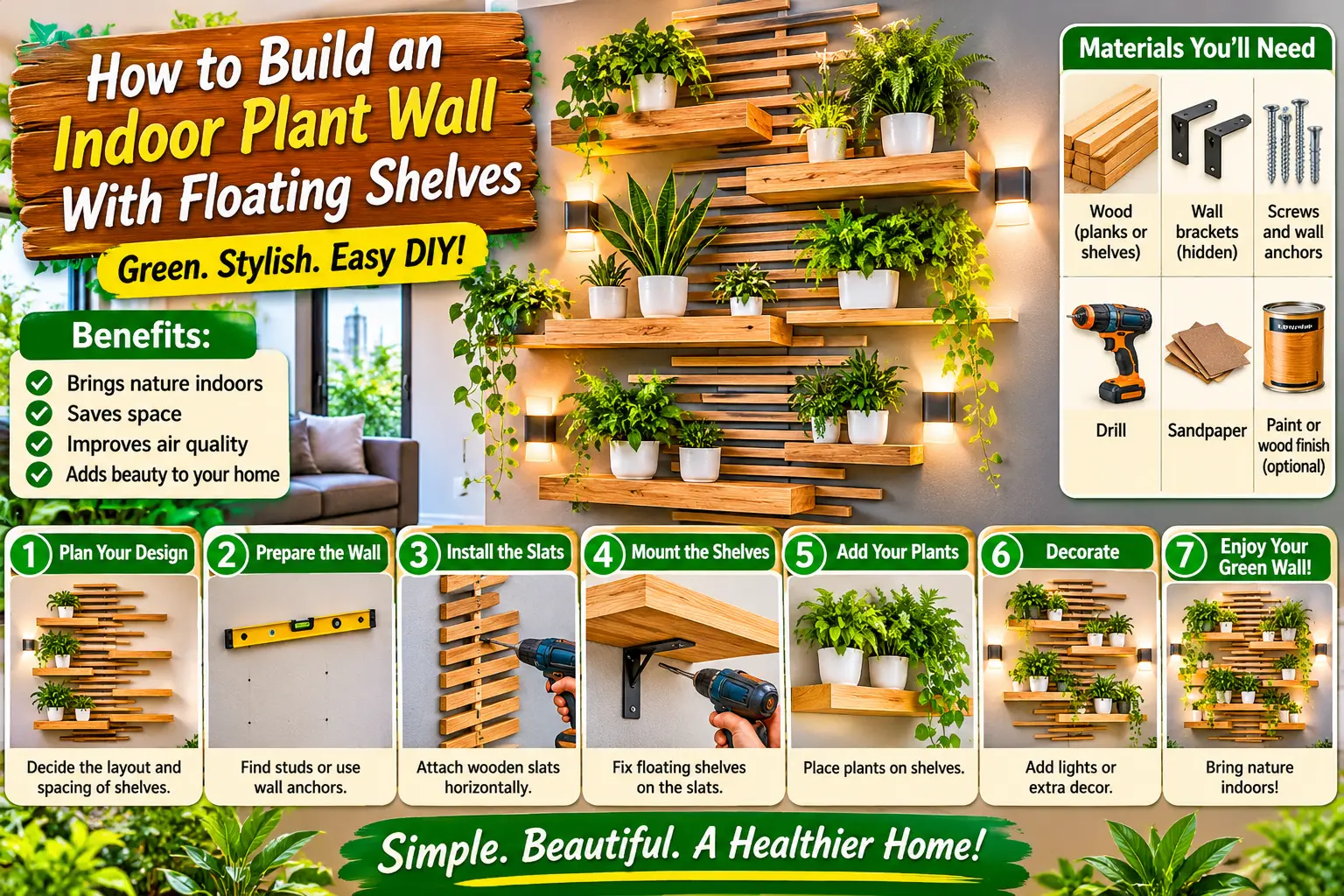
The Pinterest inspiration combines thick floating wood shelves, small houseplants, decorative wood slats, and warm wall lights. It looks polished, but the most important part of a successful plant wall is not the decorative lighting—it is matching each plant to the actual light available in the room.
Quick answer: build strong moisture-resistant shelves, anchor them into appropriate wall structure, use pots with drainage and saucers, choose plants for the real light level, and add proper grow lights if the wall is too far from a window.
Why an Indoor Plant Wall Works So Well
A vertical plant display can add greenery to a room without filling tables and floors with pots.
- Uses unused wall space
- Keeps small plants organized
- Creates a strong focal point
- Makes watering and inspection easier when shelves stay accessible
- Can work in apartments and small homes
- Lets you group plants with similar care needs
1. Check the Light Before You Build Anything
Do not choose the plants first and hope the wall works for them.
University of Minnesota Extension recommends choosing houseplants according to the actual light available in the room. Low-, medium-, and high-light plants have very different needs.
Watch the wall for several days and ask:
- How close is it to a window?
- Which direction does the window face?
- Does direct sun hit the shelves?
- Does a roof overhang block light?
- Will neighboring buildings or trees shade it?
2. Decorative Wall Lights Are Not Automatically Grow Lights
The warm sconces in the Pinterest image create atmosphere, but that does not mean they provide enough plant-usable light.
UMN notes that artificial lighting can supplement natural light, but the fixture needs enough intensity and an appropriate spectrum for plant growth.
If the wall is far from a window, use a proper LED grow light rather than relying on decorative lamps.
3. Choose Plants for the Light You Actually Have
Low-Light Options
UMN lists several foliage plants that tolerate lower indoor light, including:
- Pothos
- Philodendron
- Snake plant
- ZZ plant
- Chinese evergreen
- Peace lily
Medium-Light Options
- Ferns
- Spider plant
- Rubber plant
- Peperomia
- Monstera
- Hoya
These classifications are based on UMN indoor-light guidance.
4. Do Not Put Every Plant on the Same Shelf Just for Symmetry
The upper shelf may receive substantially more light than the lower shelf.
That means the best layout may not look perfectly symmetrical.
Put plants where their light requirements fit rather than arranging them only by pot color or height.
5. Size the Shelves for Mature Plants
A small nursery plant can double or triple in size.
Before installing shelves, think about mature:
- Plant height
- Leaf width
- Trailing length
- Pot diameter
- Repotting size
Do not leave only a few inches between shelves if the plants will soon touch the shelf above them.
6. Floating Shelves Must Carry Wet Weight
Potted plants are much heavier after watering than they look in a photo.
The shelf has to support:
- The wood shelf itself
- Ceramic or terracotta pots
- Wet potting mix
- Plants
- Drainage saucers
- Decorative containers
Do not estimate shelf capacity by appearance. Use mounting hardware and anchors appropriate for the wall construction and expected load.
7. Anchor Heavy Shelves Into Structure
Long solid-wood floating shelves carrying several pots should not depend on weak decorative fasteners.
Where appropriate, locate wall studs or use a properly engineered anchoring system rated for the wall type and load.
If you are uncertain about the wall or concealed utilities, use a qualified installer.
8. Protect the Wood From Water
Raw wood under plant pots can absorb spills and develop stains, swelling, or rot.
Use a suitable moisture-resistant finish and always place saucers or waterproof trays under pots.
9. Every Pot Needs Good Drainage
UMN recommends pots that drain well and warns against allowing houseplants to stand in water because overwatering and poor drainage can contribute to root rot and fungus gnats.
A practical shelf setup is:
Nursery pot with drainage → saucer → decorative outer pot if desired.
10. Do Not Water Plants Directly Over the Shelf Edge
One watering mistake can run down the wall and stain paint, wood, flooring, or electrical fixtures.
For small pots, it is often easier to remove the plant, water it in a sink, let excess water drain, then return it to the shelf.
11. Avoid Overwatering Low-Light Plants
Plants growing in lower light generally use water more slowly.
UMN specifically notes that low-light plants dry more slowly and recommends checking the soil rather than watering on a fixed schedule.
Do not water the entire wall every Sunday just because it is convenient.
12. Group Plants With Similar Water Needs
A fern and a snake plant may look attractive side by side, but their watering preferences can be very different.
Grouping plants with similar moisture needs makes routine care easier and reduces mistakes.
13. Give Ferns More Humidity Than Succulents
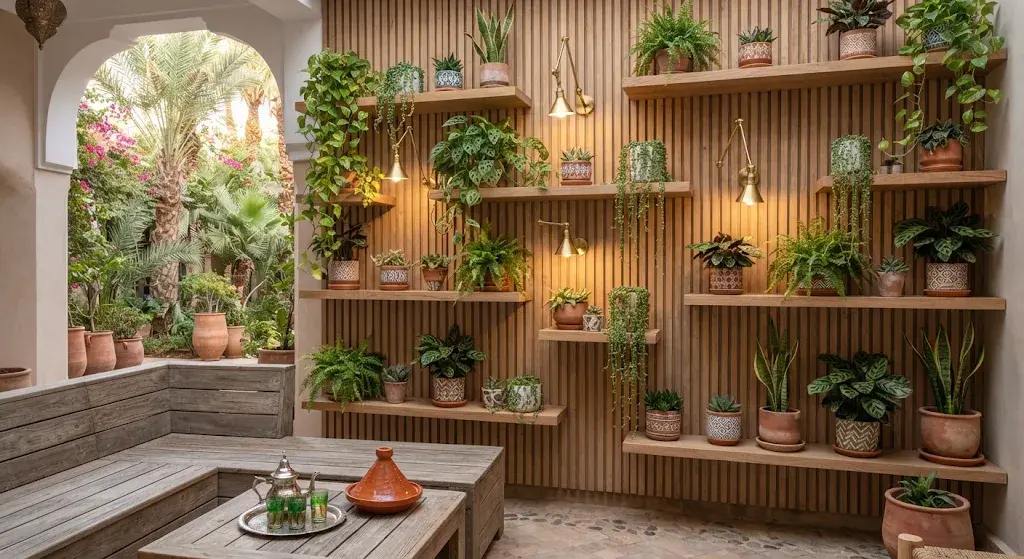
The photo appears to mix fern-like foliage with tougher low-water plants.
Penn State notes that plant humidity requirements differ significantly. Ferns often prefer higher humidity, while cacti and many succulents do not need the same humid conditions.
Arrange the wall according to care compatibility, not just appearance.
14. Grouping Plants Can Raise Local Humidity
UMN and Penn State both note that grouping plants can slightly increase humidity around foliage.
That can help humidity-loving species, but avoid packing plants so tightly that airflow becomes poor.
15. Watch for Wall Moisture
Plants add moisture to indoor air, and watering spills can create localized dampness.
UMN notes that excess indoor moisture can show up as condensation, mildew, mold, or peeling paint.
If the wall repeatedly stays damp behind pots, move the plants forward, improve ventilation, and fix the moisture source.
16. Leave Space Between Leaves and the Wall
Foliage pressed tightly against a wall can stay damp after watering and makes inspection difficult.
Give larger plants enough clearance for air movement and mature leaf size.
17. Inspect for Pests Regularly
When many plants are grouped on one wall, pests can move from one pot to another quickly.
UMN recommends examining indoor plants regularly and isolating affected plants if insects are found.
Look underneath leaves and around stems for:
- Spider mites
- Mealybugs
- Scale
- Aphids
- Whiteflies
- Fungus gnats around wet soil
18. Quarantine New Plants Before Adding Them
One new infested plant can turn a wall of ten plants into a much larger pest problem.
Penn State recommends considering an isolation period of roughly three to four weeks when bringing plants indoors so hidden pest problems have time to appear.
19. Use Clean Potting Mix Indoors
UMN advises using clean potting media for indoor plants rather than ordinary garden soil, which can introduce pests and drainage problems.
20. Add Grow Lights if the Wall Is Too Dark
If plants become pale, drop leaves, or develop long stretched stems, insufficient light may be part of the problem.
UMN notes that plants grown with too little light can become leggy, lose leaves, or turn pale.
A slim LED grow-light bar can often be hidden underneath the shelf above, creating a cleaner look than a large freestanding lamp.
21. Use a Timer for Supplemental Lighting
If you add grow lights, a timer makes the system easier to maintain.
UMN gives approximately 12–14 hours of total daily light as a useful reference for foliage houseplants under supplemental lighting.
Do not leave grow lights on continuously; plants also need a dark period.
22. Keep Grow Lights at the Right Distance
Light intensity drops as the fixture moves farther away.
UMN lists about 12–24 inches as a general reference distance for foliage houseplants under supplemental lighting, depending on the fixture and plant.
Always follow the light manufacturer’s recommendations because fixture output varies significantly.
23. Keep Electrical Fixtures Away From Water
A plant wall combines watering and electricity in the same small area.
Route cords and fixtures so spilled water cannot run directly into outlets, connectors, or lighting equipment.
Use equipment appropriate for the location and follow local electrical requirements.
24. Keep the Lowest Shelf High Enough to Clean Under It
The bottom shelf in the inspiration image stays above the floor, which makes sweeping and cleaning easier.
Avoid placing the shelf so low that fallen soil, dead leaves, or water become difficult to reach.
A Simple Plant Wall Layout
| Wall Zone | Good Use |
|---|---|
| Upper shelves | Trailing pothos, philodendron, smaller plants where light is strongest |
| Middle shelves | Ferns, peperomia, spider plants, medium-light foliage |
| Lower shelves | Snake plants, ZZ plants and other lower-light tolerant foliage plants |
| Under-shelf area | Optional hidden LED grow-light bars |
What This Pinterest Plant Wall Gets Right
- Uses vertical space instead of floor space.
- Combines plants with natural wood.
- Uses shelves at different heights for visual movement.
- Keeps each plant removable for maintenance.
- Leaves some wall visible instead of creating a dense living wall.
- Uses lighting to make the display feel intentional.
What I Would Change
- Do not assume the decorative sconces provide enough light for plants.
- Add hidden grow lights if natural light is weak.
- Use drainage saucers under every pot.
- Seal or protect wooden shelves against water.
- Group plants according to light and moisture needs.
- Leave more room for mature foliage.
- Confirm shelf load capacity before adding heavy ceramic pots.
- Keep water away from electrical fixtures.
Indoor Plant Wall FAQ
Can plants survive on floating shelves?
Yes, if the shelf provides enough room and the plant receives suitable light, water, airflow, temperature, and humidity.
Which plants are easiest for a lower-light plant wall?
Pothos, philodendron, ZZ plant, snake plant, Chinese evergreen, and several other foliage plants tolerate lower indoor light better than sun-loving plants.
Do normal LED lights help houseplants grow?
Some general LED fixtures may provide useful light, but decorative lighting is not automatically strong enough for plant growth. A purpose-designed grow light makes intensity and spectrum easier to manage.
How many hours should houseplant grow lights run?
UMN gives roughly 12–14 hours of total daily light as a useful reference for foliage houseplants under supplemental lighting, with a dark period each night.
How do I stop water damaging floating shelves?
Use pots with drainage, waterproof saucers, a moisture-resistant wood finish, and remove plants for heavy watering when practical.
Why are my plant-wall plants becoming leggy?
Long thin stems and stretched growth commonly indicate insufficient light. UMN identifies leggy growth as one of the typical signs of inadequate indoor light.
Should I mist the whole plant wall?
Not automatically. Plants have different humidity needs, and repeatedly wetting leaves and walls can create unnecessary moisture problems. Use plant-specific humidity management instead.
The Bottom Line
The Pinterest wall works visually because it combines warm wood, staggered shelves, small plants, and soft lighting without filling the entire wall.
For a version that works long-term, treat it as a growing system as well as a decorating project. Match plants to the real light level, add grow lights when necessary, anchor shelves for wet-pot weight, protect the wood and wall from water, provide drainage, and group plants with compatible care needs.
Sources
- University of Minnesota Extension — Lighting for Indoor Plants and Starting Seeds
- University of Minnesota Extension — Managing Insects on Indoor Plants
- University of Minnesota Extension — Winter Houseplant Tips
- University of Minnesota Extension — Controlling Moisture Problems in Your Home
- Penn State Extension — The Argument for Houseplants