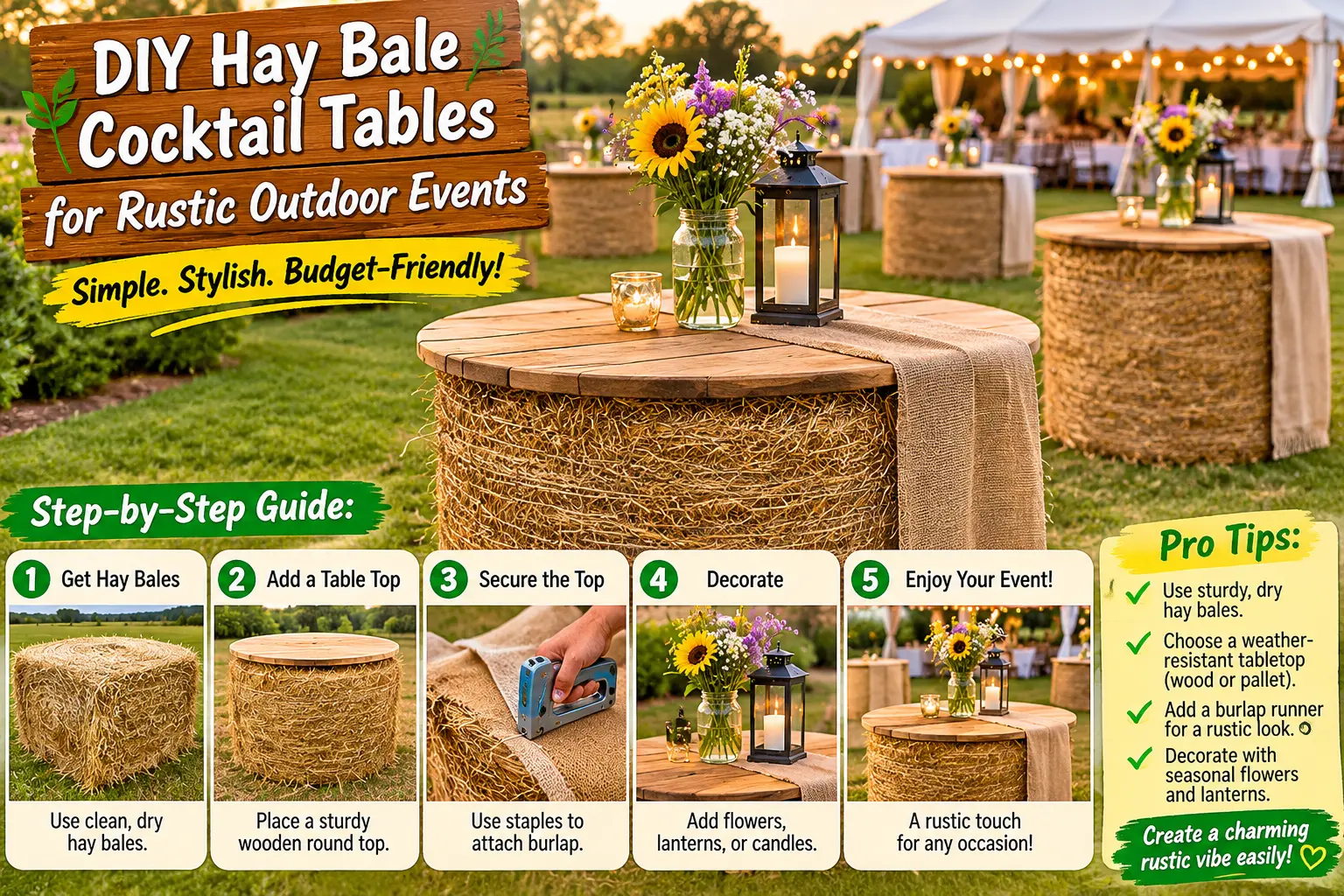
Round hay or straw bales can become surprisingly attractive cocktail tables for a farm wedding, backyard reception, or outdoor event—but they need more planning than simply placing a wood circle on top.
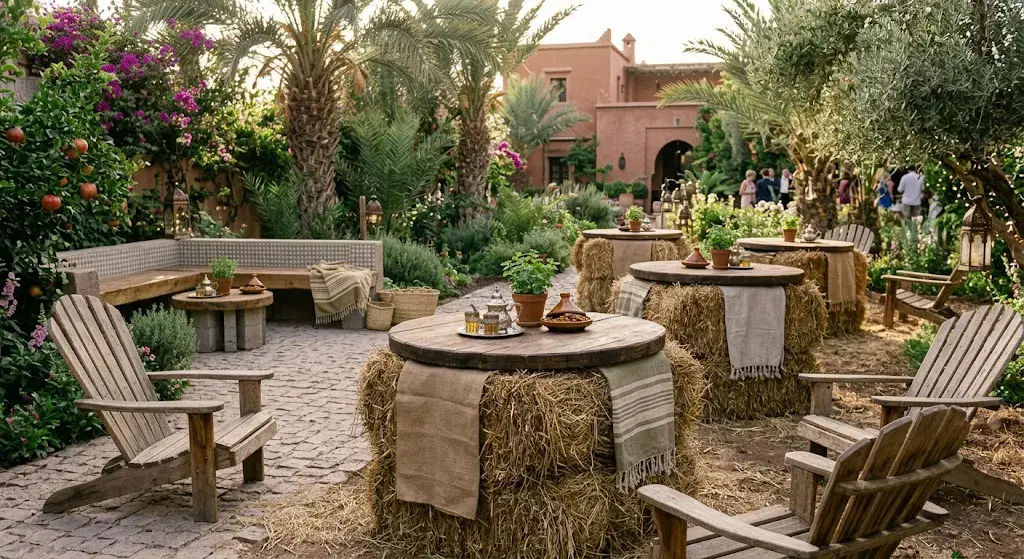
The Pinterest setup works because the bales create a rustic cylindrical base while the wooden tabletop gives guests a flat surface for drinks, flowers, lanterns, and small plates.
The biggest safety rule: treat hay and straw as combustible material. Use battery-operated candles or enclosed flameless lighting instead of open flames, and keep the tables away from heaters, grills, fire pits, and other ignition sources.
Hay Bale or Straw Bale?
For event decor, straw is often the better choice when available.
Hay contains dried grasses and often more seeds and plant material, while straw is the dry stalk left after grain harvest. Straw is generally cleaner for decorative use and usually contains fewer seeds.
Oklahoma State Extension also notes that straw typically contains less seed than hay.
1. Start With Dry, Tight Bales
Choose bales that are firm, dry, and tightly bound.
Avoid bales that are:
- Wet or damp inside
- Moldy
- Soft or collapsing
- Loosely tied
- Strong-smelling
- Actively heating
Wet hay can heat internally and become a fire hazard. University of Minnesota Extension notes that hay baled at lower moisture has much lower fire risk, while risk rises as moisture increases.
2. Place the Bale on Its Most Stable Base
The bale needs to stand securely before you add a tabletop.
Penn State recommends storing large bales on their broadest base to reduce the risk of tipping. The same stability principle is useful for event tables.
3. Use a Real Tabletop
A round wood panel makes the bale feel much more like a real cocktail table.
The top should be:
- Flat
- Smooth
- Free of splinters
- Wide enough for drinks and small decor
- Not so oversized that it becomes easy to tip
4. Keep the Top From Sliding
A loose wood circle resting on dry straw can slide if someone leans on one side.
For a temporary event table, use a concealed stabilizing method appropriate for the bale and tabletop rather than relying only on gravity.
The attachment should prevent side-to-side movement without creating exposed sharp hardware where guests can touch it.
5. Wrap the Bale Only if It Helps
The image appears to use decorative twine or netting around the outside.
A wrap can:
- Contain loose straw
- Create a cleaner appearance
- Add decorative texture
- Reduce shedding onto guests’ clothing
Do not use a wrap that introduces sharp wire ends or creates a tripping hazard.
6. Do Not Use Open-Flame Candles
The Pinterest table is styled with lanterns and candles, but this is the detail I would change first.
NFPA warns that dried plant materials can ignite easily and recommends keeping combustible decorations away from flames and heat sources.
Use LED candles or battery lanterns instead. They give the same warm evening look without putting an ignition source directly above dry straw or hay.
7. Keep the Tables Away From Fire Features
Do not place hay-bale tables beside:
- Fire pits
- Outdoor heaters
- Grills
- Smoking areas
- Generators with hot exhaust
- Open-flame decor
Dry agricultural material can contribute significant fuel to a fire once ignited.
8. Keep Walkways Clear
Round cocktail tables work best around the edge of a reception area rather than in narrow walking routes.
Leave clear paths between:
- The dining tent
- Food service
- Restrooms
- Parking
- Emergency exits
9. Protect the Bales From Rain
A bale that becomes soaked before the event can soften, smell, mold, and become less stable.
Store event bales under cover until setup day whenever possible.
UMN recommends keeping stored hay off wet ground and protecting it from moisture to reduce deterioration.
10. Use a Stable Surface
The field in the Pinterest image looks level, but real lawns can hide holes, soft soil, and uneven ground.
Before setting up tables:
- Check that the bale does not rock
- Avoid steep slopes
- Avoid muddy depressions
- Keep tables away from irrigation heads
- Do not block drainage routes
11. Keep Decor Lightweight
These are temporary rustic tables, not heavy restaurant furniture.
They are ideal for:
- Small flower arrangements
- LED lanterns
- Drink glasses
- Cocktail napkins
- Small signs
Avoid large heavy centerpieces that raise the center of gravity or make the tabletop easier to tip.
12. Plan What Happens After the Event
One advantage of using agricultural bales is that they can have a second use after the event if they remain clean and suitable.
Depending on the material and condition, they may be reused for:
- Mulching
- Composting
- Straw-bale gardening
- Other farm uses
Do not use event bales as animal feed if they have been contaminated by drinks, decorations, chemicals, mold, or prolonged wet weather.
What the Pinterest Setup Gets Right
- Uses inexpensive farm materials as event decor.
- Creates natural standing-height gathering points.
- Pairs well with wood tabletops and wildflower arrangements.
- Fits a field, barn, or homestead setting.
- Can be disassembled after the event.
What I Would Change
- Use flameless candles instead of real candles.
- Secure the tabletop against sliding.
- Use only dry, stable bales.
- Place them on level ground.
- Keep them away from heaters, grills, and fire pits.
- Protect them from rain before the event.
The Bottom Line
Hay or straw bale cocktail tables can look beautiful at a rustic outdoor event because they turn an ordinary agricultural material into temporary furniture with very little construction.
The idea works best when the bales are dry and stable, the wood tops are secured, and all decor stays lightweight.
The one Pinterest detail I would not copy is open flame around dry straw or hay. Flameless lighting gives you the same look with much less risk.
Sources
- National Fire Protection Association — Fire Safety Around Combustible Decorations
- Penn State Extension — Safely Moving and Storing Large Hay Bales
- University of Minnesota Extension — Preventing Hay Fires
- University of Minnesota Extension — Preserving Dry Stored Hay
- Oklahoma State University Extension — Straw and Hay Bale Use