FARMSOLO • BACKYARD PROJECTS
How to Lift Roofing Materials onto a Roof: Safe Methods, Tools & DIY Tips
Moving roofing materials from the ground to the roof can be one of the hardest parts of a roofing project. Shingles are heavy, plywood sheets are awkward, and long metal panels can become difficult to control.
The right lifting equipment can make the job easier and safer. In this guide, we’ll look at roofing material hoists, ladder lifts, conveyors, lifting ramps, and the safety checks you should make before moving anything overhead.
Quick Answer
The safest way to lift roofing materials onto a roof is usually to use equipment specifically designed and rated for the materials being moved. Depending on the project, this may include a roofing material hoist, a compatible ladder lift, or a construction conveyor.
Choose equipment based on the load weight, material dimensions, roof height, and site conditions. Never assume an ordinary ladder, homemade ramp, or improvised pulley can safely support heavy roofing materials.
Important safety warning: Do not stand beneath suspended materials. Never overload lifting equipment or use an improvised wooden ramp without professional design and verification. Follow the equipment manufacturer’s instructions and applicable workplace safety requirements.
Why Is Lifting Roofing Materials So Difficult?
At first, carrying a few roofing supplies up a ladder might not sound like a big deal. But once you start moving bundles of shingles, plywood, or metal panels, the job becomes more complicated.
Roofing materials can be heavy, bulky, and difficult to grip. Some materials are also long enough to catch the wind or become unbalanced while being moved.
There are three main things to consider before choosing a lifting method:
- Weight: How heavy is each bundle, sheet, or package?
- Dimensions: Is the material compact, oversized, or difficult to balance?
- Roof height: How far must the materials travel from the ground?
Remember: The best lifting method is not necessarily the fastest one. It is the method that can move the specific load safely within the equipment’s rated limits.
5 Ways to Lift Roofing Materials onto a Roof
01 • ROOFING EQUIPMENT
Use a Roofing Material Hoist
A roofing material hoist is one of the most practical options for moving heavy roofing supplies to roof level.
These machines are designed to raise materials along a controlled lifting path. Depending on the model, a hoist may use a motor, a track, and a platform or carrier that supports the load.
Some models are designed for bundles of shingles, while others are suitable for different construction materials. Always check the manufacturer’s specifications before choosing one.
Why consider a roofing hoist?
- Reduces repeated manual lifting.
- Can move heavy materials in a controlled way.
- Helps organize material delivery on larger projects.
- Can reduce the need to carry supplies up a ladder.
Check the load rating, setup requirements, support conditions, and operating instructions before using the equipment.
02 • MATERIAL HANDLING
Use a Ladder Hoist or Material Lift
A ladder hoist or material lift can help move supplies to a particular height without requiring workers to carry every item by hand.
Some systems use a guided platform that travels along a track. Others have a lifting mechanism designed for a compatible support structure.
The important detail is compatibility. A lift designed for small construction supplies may not be suitable for heavy shingle bundles or long metal roofing panels.
Before operating a material lift:
- Confirm the rated capacity.
- Check that the equipment is approved for your materials.
- Follow the required installation and support instructions.
- Keep the lifting path clear.
- Keep workers away from suspended loads.
A regular extension ladder is not automatically a safe support for a lifting system. Use only a compatible, approved setup.
03 • LARGE ROOFING PROJECTS
Use a Roofing Material Conveyor
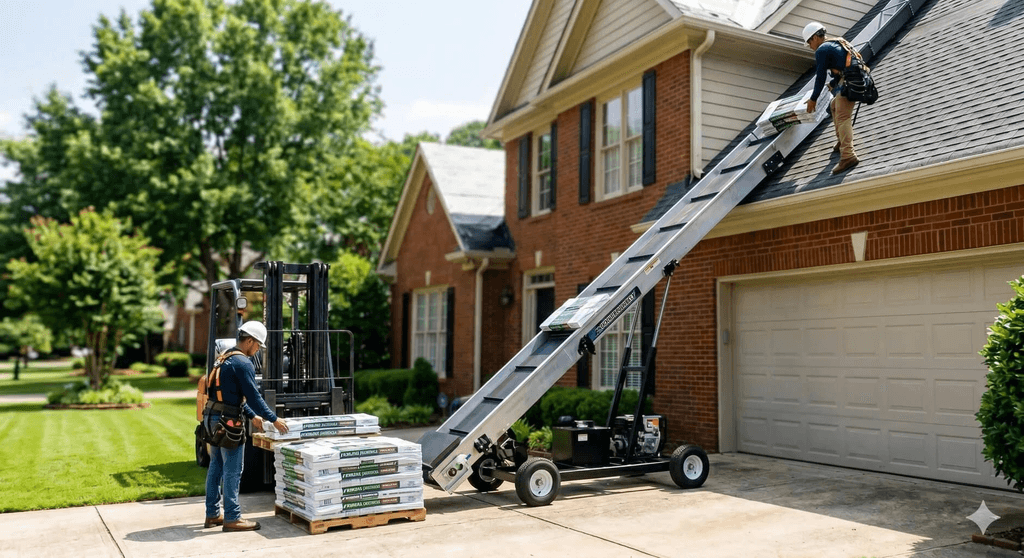
A roofing conveyor can be useful when a project involves moving many bundles or packages to roof level.
Instead of manually carrying every package, the conveyor moves materials along a powered belt or lifting system.
Some conveyors are made for shingles and construction supplies. Others are designed for different loads and applications.
Check these details before renting:
- Maximum lifting height.
- Rated load capacity.
- Conveyor length and operating angle.
- Material dimensions and compatibility.
- Power and setup requirements.
The conveyor must be positioned and supported according to its manufacturer’s instructions. Never assume one model can safely handle every type of roofing material.
04 • SPECIALIZED LIFTING
Consider a Properly Designed Lifting Ramp
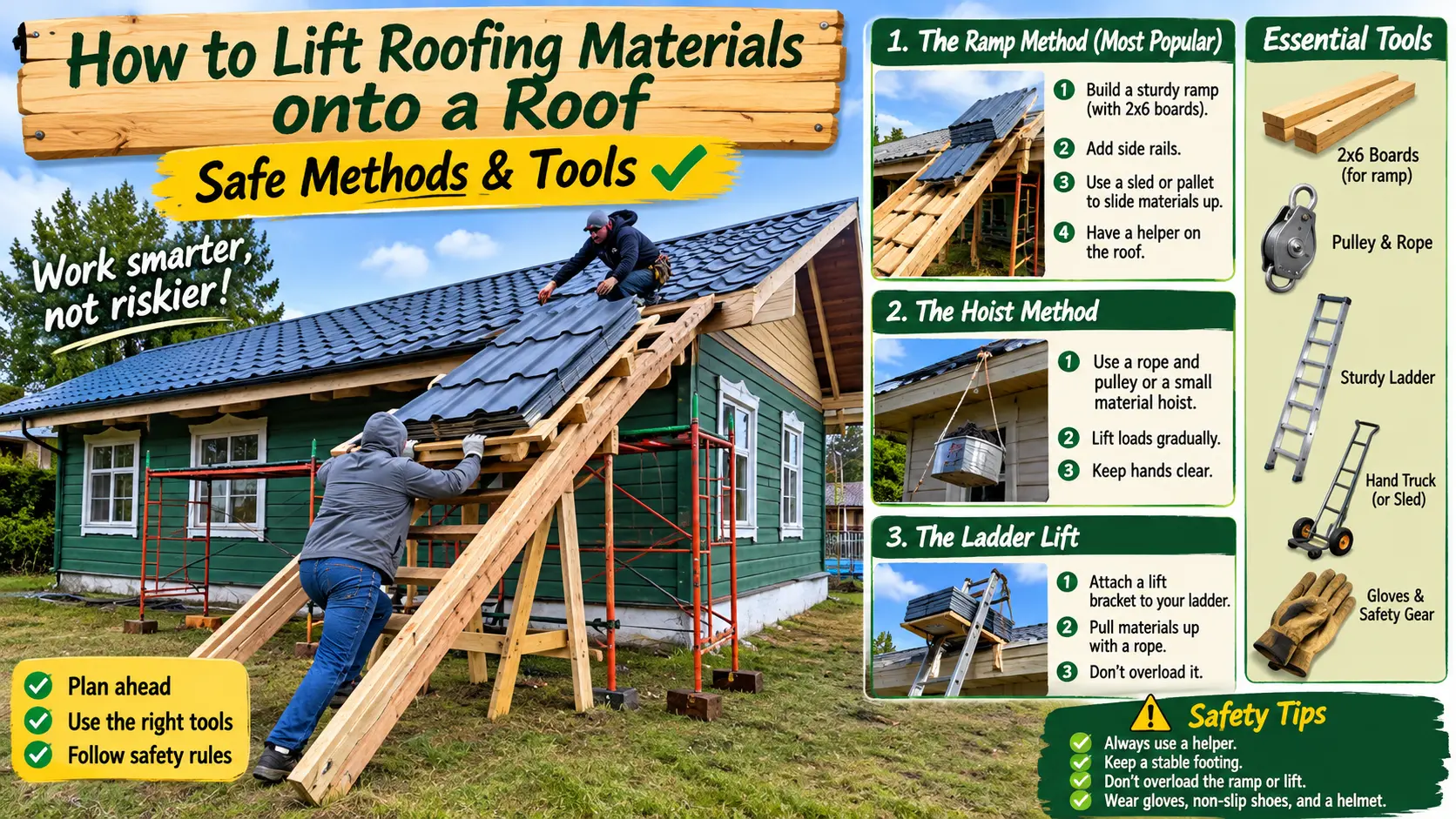
You may have seen DIY videos showing wooden ramps used to move roofing materials toward a roof. They can look simple, but this is a method that needs careful attention.
An ordinary wooden board is not automatically strong enough to support a heavy bundle. A homemade structure can bend, shift, or collapse under load. Materials can also slide backward or fall sideways.
A suitable ramp system must be designed for the actual load, height, support points, and operating conditions.
Before considering a ramp, verify:
- Its rated load capacity.
- The strength of its supporting structure.
- How materials are prevented from sliding.
- Whether the system is approved for the intended use.
- How workers will be protected from falling materials.
For most homeowners, renting a purpose-built material lift is a better option than experimenting with an untested homemade ramp.
05 • MATERIAL-SPECIFIC HANDLING
Choose Equipment for the Roofing Material
Not all roofing materials are equally easy to lift. Their weight, shape, and dimensions affect which equipment is suitable.
A bundle of shingles is heavy and compact. A metal panel may be lighter but much longer and harder to control. Plywood sheets have a large surface area that can catch the wind.
Use the manufacturer’s product weight and dimensions when selecting lifting equipment.
| Material | Main concern | Equipment to consider |
|---|---|---|
| Asphalt shingles | Heavy bundles | Rated roofing hoist |
| Metal panels | Long and awkward | Suitable panel lift |
| Plywood sheets | Large surface area | Sheet-material lift |
| Underlayment | Bulky packages | Suitable material lift |
| Roofing tiles | Heavy and fragile | Hoist rated for the load |
Essential Safety Tips Before Lifting Materials
Lifting materials adds another risk to a job that already involves working at height. A safe lifting plan should be prepared before the equipment starts moving.
01 • Check the weather. Wind can make long roofing panels difficult to control. Avoid lifting when wind or weather conditions exceed the equipment’s approved operating limits.
02 • Keep people away from the lifting area. Establish an exclusion zone and never allow anyone to stand underneath a suspended load.
03 • Inspect the equipment. Look for damaged components, worn cables, loose connections, and other problems before operating the system. Do not use damaged equipment.
04 • Secure the materials. Support and secure every load according to the lifting equipment’s instructions. Unbalanced or loose materials can shift while being raised.
05 • Check roof loading. Make sure the roof can support the materials being delivered. Avoid placing large stacks in one location without checking the roof’s load capacity.
06 • Use proper fall protection. Anyone working at height should follow applicable fall-protection requirements. The right system depends on the roof, work conditions, and local regulations.
Should You Rent or Buy Roofing Lifting Equipment?
This depends on how often you work on roofing projects.
For a one-time home repair, renting suitable equipment may be more practical than buying a machine that you will rarely use.
For a roofing contractor or someone managing frequent construction projects, purchasing equipment may make more sense after comparing the costs.
| One small roofing project | Consider renting |
| Large roof replacement | Compare professional hoist rental options |
| Frequent roofing jobs | Compare buying and renting costs |
| Heavy or oversized materials | Use equipment rated for those materials |
When comparing rental prices, ask whether delivery, setup, operator training, and collection are included. Also confirm that the equipment is suitable for your roof height and material type.
Common Mistakes to Avoid
- Carrying heavy bundles up a regular ladder. Carrying bulky materials while climbing can affect balance and increase fall risk.
- Overloading lifting equipment. Never guess the load weight. Check the product specifications and equipment capacity.
- Using an untested wooden ramp. A homemade structure may fail under pressure. Use an engineered and approved system.
- Lifting large panels in strong wind. Long panels can become difficult to control and may strike people or nearby objects.
- Stacking all materials in one spot. Concentrated loads can put excessive pressure on part of a roof.
- Ignoring the manufacturer’s instructions. Every lifting system has specific operating limits and setup requirements.
Frequently Asked Questions
What is the safest way to lift shingles onto a roof?
A properly rated roofing material hoist or compatible material lift is generally a practical option for heavy shingle bundles. The equipment must be suitable for the load and installed and operated according to its instructions.
Can I use a regular ladder to lift roofing materials?
A regular ladder should not be treated as a material lifting system. Carrying heavy materials while climbing can create serious fall risks. Use equipment specifically designed and approved for the intended lifting task.
Can I build a DIY ramp to lift roofing materials?
A ramp should not be built from ordinary lumber and used for heavy loads without professional design and verification. Its load capacity, supports, stability, and material restraints all need to be considered.
Can a roofing conveyor lift metal panels?
It depends on the conveyor model and its approved uses. Long metal panels need equipment that can properly support and control their dimensions. Check the manufacturer’s specifications before use.
Should I rent a roofing material hoist?
Renting can be practical for a one-time roofing project. Compare rental costs, equipment capacity, delivery, setup, and training before making a decision.
How do I stop roofing materials from falling during lifting?
Use a lifting system with the correct carrier or platform, secure the load as instructed, respect the rated capacity, and keep people outside the lifting area. Never improvise restraints or stand beneath suspended materials.
Sources and Safety References
Before starting a roofing project, consult official workplace safety guidance and the equipment manufacturer’s instructions. These resources can help you understand lifting, fall protection, and material-handling requirements.
THE FARMSOLO TAKEAWAY
Choose the Right Lift Before You Start
Getting roofing materials onto a roof doesn’t have to involve carrying every bundle by hand. A suitable material hoist, lift, or conveyor can make the process more organized.
The important part is matching the equipment to the material, checking the load capacity, preparing the work area, and following the manufacturer’s safety instructions.
Plan the lift carefully, protect everyone around the work area, and never take shortcuts with heavy materials or work at height. A safe roofing project is always worth the extra preparation.