FARMSOLO • BACKYARD LANDSCAPING
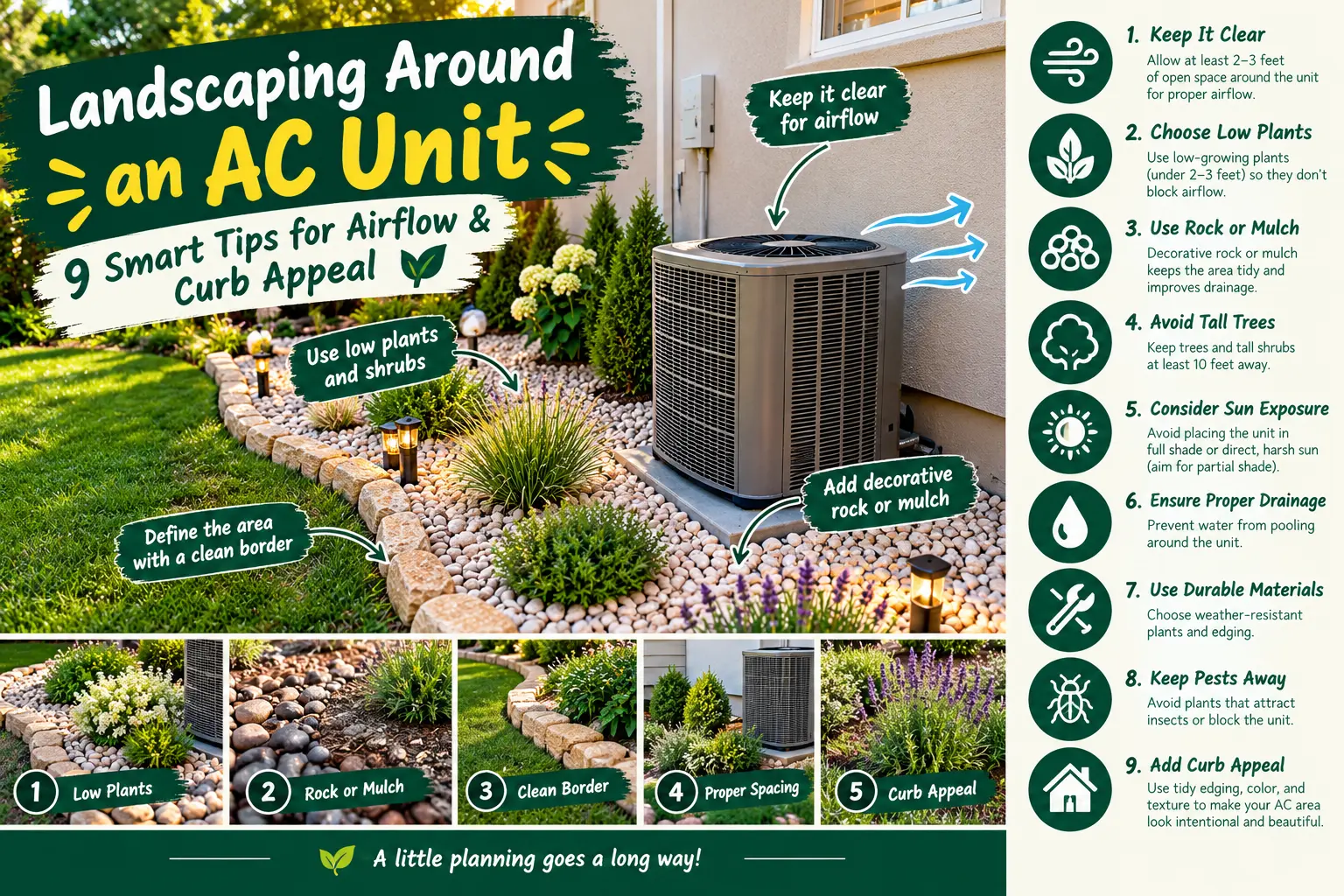
Landscaping around an AC unit can make an awkward side yard look clean and intentional—but the outdoor condenser still needs room to breathe. The best design uses gravel, low plants, simple edging and lighting to soften the equipment without blocking airflow, drainage or the space an HVAC technician needs to reach the unit.
Best for: side yards • AC condenser areas • gravel landscaping • low-maintenance beds • foundation landscaping • small backyard spaces
A Good Starting Point
Many manufacturers recommend roughly 2–3 feet of open space around outdoor equipment, but always follow the clearance listed for your exact unit.
Best Ground Cover
Decorative rock or gravel can be a practical choice near the condenser because it does not shed lightweight organic debris like bark mulch or pine straw.
Quick Answer
Keep landscaping away from the outdoor AC coil and service panels, leave the top discharge unobstructed, maintain a level and well-drained equipment pad, and choose low-debris plants outside the required clearance zone. Gravel or decorative stone can create a clean buffer around the unit, but do not pile rock against the cabinet, bury the pad, cover drain openings, or make the electrical disconnect difficult to reach.
Why Landscaping Around an AC Unit Takes a Little Planning
An outdoor air-conditioning unit is not just an unattractive metal box you need to hide.
The condenser pulls outdoor air across its coil and releases heat through the top or side, depending on the equipment design. When shrubs, tall grass, leaves, fencing or decorations crowd that airflow, the system can have a harder time doing its job.
At the same time, leaving the whole side yard as bare dirt or patchy grass is not very attractive either.
The goal is a landscape that visually softens the unit while giving the equipment more—not less—breathing and working space.
FarmSolo Rule: Do not choose plant spacing from a Pinterest photo. Find the model number of your outdoor unit and check its installation or owner’s guide first. Clearance can vary by equipment and by which side contains the service panel.
9 Smart Tips for Landscaping Around an AC Unit
01 • CLEARANCE
Start With the AC Clearance, Then Design the Garden
This is the part that matters most.
Carrier and Trane commonly recommend keeping plants and debris roughly two feet or more away from outdoor units, with some guidance calling for two to three feet around landscaping.
But your specific installation manual comes first. One side may need more room because it contains the electrical or service access panel.
Mark that clear zone before buying any shrubs. It is much easier to move the garden on paper than to move a mature plant three years later.
02 • TOP AIRFLOW
Keep the Space Above the Unit Open
Many residential condensers discharge warm air upward through the fan at the top.
That makes a pergola roof, low shelf, thick tree canopy or decorative cover directly over the equipment a bad place to improvise.
Some Trane residential guidance calls for about five feet of unrestricted space above top-discharge equipment. Again, check the manual for your unit rather than assuming one number applies everywhere.
03 • SERVICE ACCESS
Leave a Real Path for the HVAC Technician
A beautiful planting bed becomes frustrating when someone has to remove shrubs just to open the equipment cabinet.
Keep the service panel, electrical disconnect and route to the unit accessible. Do not place heavy planters, boulders, permanent screens or tightly packed plants directly in front of them.
If a technician has to kneel beside the condenser, there should be usable working space—not a thorny shrub and six landscape lights.
04 • GRAVEL
Use Decorative Rock to Create a Clean Buffer Zone
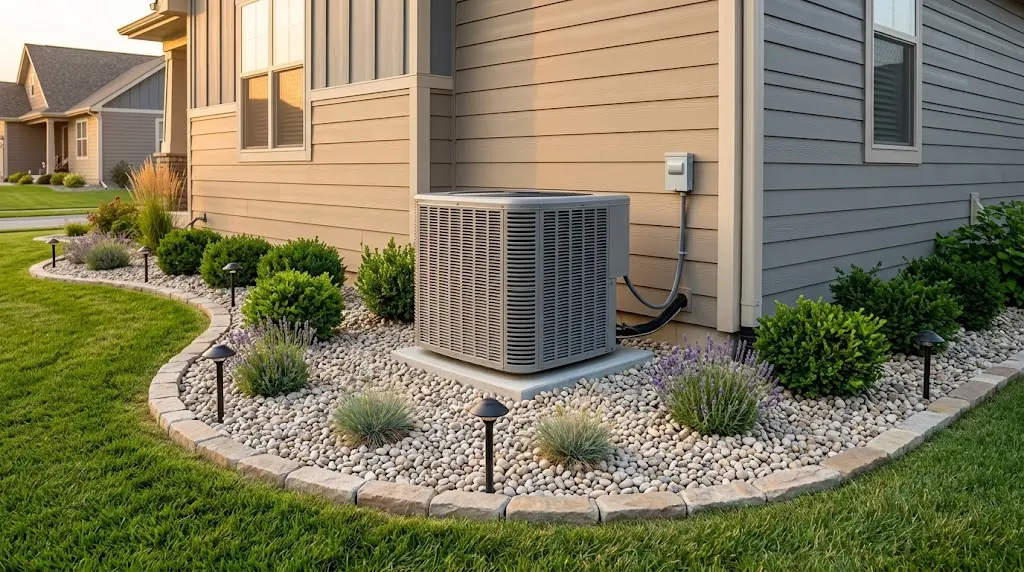
This is one of the strongest ideas in the inspiration photo.
River rock, pea gravel or another stable decorative stone can create a low-maintenance open area around the condenser while visually connecting it to the rest of the landscape.
Trane specifically recommends landscape rock instead of shredded mulch or pine straw near outdoor HVAC equipment because lightweight organic material can be pulled toward the unit and collect around the coil.
Keep loose rock out of the cabinet and do not bury the equipment pad beneath several new inches of stone.
05 • THE PAD
Keep the Condenser Level and Above the Finished Grade
Do not raise the surrounding landscape until the concrete or composite condenser pad disappears into it.
Installation guidance commonly calls for the outdoor unit to sit level on a stable pad, with the pad high enough above grade to allow drainage.
That means the finished gravel surface should not block openings in the bottom of the equipment or trap runoff against the cabinet.
06 • PLANTS
Choose Plants by Their Mature Size
A tiny one-gallon shrub may look safely far away today and grow directly into the condenser two summers from now.
Check the mature width of every plant and position it so its normal growth remains outside the equipment clearance zone.
Compact evergreen shrubs, small ornamental grasses, lavender-like forms and other neat low plantings can create the look in the inspiration photo, but the correct species depends on your climate, sunlight and water conditions.
Avoid plants with aggressive roots, heavy seasonal debris or growth that requires constant trimming away from the coil.
07 • WATER
Keep Roof Runoff and Irrigation Under Control
The condenser should not become the collection point for every source of water around the house.
Avoid directing a downspout onto the equipment pad. Keep sprinkler heads from continuously spraying the cabinet. Shape the surrounding grade so water does not pool around the unit.
If the entire side yard stays wet after rain, solve the larger drainage problem rather than simply covering it with decorative gravel.
08 • SCREENS & FENCES
Be Careful When Trying to Hide the Unit
Privacy screens can look attractive, but a solid wall placed too close to the condenser can restrict airflow and make servicing difficult.
If you want a visual screen, use an open design and place it outside the clearance required by the equipment manufacturer.
And make sure the screen can be removed or opened easily when the unit needs service.
09 • MAINTENANCE
Design the Bed So It Stays Easy to Maintain
A good AC landscape should still look good after three years without weekly trimming.
Remove leaves, weeds and grass clippings before they collect against the condenser coil. Trim plants before they enter the clearance zone instead of waiting until branches touch the cabinet.
When mowing nearby, point side-discharge clippings away from the outdoor unit. Lightweight debris can collect in the coil and reduce airflow.
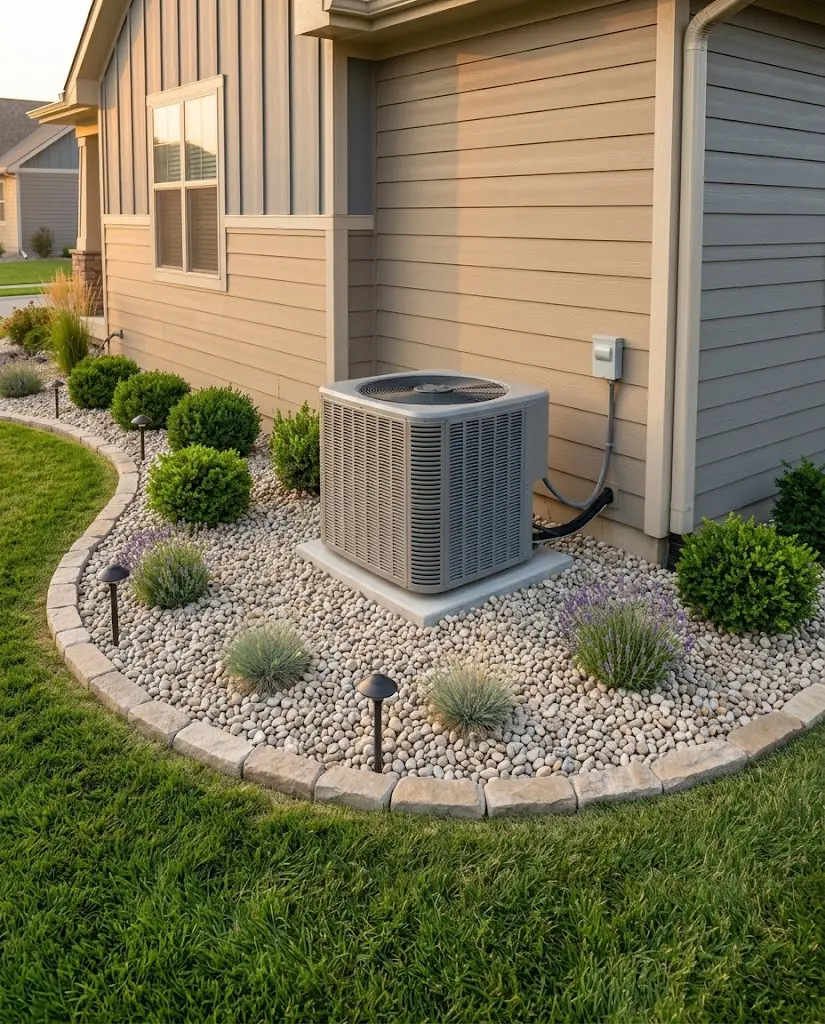
What the Pinterest AC Landscaping Idea Gets Right
| Idea in the photo | FarmSolo take |
|---|---|
| Decorative gravel | A practical low-debris material around the clear zone. |
| AC on a separate pad | Good. Keep the pad level, visible and above surrounding finished grade. |
| Low plants | Good visually, but their mature size must remain outside the required clearance. |
| Open top | Important for a top-discharge condenser. |
| Curved stone edging | A good way to visually connect the equipment zone to the lawn. |
| Landscape lights | Fine when placed outside technician working space and away from equipment wiring. |
| Dense planting near the wall | Keep checking mature width so plants do not eventually crowd the unit. |
A Simple AC Landscaping Formula
House → accessible equipment pad → open gravel clearance zone → low plants → edging → lawn or pathway.
Keep the functional equipment zone simple. Put most of the color and texture farther out where plants can grow naturally without becoming an HVAC problem.
Is Gravel Better Than Mulch Around an AC Unit?
Near the condenser itself, gravel has several practical advantages.
- It does not blow toward the coil as easily as lightweight bark or pine straw.
- It provides a clean visual buffer around the equipment.
- It makes weeds easier to spot before they reach the cabinet.
- It can reduce muddy ground around a properly drained equipment area.
- It creates a clear separation between the AC and nearby planting beds.
That does not mean gravel fixes drainage by itself. If water flows toward the foundation or equipment pad, solve the grading or drainage problem first.
Related FarmSolo guide: If water collects around this side of the house after rain, see the Backyard Drainage System guide before covering the problem with decorative stone.
What Plants Work Best Near an AC Unit?
There is no universal list because climate matters, but the plant characteristics are fairly simple.
| Better characteristics | Characteristics to avoid close to the unit |
|---|---|
| Compact mature size | Large spreading shrubs |
| Easy to trim | Fast-growing vines |
| Low leaf drop | Heavy seasonal debris |
| Non-invasive roots | Aggressive root systems |
| Suitable for local sun and soil | Plants that constantly struggle and shed material |
| Low forms farther from the cabinet | Tall plants that block the service side or top discharge |
Should You Shade an Outdoor AC Unit?
Natural shade from a properly placed tree or the house can be fine, but do not sacrifice airflow in an attempt to shade the condenser.
A tightly built shade roof or dense hedge can create a bigger problem than direct sunlight if it traps discharged air or restricts the coil.
If you want more shade in the side yard, use landscaping positioned far enough away that the outdoor unit still meets all required clearances.
Common AC Landscaping Mistakes
- Planting for today’s size. Always plan around the mature width of the shrub.
- Building a solid privacy box around the condenser. Attractive screening can still restrict airflow.
- Covering the top. Many outdoor units need a large unobstructed discharge area above them.
- Piling mulch against the unit. Lightweight organic debris can end up in the coil.
- Burying the condenser pad in gravel. Keep the pad visible, level and properly drained.
- Blocking the service panel. A technician needs enough room to inspect and repair the equipment.
- Spraying the unit with irrigation every day. Keep sprinklers directed toward plants rather than the condenser.
- Allowing roof water to fall onto the unit. Redirect concentrated runoff appropriately.
- Letting grass clippings blow into the coil. Mow with the discharge directed away from the AC.
- Moving refrigerant lines or electrical components for landscaping. Equipment modifications belong with qualified HVAC or electrical professionals.
Landscaping Around an AC Unit FAQ
How much space should I leave around an outdoor AC unit?
Two to three feet is a common landscaping guideline from major HVAC manufacturers, but the exact requirement depends on the equipment. Always use the installation manual for your specific model, especially around the service panel.
Can I put gravel around an AC condenser?
Yes. Decorative stone can be a practical low-debris surface around an outdoor unit when drainage is good and the stone does not bury the equipment pad, block openings, enter the cabinet or interfere with service access.
Is rock better than mulch around the AC?
Rock is often a better choice immediately around the equipment because it does not create the same lightweight organic debris as bark mulch or pine straw. You can still use mulch in planting areas farther outside the required equipment clearance.
Can shrubs hide an outdoor air conditioner?
Yes, but place them outside the required airflow and service clearance and plan for mature plant size. A shrub that is two feet wide when planted may eventually become six feet wide.
Can I build a fence around my AC condenser?
A screen or fence may be possible if it is open enough for airflow, remains outside the equipment’s required clearances and provides easy service access. Check the manufacturer’s instructions before building a permanent screen.
Should plants touch the condenser?
No. Keep leaves, stems and branches away from the coil and cabinet. Plants touching the unit can restrict airflow and deposit leaves, pollen and other debris.
Can landscape lights go near an AC unit?
They can be part of the surrounding landscape, but keep fixtures and wiring outside service areas and required equipment clearances. Landscape lighting should never make access to the condenser, disconnect or utility lines more difficult.
Make the AC Area Look Better Without Making the AC Work Harder
You do not need to hide the condenser behind a wall of plants to make this part of the yard attractive.
Use a generous gravel buffer, keep the equipment pad visible, move the plants farther out, add a clean border and use lighting where it does not interfere with service.
The AC should still look like part of the landscape—but airflow, drainage and technician access always come before hiding the equipment.