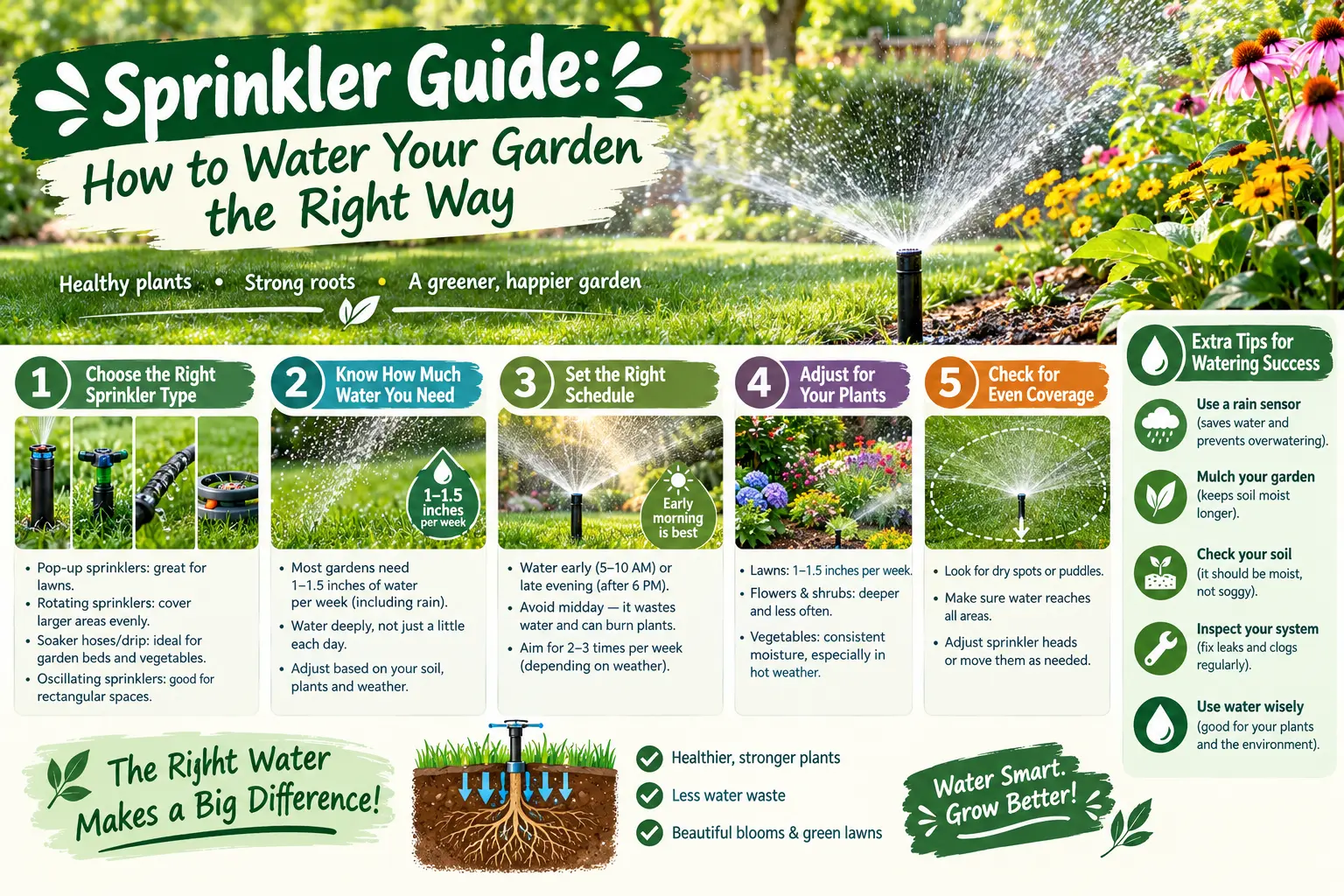
A good sprinkler can make watering your garden a whole lot easier. Whether you’re growing tomatoes in a small backyard, keeping a lawn green, or managing a little homestead with vegetables and fruit trees, the right sprinkler helps you get water where it needs to go without spending your whole morning holding a hose.
But here’s the thing: not every sprinkler works well in every garden. Some spray water everywhere except your plants. Others leave dry spots in the middle of your vegetable beds while soaking the grass around them. And if you run one for too long, you can waste a surprising amount of water.
If you’re trying to build a more self-sufficient backyard, learning how to water efficiently is worth your time. Let’s look at the different types of sprinklers, how to choose one, and a few simple tricks to help your garden grow without wasting water.
What Is a Sprinkler, and Why Does Your Garden Need One?
A sprinkler is a watering device that distributes water over a particular area. Depending on its design, it can spray water in a circle, cover a rectangular space, or deliver a gentle shower across a garden bed.
For a backyard gardener, a sprinkler can save time and effort. Instead of dragging a hose around every morning, you can set up a watering system that covers much of your garden while you handle other jobs.
Maybe you need to check your compost pile, feed the chickens, or pick a few ripe tomatoes. Having a reliable watering routine makes those everyday homesteading jobs easier to manage.
However, a sprinkler isn’t always the best choice for every plant. Leafy vegetables may tolerate overhead watering, but some plants are better watered near the soil to keep their leaves dry and reduce the spread of certain diseases.
The goal isn’t simply to spray as much water as possible. It’s to give your plants the right amount of moisture, in the right place, at the right time.
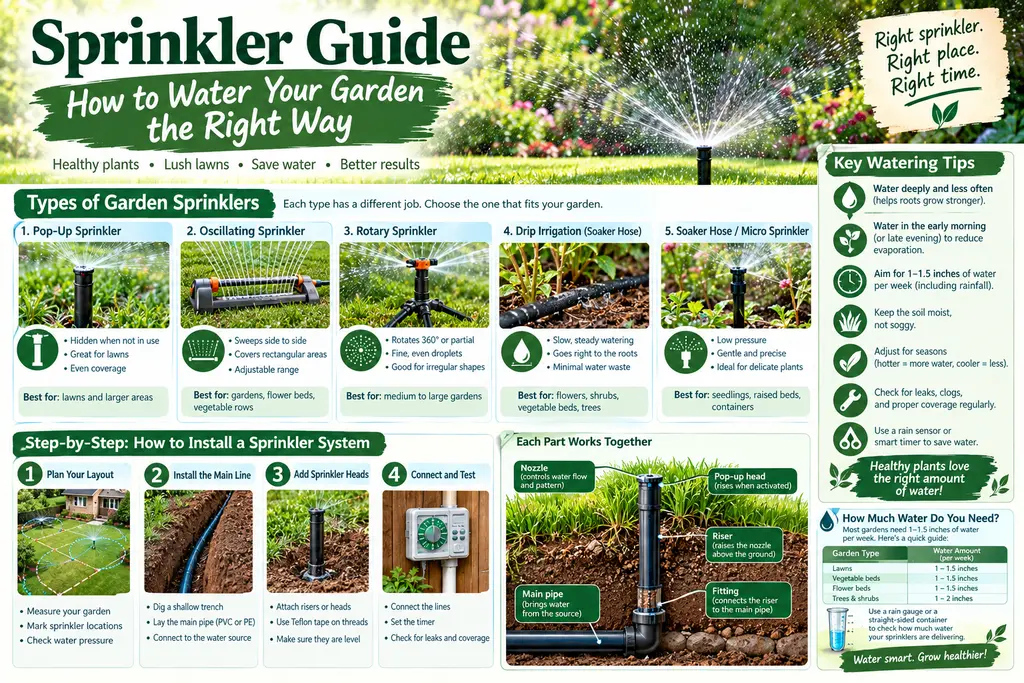
What Are the Different Types of Sprinklers?
Before spending money on a new sprinkler, think about the shape and size of your garden. A small square lawn has different needs from a long vegetable bed or a backyard filled with raised planters.
Here are the main options worth knowing about.
1. Oscillating Sprinklers
An oscillating sprinkler moves back and forth, sending water through several small openings along a horizontal bar. It usually covers a rectangular area.
This type can work well for lawns and relatively even garden spaces. You can often adjust the spray width and distance to suit the area you’re watering.
The downside? Wind can push the water away from your target. Some models also struggle to distribute water evenly if the water pressure is too low.
For a rectangular backyard, this can be a convenient starting point. Just check how far the spray reaches before leaving it running.
2. Rotary Sprinklers
Rotary sprinklers rotate while spraying water over a circular or partly circular area. Some have one or more rotating arms, while others use rotating nozzles.
They’re useful for lawns and open garden spaces where you want water to reach a wider area.
One thing to watch is the coverage around the edges. A sprinkler may cover a large circle but still leave dry patches if the spray pattern doesn’t overlap properly with nearby areas.
3. Stationary Sprinklers
A stationary sprinkler stays in one position and sprays water through a fixed pattern of openings.
These models are often simple and affordable. They’re suitable for smaller areas, patios with containers, or compact patches of grass.
The catch is that you may need to move them around to water a larger garden. If you forget to reposition the sprinkler, one area can become soaked while another stays dry.
4. Impact Sprinklers
Impact sprinklers make a familiar clicking sound as a moving arm strikes the sprinkler body and rotates the spray around an area.
They’re commonly used for lawns, larger gardens, and some agricultural applications. Depending on the model, they can cover a fairly wide area.
They may be too powerful or poorly suited for delicate seedlings and tiny raised beds, so check the spray intensity before using one around young plants.
5. Drip Irrigation: An Alternative Worth Considering
Drip irrigation isn’t a traditional sprinkler, but it’s worth mentioning because it can be a better solution for vegetable gardens.
Instead of spraying water through the air, drip lines deliver water slowly near plant roots.
This can reduce evaporation and keep foliage drier than overhead watering. It’s particularly useful for tomatoes, peppers, raised beds, and other crops that benefit from targeted watering.
For a mixed homestead, you might use a sprinkler for the lawn and drip irrigation for vegetables. There’s no rule saying your entire property must use the same watering method.
How to Choose the Best Sprinkler for Your Garden
I would start with the garden itself rather than the price tag. A fancy sprinkler won’t solve a problem if it’s the wrong shape or size for your space.
Ask yourself a few simple questions before buying.
How large is the area?
Measure the length and width of the space you want to water. A small backyard may only need a basic stationary sprinkler, while a larger lawn might benefit from a rotary or impact model.
What are you watering?
Grass, flower beds, vegetable gardens, and newly planted seedlings don’t always need the same watering method. Choose a sprinkler with a spray pattern that suits your plants.
What is your water pressure like?
Some sprinklers need more pressure than others to operate properly. If your spray barely reaches the garden’s edges, check the manufacturer’s pressure requirements and look for restrictions or leaks in the hose.
Can you adjust the coverage?
Adjustable spray patterns can help prevent water from soaking sidewalks, fences, and the neighbor’s driveway.
Is it easy to maintain?
A sprinkler with accessible nozzles and a sturdy connection can be easier to clean and repair. You don’t necessarily need the most expensive model, but avoid choosing one based only on the lowest price.
How to Water Your Vegetable Garden With a Sprinkler
Vegetable gardens need consistent moisture, especially when plants are producing fruit or growing through hot weather. But the amount of water they need depends on soil type, weather, crop variety, and plant maturity.
Here’s a practical routine you can follow.
Step 1: Check the Soil First
Before turning on the sprinkler, check the soil near your plants. Push a finger into the ground or use a small garden trowel to see whether the root zone is still moist.
If the soil is already wet, additional watering may not be necessary.
Sandy soil tends to drain faster than heavier soil, so it may need more frequent attention. Clay soil can hold moisture longer, although poorly drained clay can create root problems.
Step 2: Water Early When Possible
Morning is often a good time to water. Temperatures are usually lower, and there may be less evaporation than during the hottest part of the afternoon.
Avoid making a habit of leaving vegetable foliage wet overnight, especially when conditions encourage fungal diseases.
If you can only water later in the day, focus on getting the water to the root zone and allow enough time for foliage to dry when possible.
Step 3: Water Deeply Rather Than Constantly
Frequent, shallow watering can encourage roots to remain close to the surface. Depending on the soil and crop, deeper watering may help roots develop farther down.
That doesn’t mean every garden needs a long sprinkler session. Water slowly enough for the soil to absorb the moisture without producing runoff.
Check the soil after watering to see how deeply the water has reached. Adjust your schedule based on what you find.
Step 4: Keep an Eye on Young Plants
Newly planted seedlings and transplants often need more careful moisture management than established plants.
Their roots may not reach far into the soil yet, so check them regularly. A strong sprinkler spray can also flatten delicate seedlings or wash soil away from their roots.
If your sprinkler is too powerful, use a gentler setting, increase the distance, or water those plants by hand.
How Long Should You Run a Sprinkler?
There isn’t one perfect number of minutes for every garden. A sprinkler’s output varies with its design, water pressure, and coverage area.
Fortunately, you can measure how much water your sprinkler applies without buying expensive equipment.
Try this simple test:
- Place several straight-sided containers, such as empty tuna cans, across the area you’re watering.
- Run the sprinkler for 15 minutes.
- Turn off the water and measure the depth collected in each container.
- Compare the amounts to see whether the water is distributed evenly.
- Adjust the sprinkler position or watering time as needed.
If one container has much more water than another, your sprinkler may be creating uneven coverage.
You can repeat the test after adjusting the spray pattern. This helps you build a watering schedule based on actual output instead of guessing.
Also, don’t assume your garden needs the same schedule every day. Rain, wind, temperature, and plant growth all affect water requirements.
Common Sprinkler Mistakes That Waste Water
A sprinkler can save time, but a poorly planned watering routine can waste water and cause problems for your plants.
Here are a few mistakes to avoid.
Watering the pavement. If half the spray lands on a driveway or sidewalk, adjust the direction and coverage area.
Ignoring wind. Strong wind can carry water away from the garden. Wait for calmer conditions when practical.
Running the sprinkler every day automatically. Some days your plants may not need extra water, especially after rainfall. Check the soil first.
Using too much pressure. Excessive spray intensity can damage seedlings, disturb soil, or create runoff.
Forgetting about drainage. If water collects in low spots, shorten the watering cycle and allow the soil time to absorb moisture.
Never checking the equipment. Clogged nozzles, leaking hose connections, and damaged fittings can reduce performance.
A quick inspection once a week can help you catch small problems before they become frustrating.
Can You Use a Sprinkler in a Small Urban Garden?
Absolutely. You don’t need a large property to benefit from a sprinkler.
For a small backyard, patio, or compact lawn, look for a model with adjustable coverage and a gentle spray pattern.
If you grow vegetables in containers, though, be careful. Pots can dry out at different rates, and a sprinkler may not distribute water evenly across every container.
Tall plants can also block the spray, leaving smaller plants underneath dry. Check each container rather than assuming everything received enough water.
For a tiny garden with only a few pots, a watering can may actually be easier. For several raised beds or a larger lawn, a sprinkler can save a good deal of time.
The best system is the one that suits your space without making watering more complicated than it needs to be.
How to Maintain Your Sprinkler
You don’t need a complicated maintenance routine. A few simple habits can keep your equipment working well.
- Check hoses and connections for leaks.
- Clean clogged sprinkler nozzles according to the manufacturer’s instructions.
- Remove dirt and debris from moving parts.
- Inspect the spray pattern to make sure coverage hasn’t changed.
- Store portable equipment in a protected place when you’re not using it.
- Before freezing weather, drain and store equipment as recommended to help prevent damage.
If a sprinkler suddenly stops rotating or sprays unevenly, check for low water pressure, clogged openings, or a damaged part before replacing the whole unit.
Keeping basic garden equipment in good condition is one of those small homesteading habits that can save money over time.
Frequently Asked Questions About Sprinklers
Is a sprinkler better than a garden hose?
A sprinkler can be more convenient for watering a large, open area because it distributes water over a wider space. A hose is often better for targeted watering, containers, and individual plants. The right choice depends on your garden.
Are sprinklers good for vegetable gardens?
Yes, they can be useful for many vegetable gardens. However, overhead watering wets the foliage, which can increase disease risk under certain conditions. Drip irrigation or watering near the soil may be preferable for some crops.
How can I tell if my sprinkler is watering evenly?
Place several straight-sided containers across the watering area and run the sprinkler for the same amount of time. Compare the collected water. Large differences can indicate uneven coverage that needs adjustment.
Final Thoughts: Find the Right Sprinkler for Your Backyard
A good sprinkler can make garden care easier, whether you’re growing vegetables, maintaining a lawn, or looking after a small homestead. The trick is choosing a model that fits your space and learning how to use it efficiently.
Check your soil before watering, pay attention to weather conditions, and test your sprinkler’s coverage instead of guessing. If you’re growing vegetables in raised beds, consider whether drip irrigation would work better for some of your plants.
You don’t need a complicated irrigation system to get started. A simple sprinkler, a garden hose, and a little observation can go a long way toward keeping your backyard healthy.
What type of sprinkler do you use in your garden? Share your experience or questions in the comments. If you’re trying to solve a dry patch, uneven watering, or another garden problem, tell me what’s happening and let’s figure it out.