Chicken Run Garden Ideas: What I Learned After Letting My Chickens Destroy Everything
The first time I tried to combine chickens and a garden, I thought I had a pretty clever idea. I figured the chickens could eat bugs, scratch around, give me some manure, and basically help with the garden.
Well… they helped alright.
They helped themselves to my lettuce, dug up half my seedlings, and turned one little corner of the backyard into what looked like a chicken war zone. That was my introduction to chicken run garden ideas, and trust me, I learned the hard way.
But after more than a few mistakes, I finally figured out how to make a chicken run useful without letting six hungry chickens completely destroy everything I planted.
If you’re raising chickens and want to add plants, herbs, vegetables, shade, compost, or even a little permaculture thinking to the run, lemme show you what has actually worked for me.
Can You Really Grow a Garden Inside a Chicken Run?
Yes, but you have to understand one thing first.
Chickens are not gentle gardeners.
They scratch. They dig. They peck. They kick mulch everywhere. And if you plant something small and tasty right in front of them, they’ll probably eat it before you even get back to the house.
I once planted a row of young kale along the edge of my chicken run because I thought the chickens would only nibble on it.
That was funny.
They ate every single plant.
So instead of thinking about a chicken run garden like a normal vegetable garden, I started thinking about it as a small ecosystem. The plants need protection, the chickens need shade and entertainment, and I need something that doesn’t require fixing every Saturday.
My Favorite Chicken Run Garden Ideas
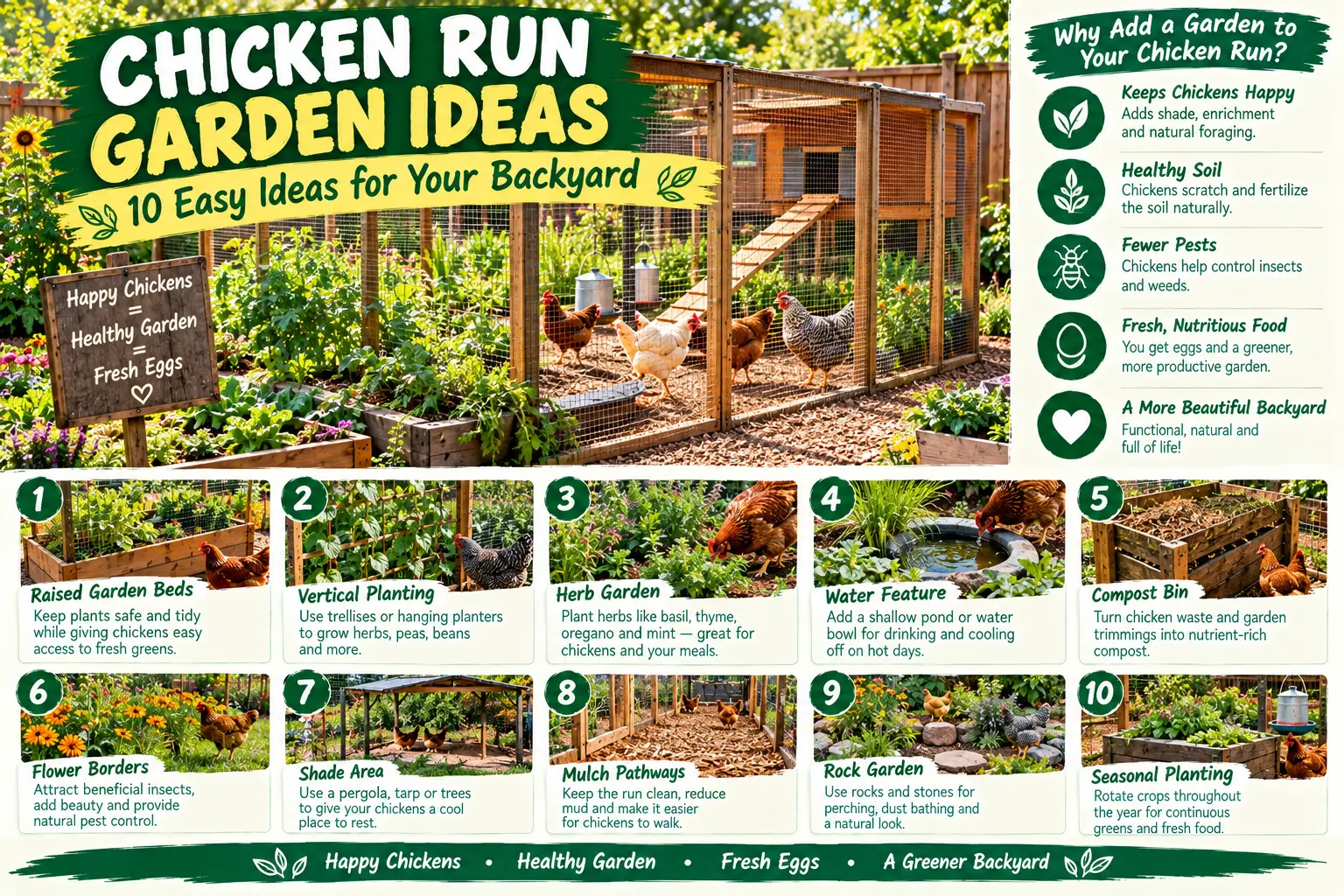
There are plenty of ways to make a chicken run greener and more useful. You don’t need a huge backyard either. Even a small urban chicken run can have plants, shade, herbs and natural areas.
1. Grow Plants Outside the Chicken Run Fence
This is probably my favorite trick.
Instead of putting everything directly inside the run, plant vegetables, herbs and flowers just outside the fence. Then allow the chickens to reach through the wire.
They can peck at leaves that grow through the fence, but they can’t get their feet into the garden and destroy the roots.
I use this idea with tougher plants and herbs. It gives the chickens something interesting to nibble on while keeping my main garden safe.
Just make sure the plants you use are safe for chickens. Don’t assume every backyard plant is chicken-friendly.
2. Plant Shade Trees and Shrubs Around the Run
One thing chickens absolutely love is shade.
During hot summer afternoons, mine will squeeze themselves under anything that gives them a little relief from the sun.
If you have room, planting suitable shrubs or small trees around the outside of the chicken run can create natural shade over time.
Don’t plant something huge right next to the fence, though. Roots, branches and falling fruit can become a maintenance headache.
I like the idea of using the plants around the chicken run as part of the whole backyard design. That way you’re getting shade, habitat for insects, flowers for pollinators and maybe even food for yourself.
3. Make a Chicken Herb Garden
Herbs can be a fun addition to a backyard chicken area.
I like growing herbs in protected areas around the run rather than putting young plants directly into the chicken’s scratching zone.
Some herbs that people commonly grow around chicken areas include rosemary, thyme, oregano, sage and mint. But always check that a plant is appropriate for chickens before allowing them access to it.
Here’s another trick I learned: grow herbs in containers.
A few cheap pots along the outside of the run can give you a mini herb garden without giving the chickens complete access.
4. Use Hanging Planters
You’re gonna laugh at how simple this one is.
I started hanging containers because I was tired of watching the chickens dig up everything I planted at ground level.
Hanging baskets are useful for herbs and some leafy plants because the chickens can’t easily reach them.
You can use old buckets, sturdy pots, baskets or other safe containers. Just make sure whatever you’re hanging is secure.
A falling planter isn’t good for chickens, and it’s not good for your garden either.
In a small urban backyard, this is one of the easiest ways to add more greenery without using extra ground space.
5. Create a Dust Bath Garden Corner
Okay, technically this isn’t gardening in the normal sense, but it makes a huge difference.
Chickens love dust baths.
Mine will dig a little hole and roll around in it like they’re having the best day of their lives.
Instead of fighting them, I created a dedicated dusty area in one corner of the run.
Keeping this area separate from your planted garden can actually help. If chickens have a place where they’re allowed to scratch and dust bathe, they’re less likely to spend every minute attacking your plants.
It won’t stop all the digging. Nothing stops all the digging. They’re chickens.
6. Add a Small Compost Area Nearby
Here’s where chicken keeping and homesteading really start working together.
Chicken manure can be valuable for composting, but fresh manure shouldn’t simply be dumped directly onto plants you plan to eat. It needs proper handling and composting.
I keep my compost system separate from the chicken sleeping and feeding areas.
Over time, chicken bedding, leaves, garden scraps and other suitable compost materials can become part of a healthy compost system.
Then that finished compost can go into your vegetable garden.
It’s one of those little backyard cycles I really enjoy. The chickens give you manure, the garden gives you scraps, and the compost eventually goes back into the soil.
7. Try a Chicken Run Garden With Raised Beds
If you’ve got enough room, raised beds near the chicken run can be a great option.
I wouldn’t leave an open raised bed where chickens can jump straight into it, though.
Ask me how I know.
I once came outside and found chickens standing inside my freshly planted bed. They had scratched through the mulch, knocked over seedlings and left little chicken footprints everywhere.
Now I use fencing or covers around young plants.
You can build a simple raised bed outside the run and use wire mesh or a lightweight garden cover until the plants are established.
This works especially well for lettuce, herbs, greens and other small garden crops.
8. Give Chickens Something to Peck At
Sometimes chickens destroy the garden because they’re bored.
Okay, maybe that’s not the only reason, but keeping them busy definitely helps.
I like hanging safe vegetables or greens where the chickens can peck at them. It gives them something to do and makes feeding time a little more interesting.
You can also provide natural perches, logs and different areas to explore.
A chicken run doesn’t have to be a boring rectangle covered with dirt.
Adding different levels, safe branches and shaded areas can make the space more interesting for your birds.
9. Use Tough Ground Covers
One of the biggest problems with chicken runs is bare soil.
Chickens scratch constantly, and eventually you can end up with mud when it rains and dust when it doesn’t.
I’ve had both.
Neither one is particularly fun.
Depending on your climate and setup, hardy plants around the edges can help soften the space. But don’t expect delicate lawn grass to survive six chickens forever.
Instead, think about hardy vegetation, mulch and areas where chickens are allowed to scratch naturally.
You can also rotate access to different sections if your backyard gives you enough room.
10. Build a Simple Rotational Chicken Run
This was one of the biggest improvements I made.
Instead of letting chickens use exactly the same patch of ground all the time, you can divide the space into sections and rotate where they spend their time.
When one section gets completely scratched up, you can give it time to recover while the chickens use another section.
This is much easier if you have a larger backyard, but even a simple temporary fence can help.
It’s not perfect. Plants don’t magically recover overnight. But giving soil and vegetation a break can make the whole area easier to manage.
What Plants Should You Keep Away From Chickens?
This is something I wish I’d taken more seriously when I first started.
Don’t just throw random ornamental plants into a chicken run because they look pretty.
Some plants can be harmful to chickens.
If you’re unsure about a plant, check a reliable poultry or veterinary source before planting it where chickens can eat it.
I also avoid using treated wood, questionable painted containers, old chemical containers or anything that could introduce harmful materials into the run.
With chickens, I try to keep things simple. Clean water, safe shelter, good feed, healthy soil and materials I actually know are safe.
My Simple Chicken Run Garden Setup
If I were starting again from scratch, here’s what I’d do.
I’d build the chicken run with a solid shaded section and good fencing first. Then I’d create a dedicated dust-bath corner.
Outside the fence, I’d plant a few hardy herbs and shrubs.
I’d add hanging containers for herbs and greens, plus a small compost area nearby.
Then I’d put my main vegetable garden outside the chicken run with a physical barrier between the chickens and the vegetables.
That’s the important part.
You don’t have to put everything together just because it’s all part of the homestead.
Sometimes keeping things separated actually makes the whole system work better.
What About a Chicken Run in a Small Urban Backyard?
If you’re working with a small urban backyard, don’t worry. You can still use some of these chicken run garden ideas.
Think vertically.
Use hanging pots, wall planters, narrow beds and plants around the outside of the fence.
Shade cloth can help when natural shade isn’t available, and containers let you move plants around when needed.
Also check your local rules before keeping chickens. Urban chicken regulations can vary a lot between cities, especially when it comes to the number of birds, coop placement, setbacks and roosters.
Chicken Run Garden FAQ
Can chickens live in a garden?
They can spend time around a garden, but chickens can quickly damage young plants. I recommend protecting your main vegetable beds with fencing or covers.
What is the best thing to put on the ground in a chicken run?
That depends on your climate, drainage and setup. I like using a combination of natural ground, suitable bedding and areas for dust bathing. The biggest thing is keeping the area reasonably dry and easy to clean.
Can I grow vegetables inside a chicken run?
Yes, but protect young plants. Mature, sturdy plants have a better chance, while seedlings are basically chicken salad waiting to happen.
Don’t Make My Chicken Garden Mistakes
After years of backyard farming, I’ve learned that chickens and gardens can work together, but you need a little planning.
Give the chickens their own space. Give your plants protection. Add shade, safe vegetation, dust-bathing areas, compost and things for the birds to explore.
And don’t get too fancy at the beginning.
Start small and watch what your chickens actually do. Every flock has its own personality. One bird might ignore your plants while another acts like she owns the entire backyard.
That’s the fun of homesteading, honestly. You make a plan, the chickens laugh at your plan, and then you make a better one.
These chicken run garden ideas have helped me turn a messy chicken area into something that’s actually useful for my backyard homestead. If you get stuck, just ask. I’ve messed up plenty of times too.