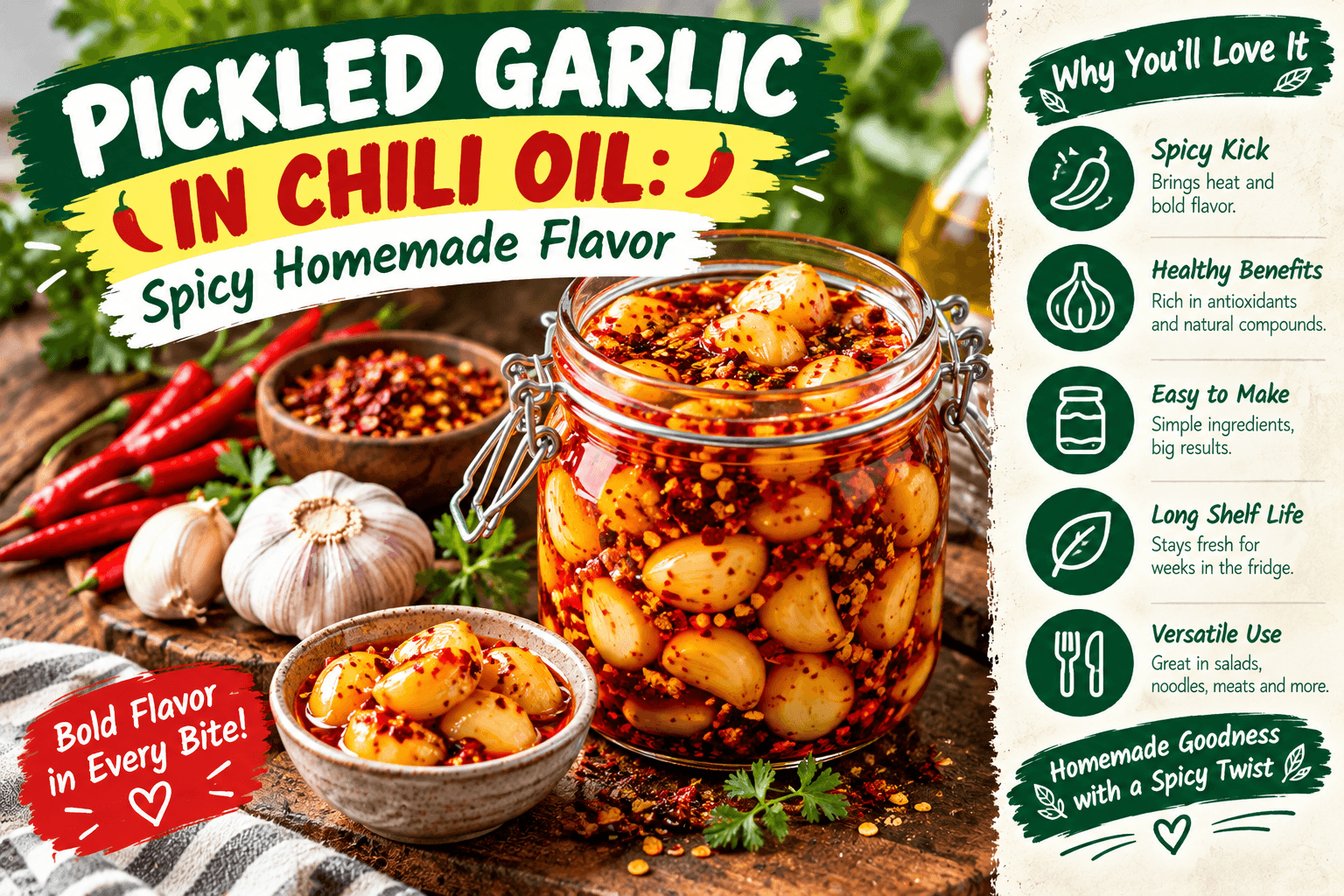
Pickled Garlic in Chili Oil: The Spicy Little Jar I Keep Coming Back To
Pickled garlic in chili oil sounds like one of those things you make once and then suddenly start putting on everything. Eggs. Rice. Noodles. Sandwiches. Roasted vegetables. A plain bowl of beans that looked pretty boring five minutes ago.
But there’s an important catch with this recipe idea. Garlic sitting in oil at room temperature can create a serious food-safety risk, so I don’t treat a homemade garlic-and-oil mixture like a shelf-stable pantry pickle. The safe approach is to make a properly acidified pickled garlic first, then use chili oil as a refrigerated finishing ingredient. More on that in a minute, because this is one of those kitchen shortcuts where “my grandma always did it” isn’t quite good enough.
The good news? You can still get that tangy garlic, spicy chili and rich oil combination. And honestly, it’s fantastic.
Why Pickled Garlic and Chili Work So Well Together
Garlic has that deep savory flavor, but pickling gives it a sharp little kick. Add chili and suddenly you’ve got sweet, sour, spicy and savory all happening at once.
That’s what makes it so useful.
You don’t need a complicated recipe for dinner when you’ve got a jar of something flavorful sitting in the refrigerator. A little spoonful can turn plain rice into something worth eating.
And if you grow your own garlic in the backyard, this is a nice way to use some of the harvest while keeping your food preservation habits sensible.
The Big Food-Safety Thing About Garlic in Oil
Let’s get this out of the way before we talk about flavors.
Garlic is a low-acid food. Oil creates a low-oxygen environment. Together, especially when stored at room temperature, they can create conditions favorable for Clostridium botulinum and botulinum toxin. That’s why homemade garlic-in-oil mixtures should not simply be put in a cupboard and forgotten.
So if you’ve seen recipes telling you to put fresh garlic and chili into oil, seal the jar and leave it on the counter for weeks, don’t follow that advice.
So What Makes This “Pickled Garlic in Chili Oil”?
Think of it as two parts.
First, you have garlic that has been properly pickled or acidified using a tested recipe. Pickling works by lowering the acidity of the food to a safe range; properly acidified pickled foods can be refrigerated or, with an appropriate tested recipe and process, canned.
Then you have chili oil added for flavor.
For a home refrigerator version, I like keeping the quantities small. Make enough for a few meals instead of making a giant jar that sits around for weeks.
That’s actually one of the easiest ways to avoid wasting food too.
What Kind of Garlic Should You Use?
Fresh, firm garlic is the way to go.
Don’t use cloves that are soft, moldy or damaged. Pickling isn’t a magic trick that turns spoiled produce into good food.
If you grew the garlic yourself, even better. Just clean it properly and use a tested pickling method for the acidified portion.
Garlic varieties can taste different, too. Some are hot and sharp when raw, while others are sweeter and more mellow.
For this kind of condiment, I actually like a garlic that keeps some bite after pickling. Mushy garlic isn’t my favorite.
Choosing the Chili
This is where you can have some fun.
Use mild chili flakes if you want flavor without setting your mouth on fire. Use hotter peppers if that’s your thing.
You can also combine different dried chilies to get more complexity.
And don’t assume more chili means better chili oil. Sometimes too much heat just covers up the garlic.
For everyday use, I like a medium level of heat. Enough to notice it, not enough to make me regret putting it on my breakfast.
How I’d Build the Flavor
Once the pickled garlic is properly prepared and chilled, the fun part starts.
You can combine it with a small amount of prepared chili oil right before serving or make a small refrigerated batch that you’ll use promptly.
A simple flavor combination can include:
- Pickled garlic cloves
- Chili flakes or dried chili pieces
- A mild cooking oil or olive oil
- A pinch of salt if needed
- Optional toasted sesame seeds
- Optional herbs or spices that fit the dish
Don’t go crazy with ten different ingredients.
Garlic and chili already know what they’re doing.
Why I Like Small Batches
There’s a temptation with home preservation to make a huge batch because you’re already standing in the kitchen.
I understand it.
But with a refrigerated condiment like this, small batches make more sense for everyday eating.
You get better freshness, less waste and less chance of forgetting an old jar in the back of the fridge.
Label the container with the date.
That’s a boring little habit that saves you from playing “how long has this been here?” six days later.
Don’t Change the Vinegar Amount in a Pickling Recipe
This is one of the biggest mistakes people make with pickling.
They see a recipe and think, “That’s a lot of vinegar. I’ll use less.”
Or they swap vinegar types because one smells nicer.
That’s not something I’d freestyle.
The acidity of a pickling recipe is part of the safety system. The National Center for Home Food Preservation specifically warns against changing vinegar, food or water proportions in tested pickling recipes. Vinegar used for pickling should also have the acidity specified by the tested recipe, commonly 5%.
Save the experimenting for the spices.
What Can You Eat This With?
This is the part where the jar disappears.
Try the pickled garlic and chili combination with:
- Steamed rice
- Eggs
- Roasted potatoes
- Noodles
- Grilled vegetables
- Beans and lentils
- Sandwiches
- Pizza
- Grilled chicken or other cooked meats
A little garlic can also be chopped and stirred into a simple dressing.
And if you’re cooking a big batch of vegetables from the garden, having something sharp and spicy on the side is a lifesaver.
A Backyard Homesteading Trick: Use the Garlic Harvest Wisely
Growing garlic is one of those garden jobs where the harvest can look small until you bring it all inside.
Suddenly you’ve got garlic everywhere.
Some goes into everyday cooking. Some gets stored properly. And some can be used in tested pickling recipes.
I like having several ways to preserve one crop rather than trying to turn the whole harvest into one product.
That way, if you get tired of pickled garlic halfway through winter, you’ve still got other garlic available for cooking.
Can You Can Garlic in Oil?
This is where you need to be especially careful.
Don’t invent a water-bath canning recipe for garlic submerged in oil. Low-acid foods require specific tested processing methods, and oil changes the oxygen environment. A recipe that “looks right” isn’t enough.
There are research-tested canned recipes that use garlic as an ingredient with appropriate acid and processing instructions, but those recipes need to be followed exactly.
If you want a shelf-stable pickled garlic product, use a tested recipe from a reliable food-preservation source and don’t modify the acid ratios.
What If the Jar Looks Weird?
This isn’t the time to taste-test something questionable.
If a refrigerated preparation has been stored longer than the recommended safe period, throw it away. Don’t taste it to see if it’s okay.
And if a home-canned jar is bulging, leaking, spurting unexpectedly or showing other signs of spoilage, discard it without tasting.
Food preservation is one place where being cheap can get expensive very fast.
Pickled Garlic in Chili Oil FAQ
Can I leave homemade garlic in chili oil on the counter?
No. Homemade garlic-in-oil should not be stored at room temperature because the low-acid garlic and low-oxygen oil environment can support growth of C. botulinum. Keep it refrigerated and follow the recommended storage time.
How long does homemade garlic in oil last?
The National Center for Home Food Preservation recommends refrigerated garlic-in-oil for no more than 4 days. For longer storage, freezing is an option.
Can I make the pickled garlic ahead of time?
Yes, if you’re following a tested pickling recipe and storing it according to that recipe. Properly acidified pickled produce can be refrigerated, and some tested recipes can be safely canned.
Keep This One Simple
Pickled garlic in chili oil is one of those combinations that doesn’t need much help. Tangy garlic, spicy chili and a little rich oil can make basic food taste completely different.
The trick is separating the fun part from the risky part.
Use a tested acidified garlic recipe. Don’t change the vinegar proportions. Keep garlic-in-oil refrigerated, keep batches small, label your containers and don’t treat homemade oil-packed garlic like a shelf-stable pantry item.
That’s the kind of food preservation I like. A little old-fashioned, a little spicy, but still sensible.
And if you’ve got a pile of homegrown garlic waiting in the kitchen, don’t feel like you have to preserve all of it the same way. Save some for cooking, pickle some using a tested recipe, and make a small refrigerated chili-oil batch when you know you’re going to eat it.
That’s usually better than making six jars and discovering three months later that you forgot about them.
Got a favorite way to use pickled garlic? Leave a comment. I’m always interested in the strange little combinations people come up with in the kitchen.