I didn’t used to think much about seeds to soak before planting. I’d open a seed packet, make a little hole in the dirt, drop the seed in, water it and walk away.
Easy, right?
Well… sometimes.
Other times I’d be standing there two weeks later staring at an empty patch of soil thinking, “What the heck happened?”
After more than 10 years of growing food in backyard gardens, containers, and small urban spaces, I’ve learned that some seeds really do benefit from a good soak before planting. Not every seed, though. And soaking them too long can actually make things worse.
I’ve made that mistake too.
So let me show you the seeds I usually soak, how I do it, and a few things I learned the hard way.
Why Soak Seeds Before Planting?
The simple reason is water.
A dry seed is basically waiting for the right conditions before it wakes up. When it gets enough moisture, the seed starts absorbing water and the germination process gets moving.
Soaking gives some larger, harder seeds a head start.
I noticed this most with beans and peas. When I planted dry beans directly into cool spring soil, sometimes they just sat there. When I soaked them first, they usually got going much faster.
Now, don’t think soaking is some kind of magic gardening trick. It isn’t.
Good soil, proper temperature, fresh seeds and enough moisture still matter.
But for certain seeds, soaking can make the first part of the job easier.
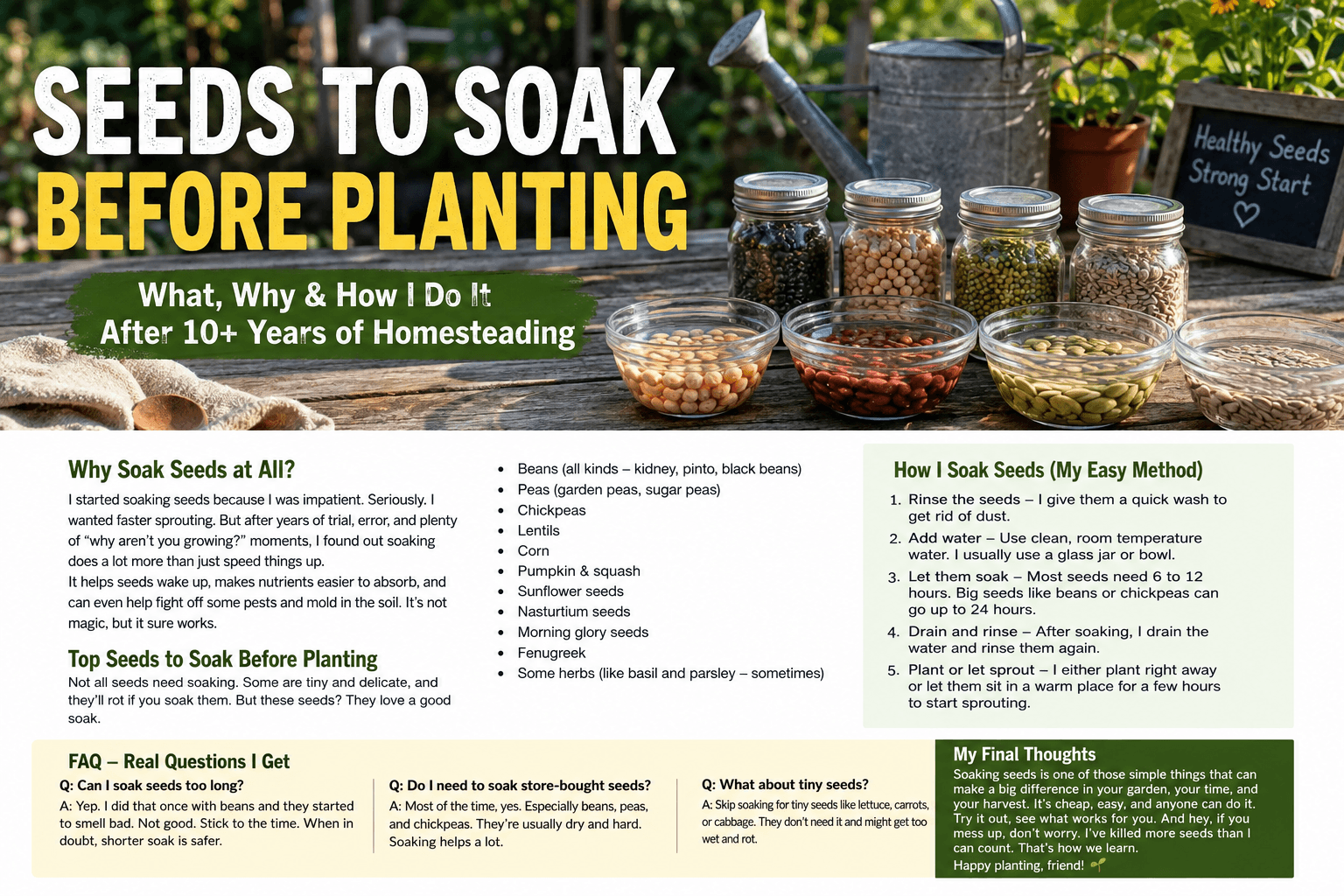
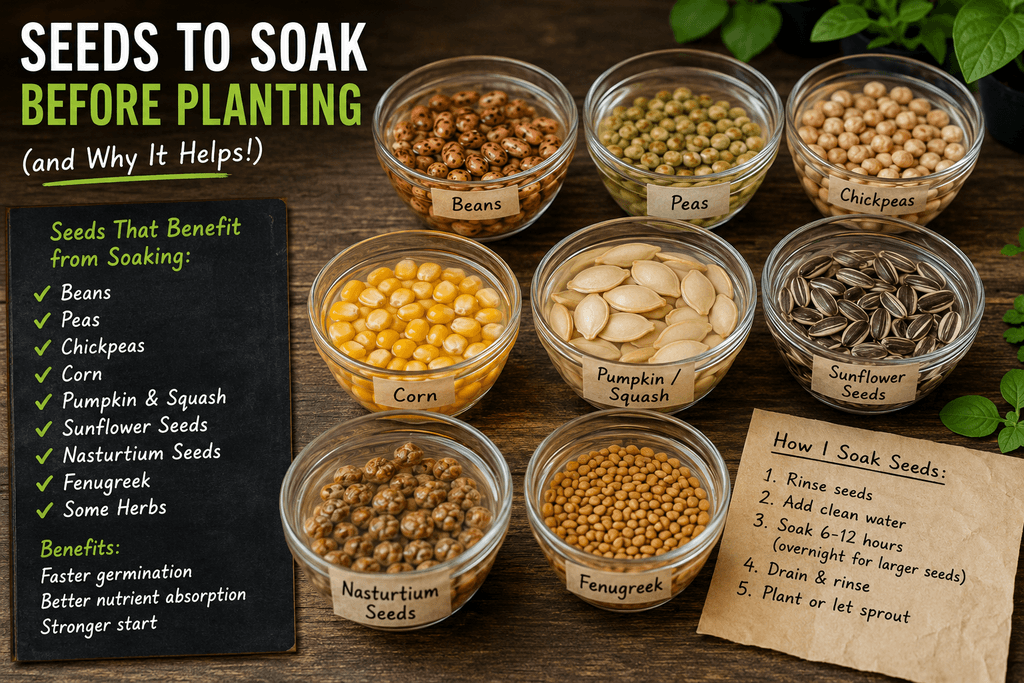
My Favorite Seeds to Soak Before Planting
Here are the ones I’ve had the best luck with.
1. Beans
Beans are probably the first seeds I think about when somebody asks me about soaking.
Kidney beans, black beans, pinto beans, lima beans and other large beans have a tough outer coat. Soaking softens that coat and gives the seed a chance to absorb moisture before it goes into the garden.
I usually soak them for several hours, often overnight.
One year I got distracted and left a bowl of beans sitting on the counter way too long. When I finally remembered them, they were already starting to split and smell a little funny.
Yep. Those went into the compost.
Don’t overdo it.
2. Peas
Garden peas and other large pea seeds are another good candidate.
I like soaking peas before planting when the soil is still a little cool in early spring. I don’t always do it, but when I do, I usually see them get started pretty quickly.
Sugar snap peas can also benefit from a short soak.
Just remember that peas don’t like sitting in cold, soggy soil forever. Soaking the seed doesn’t fix bad soil conditions.
3. Chickpeas
Chickpeas are another hard, large seed that can take some time to absorb enough moisture.
If you’re growing them in your garden, a soak can help get them hydrated before planting.
I don’t grow a huge amount of chickpeas myself because my garden space is limited, but when I do grow them, soaking is part of my routine.
4. Corn
Here’s one that surprised me.
I’ve soaked corn seeds before planting, especially when I was trying to get a more even start.
Corn needs warmth, so I wouldn’t soak it and then stick it into cold, wet soil. That’s asking for trouble.
Wait until your soil is warm enough for corn, then soak the seed for a few hours and plant it right away.
5. Pumpkin and Squash Seeds
Pumpkin, squash and some other large seeds have fairly thick seed coats.
I’ve had good results soaking these for a few hours before planting.
But here’s my little trick: I don’t let them sit in water forever. A short soak is plenty for me.
If the seed is already fresh and the weather is warm, I sometimes skip soaking altogether.
That’s the nice thing about gardening. You don’t have to turn every seed into a science experiment.
What About Sunflower Seeds?
Sunflower seeds are another one I’ve experimented with.
A short soak can help them absorb water, but honestly, I don’t think soaking is absolutely necessary for most sunflower seeds.
If your soil is warm and you keep it evenly moist, sunflower seeds usually germinate just fine without it.
So why soak them?
Sometimes I do it simply because I’m trying to speed up the beginning a little bit.
Sometimes I don’t bother.
That’s gardening.
Nasturtium Seeds Need a Little Help
Nasturtium seeds have a hard outer shell, so these are definitely on my list of seeds worth soaking.
I’ll usually soak them for several hours before planting.
I’ve also noticed that nicking or gently scratching the seed coat can help with some hard-coated seeds, but you have to be careful. Don’t attack the poor thing with a kitchen knife!
I learned that one the hard way.
A little patience is better.
What Seeds Should NOT Be Soaked?
This part is important.
You don’t need to soak every seed in your seed collection.
Tiny seeds like lettuce, carrots and many herb seeds are usually better planted directly into properly prepared soil.
If you soak tiny seeds, they can become a sticky little mess. Then you try to pick them up and plant them and suddenly you’ve got seeds stuck to your fingers, your spoon, the table…
Ask me how I know.
Seeds with very small sizes are often easier to sow dry, then keep the soil gently moist after planting.
I also don’t bother soaking most tomato and pepper seeds. They generally don’t need it when you’re planting them under good conditions.
How I Soak Seeds Before Planting
My method is about as simple as it gets.
You don’t need fancy equipment.
Here’s what I do:
1. Put the seeds in a clean glass or small bowl.
I label the bowl if I’m soaking several varieties. Trust me, don’t rely on your memory after a busy morning.
2. Add room-temperature water.
I don’t use hot water.
There’s no reason to cook your seeds before planting them!
3. Let them soak.
For many large seeds, several hours or overnight is enough.
I don’t have one magic number because different seeds and conditions are different. When the seed has absorbed water and started to swell, that’s usually enough for me.
4. Drain them well.
I pour off the water and give the seeds a gentle rinse if needed.
5. Plant them right away.
This is important.
Once you’ve soaked a seed, don’t leave it sitting around for days. Get it into the soil as soon as you reasonably can.
Don’t Soak Seeds Just Because Someone on the Internet Said So
I’m guilty of this too.
You see a gardening video saying, “Do this one trick and every seed will germinate!”
Then you try it.
And suddenly you’re spending Saturday morning wondering why half your seeds are mush.
I’ve learned to keep things simple.
If a seed has a hard coat and I’ve had trouble getting it started, I’ll consider soaking it.
If it’s a tiny seed that normally germinates well, I leave it alone.
That’s my rule.
Soaking vs. Pre-Sprouting: They’re Not the Same
People sometimes mix these two methods together.
Soaking simply means giving the seed water before planting.
Pre-sprouting means allowing the seed to begin germinating before you put it into soil. You might see a tiny root appear first.
I’ve used pre-sprouting for some larger seeds, but I’m more careful with it because that little root can be surprisingly easy to damage.
For beginners, I recommend starting with simple soaking.
It’s less fussy.
One Mistake I Don’t Make Anymore
Here’s an embarrassing one.
I once soaked a batch of beans and completely forgot about them.
I went out to do something else, got busy with chickens and compost, came back later and thought, “Oh yeah…”
The beans had swollen up so much they looked nothing like the seeds I’d started with.
Some had even begun splitting.
The smell wasn’t exactly garden-fresh either.
That taught me something useful: more soaking isn’t always better.
If you forget your seeds, don’t force yourself to plant them just because you hate wasting them. Sometimes the compost pile is the better destination.
Does Soaking Really Make Seeds Germinate Faster?
Sometimes, yes.
But it depends on the seed and the growing conditions.
Soaking can help hard-coated, larger seeds absorb water faster. That can give germination a head start.
But if the soil is too cold, too wet, too dry, or the seed is old and no longer viable, soaking isn’t going to perform miracles.
I’ve had seeds fail after soaking them.
I’ve also had seeds germinate beautifully.
The biggest lesson for me is that soaking is a tool, not a guarantee.
My Quick List of Seeds I Consider Soaking
If you’re standing in your garden shed right now wondering what to do, here’s my simple list:
- Beans
- Peas
- Chickpeas
- Some corn
- Pumpkin seeds
- Squash seeds
- Sunflower seeds, sometimes
- Nasturtium seeds
- Some other large, hard-coated seeds
For tiny seeds like carrots and lettuce, I usually skip it.
For tomatoes and peppers, I normally skip it too.
Then I focus on planting depth, soil moisture and temperature.
Those things matter a lot more than some fancy trick.
A Few Tips That Saved Me Trouble
Don’t use boiling water. Room-temperature water is fine.
Don’t leave seeds soaking forever. Longer isn’t automatically better.
Plant soaked seeds quickly. Don’t soak them Monday and forget about them until Thursday.
Use clean containers. A clean glass jar or bowl works perfectly.
Don’t soak old seeds and expect miracles. Seed quality still matters.
Keep the soil moist after planting. You just soaked the seed, so don’t let it dry out immediately afterward.
And one more thing: don’t panic if your seeds don’t all germinate at exactly the same time.
Gardens aren’t factories.
Mini FAQ: Seeds to Soak Before Planting
Can I soak seeds overnight before planting?
Yes, for many larger, hard-coated seeds, an overnight soak can work well. Beans and peas are two examples I commonly soak. But I wouldn’t make overnight soaking a rule for every type of seed.
Can soaking seeds hurt them?
It can if you soak them for too long or leave them sitting in water after they’ve absorbed plenty of moisture. I’ve had seeds become soft and unpleasant after I forgot about them. Shorter is safer when you’re unsure.
Should I soak vegetable seeds before planting?
Some vegetable seeds benefit from soaking, especially larger seeds with hard coats. But many small vegetable seeds don’t need it at all. Carrots, lettuce and similar tiny seeds are usually easier to plant directly.
What I Do Now
After more than 10 years of growing things, I’ve stopped trying to make gardening complicated.
I soak beans and peas pretty often. I like soaking pumpkin, squash and nasturtium seeds too. Corn gets a soak sometimes, depending on what I’m doing that season.
But I don’t soak everything.
That’s probably the biggest lesson.
You don’t need 20 special gardening products, complicated schedules or a perfect homestead to grow food. A few good seeds, decent soil, water, sunlight and a little attention will take you surprisingly far.
And if you mess up?
Welcome to gardening.
I’ve killed plenty of plants. I’ve forgotten seeds. I’ve planted things too early. I’ve watered things too much. I’ve watered things too little.
You learn, you compost the failures, and you try again.
So the next time you’re wondering which seeds to soak before planting, start with the big, hard-coated ones like beans, peas, chickpeas, squash and nasturtiums. Keep the soak simple, plant them soon afterward, and see how it works in your own garden.
That’s what I do.
Happy planting, friend. And don’t forget to label those bowls. Seriously.