Homemade Vegetable Stock Powder From Dehydrated Vegetables
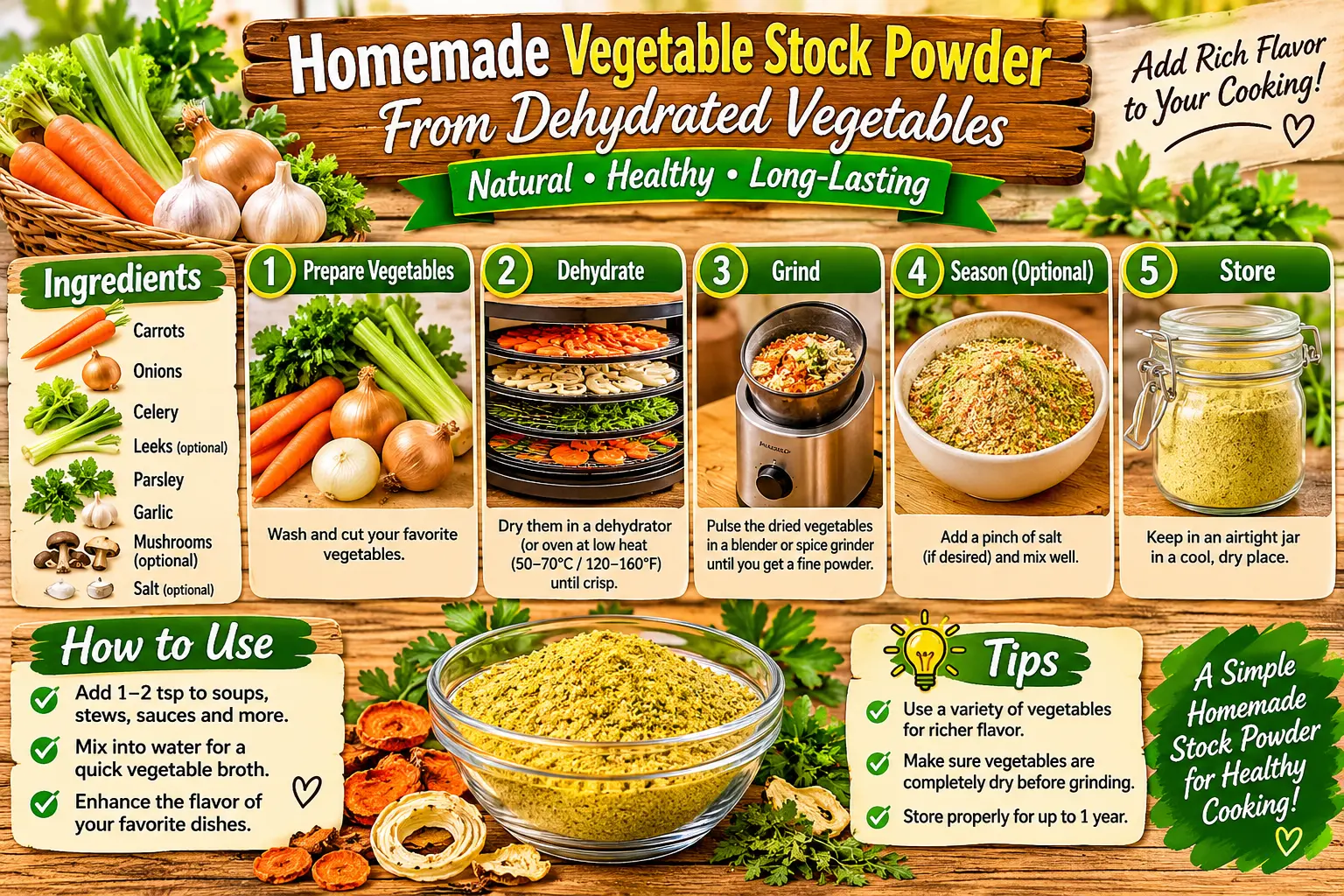
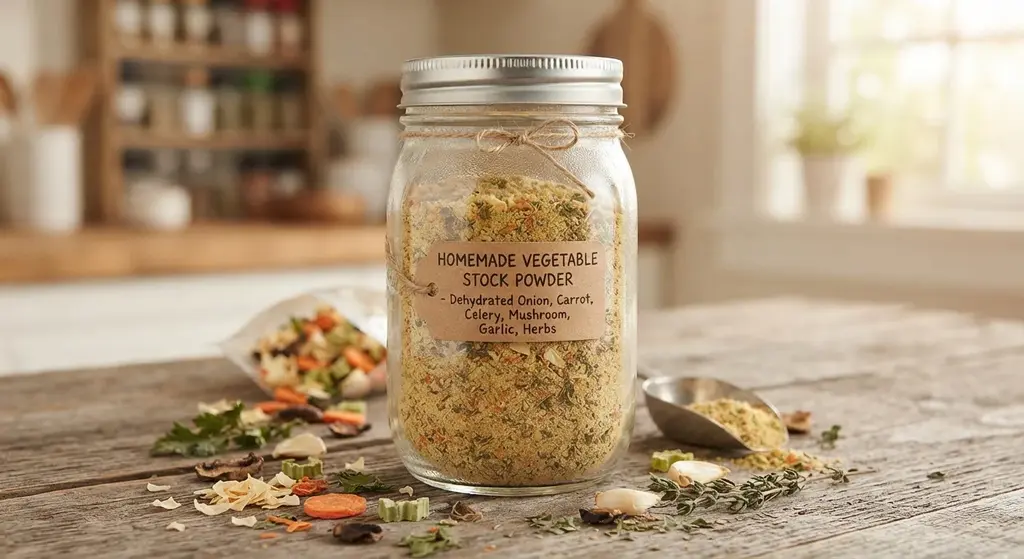
Homemade vegetable stock powder is a practical way to turn dehydrated onions, carrots, celery, mushrooms, garlic, and herbs into a concentrated pantry seasoning for soups, stews, grains, sauces, and beans.
The Pinterest graphic that inspired this guide also includes chicken and beef stock powders made from dried meat. Those versions require more careful food-safety controls, so this FarmSolo guide focuses on the vegetable version—the easiest and most practical option for a home pantry.
Important: the vegetables must be completely dehydrated before grinding. A powder made from ingredients that still contain significant moisture can clump, spoil, or mold during storage.
What Is Vegetable Stock Powder?
Vegetable stock powder is simply a concentrated blend of dry vegetables, herbs, salt, and optional spices.
When you add the powder to hot water, the dried ingredients release flavor and create a light vegetable broth.
You can also sprinkle the powder directly into:
- Soups
- Stews
- Beans
- Lentils
- Rice
- Quinoa
- Sauces
- Gravies
- Roasted vegetables
Ingredients
- 1 cup dried onion pieces
- 1 cup dried carrot pieces
- 1/2 cup dried celery
- 1 cup dried mushrooms
- 2–4 tablespoons dried garlic
- 2 tablespoons dried parsley
- 1 tablespoon dried thyme
- 1 tablespoon dried celery leaves, optional
- 1/2–1 teaspoon turmeric, optional
- Black pepper to taste
- Salt to taste, optional
You can adjust the herbs and salt without changing the basic concept. The important part is that every ingredient is fully dry before grinding.
1. Start With Clean Vegetables
Wash vegetables thoroughly and trim away damaged or spoiled portions.
Slice them evenly so they dry at roughly the same rate.
2. Use a Dehydrator or Controlled Oven
National Center for Home Food Preservation recommends controlled indoor drying for vegetables rather than depending on outdoor sun drying. Vegetables are low in sugar and acid, so uncontrolled outdoor drying presents more spoilage risk.
A thermostatically controlled food dehydrator with good airflow is the easiest method.
3. Dry Until the Vegetables Are Truly Dry
Do not stop drying because the vegetables merely feel leathery on the outside.
For grinding into powder, the pieces should be dry enough to become brittle or crisp rather than soft and flexible.
Utah State notes that safe drying depends on reaching a sufficiently low residual moisture level and using continuous controlled drying conditions.
4. Let the Ingredients Cool Before Grinding
Warm dried vegetables can create condensation inside a grinder or storage jar.
Allow them to cool completely before turning them into powder.
5. Grind in Small Batches
Use a clean spice grinder, coffee grinder reserved for spices, or a high-powered blender.
Pulse in small batches until the texture is as fine as you prefer.
A slightly coarse powder works just as well in soups and stews and is often easier to make at home.
6. Sift for a Finer Powder
If you want a smoother bouillon-style mix, pass the powder through a fine sieve and regrind the larger particles.
7. Add Salt After Grinding
Adding salt after the vegetables are ground gives you more control over sodium.
You can make the blend:
- Salt-free
- Low-sodium
- Moderately salted
This is one advantage over many commercial bouillon products.
8. Mushrooms Add Natural Savory Flavor
Dried mushrooms deepen the broth and give the powder a richer savory flavor without adding meat.
They are especially useful if you want a stronger stock for lentils, beans, gravy, or vegetable stew.
9. Celery Leaves Are Worth Saving
Celery leaves are often discarded, but once dried they make an excellent stock ingredient.
This makes stock powder a useful zero-waste project during garden harvest season.
10. How Much Powder Should You Use?
Starting point: try 1–2 teaspoons of vegetable stock powder per cup of hot water, then adjust to taste.
Homemade powders vary in strength because different vegetables and drying methods produce different concentrations.
Treat the amount as a starting point rather than an exact rule.
How to Make Vegetable Broth From the Powder
- Bring 1 cup of water to a simmer.
- Add 1–2 teaspoons stock powder.
- Stir well.
- Simmer briefly to allow the vegetables and herbs to hydrate.
- Taste and add more powder or salt if needed.
Use It Directly in Recipes
You do not always have to make broth first.
Add the powder directly to a pot of:
- Vegetable soup
- Bean soup
- Chili
- Tomato sauce
- Rice
- Lentils
- Gravy
- Stew
How to Store Homemade Stock Powder
Transfer the finished powder to a clean, completely dry airtight container.
Keep it in a:
- Cool place
- Dark place
- Dry place
- Container protected from insects and moisture
Utah State notes that properly dried foods need moisture-proof packaging and protection from heat, light, moisture, and insects.
Do Not Automatically Copy the “3–4 Months” Label
The Pinterest graphic says to use homemade stock powders within three to four months.
That may be a conservative quality target, but the true storage life depends on:
- How thoroughly the vegetables were dried
- Storage temperature
- Humidity
- Packaging
- Whether the powder contains ingredients with more fat
For best flavor, make reasonably sized batches and use them while the aroma remains fresh rather than trying to keep one jar indefinitely.
Why I Would Not Publish the Pinterest Chicken Powder Recipe As Written
The graphic simply lists “cooked chicken” as an ingredient for chicken stock powder.
That skips several critical questions:
- How lean is the meat?
- What temperature is used?
- How quickly does it reach a safe temperature?
- How dry must it become?
- How is it packaged?
- Will the powder be refrigerated, frozen, or stored at room temperature?
Utah State’s drying guidance starts meat at high enough temperatures to reduce microbial risk and emphasizes lean meat because fat can become rancid.
Why Beef Powder Needs the Same Caution
Drying meat safely is not the same as drying onions or carrots.
National Center for Home Food Preservation notes that meat is high in protein and can support microbial growth when temperature and humidity are not carefully controlled.
That is why FarmSolo would not tell readers to dehydrate cooked beef, grind it into powder, and automatically store it in a pantry jar for months.
What About Freeze-Dried Meat Powder?
Freeze-drying is a different process from ordinary dehydration.
Utah State explains that freeze-drying can produce foods dry enough for room-temperature storage when the process is correctly completed, but freeze-drying itself does not kill microorganisms. Safe food handling and complete drying still matter.
If someone wants homemade meat-based stock powder, a properly prepared and fully freeze-dried cooked product is a different project and deserves its own detailed safety guide.
Vegetable Stock Powder vs. Store-Bought Bouillon
| Feature | Homemade Vegetable Powder | Commercial Bouillon |
|---|---|---|
| Salt control | You choose | Varies by brand |
| Vegetable mix | Customizable | Fixed formula |
| Garden harvest use | Excellent | None |
| Convenience | Requires drying/grinding | Ready immediately |
Good Vegetables to Dehydrate for Stock Powder
- Onions
- Carrots
- Celery
- Celery leaves
- Mushrooms
- Garlic
- Leeks
- Parsley
- Thyme
Common Mistakes
Grinding Vegetables Before They Are Fully Dry
Residual moisture can create clumps and reduce storage quality.
Grinding While Ingredients Are Still Warm
Warm ingredients can create condensation inside the container.
Storing the Powder Beside the Stove
Heat and steam shorten quality and increase the chance of moisture getting into the powder.
Adding Too Much Salt
You can always add salt while cooking. Removing it from an overly salty stock powder is impossible.
Treating Dried Meat Like Dried Vegetables
Meat drying has separate safety requirements and should not be reduced to a simple pantry-powder recipe.
Vegetable Stock Powder FAQ
Can I make stock powder from fresh vegetables?
Yes, but first dehydrate the vegetables completely. Do not grind moist fresh vegetables and store them at room temperature.
Can I use vegetable scraps?
Clean edible trimmings such as celery leaves, carrot pieces, leek greens, or herb stems can be useful when they are sound, washed appropriately, and fully dehydrated.
How much stock powder do I add to water?
Start with about 1–2 teaspoons per cup of hot water and adjust according to the strength of your mix.
Can I leave the salt out?
Yes. A salt-free vegetable powder gives you maximum control when cooking.
Can I store homemade chicken powder at room temperature?
Do not assume a homemade dried-meat powder is shelf-stable simply because it feels dry. Safe meat dehydration, final moisture, fat content, packaging, and storage all need separate consideration.
Can I use a food dehydrator?
Yes. A thermostatically controlled food dehydrator with good airflow is one of the most practical ways to dry vegetables consistently.
The Bottom Line
Homemade vegetable stock powder is a useful way to preserve part of the garden harvest while creating a pantry ingredient you will actually use.
Dehydrate the vegetables thoroughly, let them cool, grind them into powder, season lightly, and keep the finished mix dry and airtight. Skip simplified homemade meat-powder recipes unless you are following specific, research-based meat-preservation guidance.
Sources
- National Center for Home Food Preservation — Drying Foods
- National Center for Home Food Preservation — Food Dehydrators
- Utah State University Extension — Home Drying Foods
- Utah State University Extension — Drying Meat