5 Homemade Extract Recipes for Baking and Drinks
Homemade culinary extracts are concentrated flavor infusions made by steeping aromatic ingredients such as vanilla beans, citrus zest, mint, or coffee in food-grade alcohol. They take more patience than buying a bottle at the store, but they are simple to prepare and can be useful for baking, coffee, frosting, desserts, and homemade gifts.
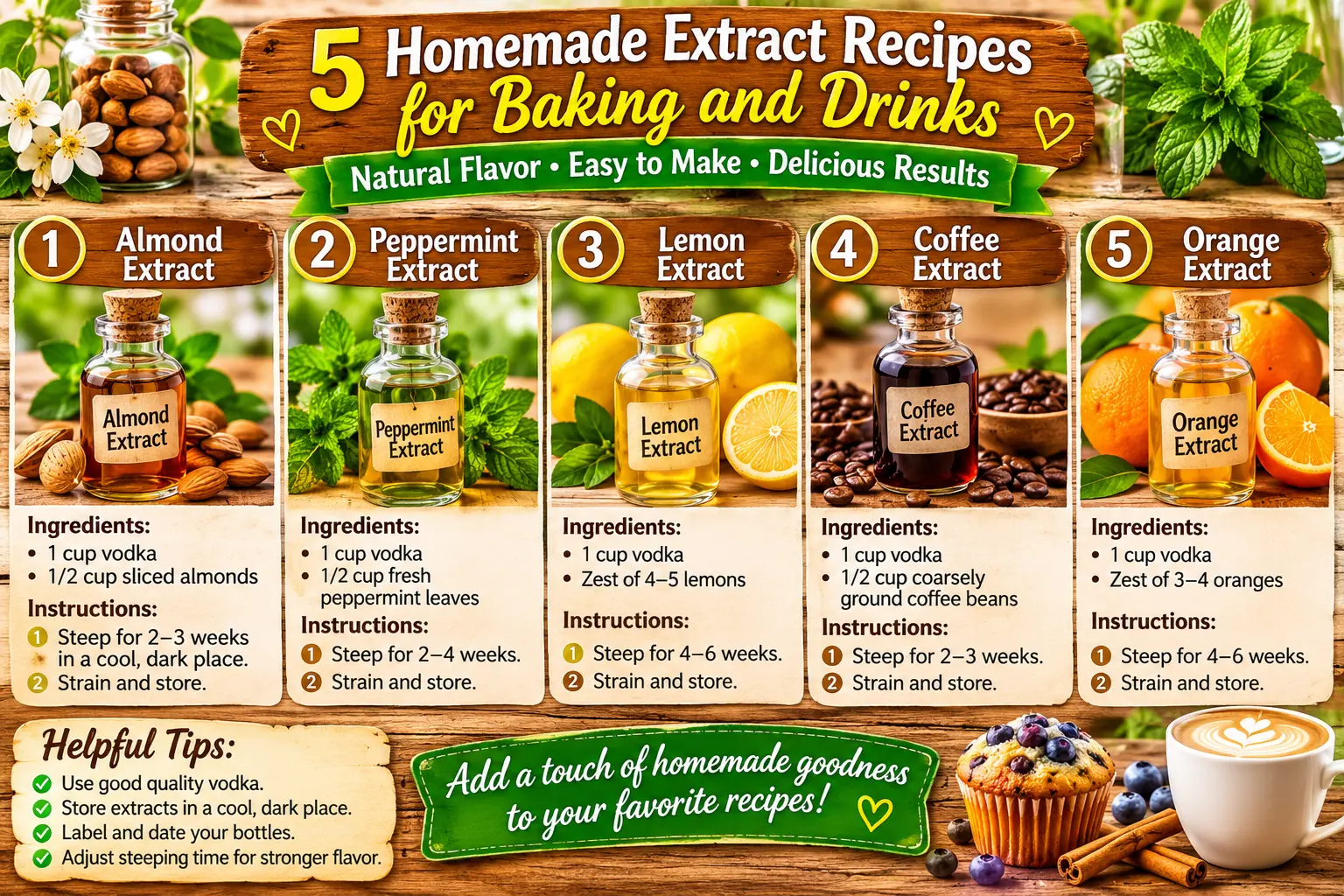
The Pinterest graphic behind this guide suggests almond, peppermint, lemon, coffee, and orange extracts. Most of those ideas translate well to a home kitchen, but the almond version deserves caution. Sweet almonds do not necessarily reproduce the familiar commercial almond-extract flavor, so this FarmSolo version replaces that recipe with a much more established homemade vanilla extract.
Use only beverage-grade alcohol intended for consumption. Never use rubbing alcohol, denatured alcohol, methanol, or other non-food solvents. Utah State Extension makes the same distinction in its alcohol-based propolis preparation guidance.
What Alcohol Works for Homemade Extracts?
A neutral vodka is convenient because it extracts aromatic compounds without adding much competing flavor.
For vanilla, U.S. standards require at least 35% alcohol by volume for a product to meet the federal definition of vanilla extract. An 80-proof vodka is 40% alcohol by volume and comfortably clears that threshold.
For home infusions, keep the ingredients completely submerged and store the bottle away from heat and direct sunlight while it steeps.
1. Homemade Vanilla Extract
You’ll Need
- About 1 ounce vanilla beans
- 8 fluid ounces 80-proof vodka
- 1 clean glass bottle or jar with a tight lid
How to Make It
- Split the vanilla beans lengthwise to expose the interior.
- Cut them if necessary so they fit completely below the alcohol.
- Place them in the jar and pour in the vodka.
- Close tightly and store in a cool, dark cabinet.
- Shake occasionally.
- Allow several months for a traditional slow extraction and stronger flavor.
The U.S. standard for single-fold vanilla extract uses 13.35 ounces of vanilla beans per gallon and at least 35% alcohol. That works out to roughly 0.83 ounce of beans per 8 fluid ounces, so using about 1 ounce at home provides a useful practical ratio.
2. Peppermint Extract
You’ll Need
- 1 cup food-grade vodka
- About 1/2 cup clean fresh peppermint leaves
- Clean glass jar
How to Make It
- Wash the mint and let it dry thoroughly.
- Lightly bruise the leaves to release their aroma.
- Pack them loosely into a clean jar.
- Cover completely with vodka.
- Store in a dark cabinet for about 2–4 weeks.
- Shake gently every few days.
- Strain when the flavor reaches the strength you like.
Peppermint is strong, so homemade extract should be added to recipes gradually. Your existing FarmSolo peppermint mocha creamer already uses commercial peppermint extract in very small amounts for exactly this reason.
3. Homemade Lemon Extract
You’ll Need
- 1 cup food-grade vodka
- Zest from about 3–4 lemons
- Clean glass jar
How to Make It
- Wash and dry the lemons well.
- Remove only the thin yellow outer zest.
- Avoid as much white pith as possible because it can taste bitter.
- Place the zest in a jar.
- Cover completely with vodka.
- Store in a cool, dark place for roughly 4–6 weeks.
- Shake periodically and strain when the flavor is strong enough.
Utah State Extension likewise recommends removing the colored outer lemon peel while avoiding the bitter white pith when preparing zest.
4. Homemade Orange Extract
You’ll Need
- 1 cup food-grade vodka
- Zest from 3–4 oranges
- Clean glass jar
How to Make It
- Wash and thoroughly dry the oranges.
- Remove the colored outer zest without taking much white pith.
- Put the zest in the jar.
- Pour vodka over it until completely submerged.
- Close tightly and store away from light.
- Allow roughly 4–6 weeks for extraction.
- Strain into a clean bottle.
Orange extract is useful in cakes, cookies, frostings, quick breads, hot chocolate, and other recipes where you want citrus aroma without adding much liquid.
5. Coffee Extract
You’ll Need
- 1 cup food-grade vodka
- 1/2 cup coarsely crushed or ground roasted coffee beans
- Clean glass jar
How to Make It
- Add the coffee to the jar.
- Pour over the vodka.
- Close tightly.
- Store in a cool, dark cabinet.
- Shake occasionally.
- Begin tasting after about 1–2 weeks.
- Strain when the coffee character is strong but not unpleasantly bitter.
Unlike citrus zest or vanilla, coffee can become harsh when over-extracted. Treat the Pinterest graphic’s “2–3 weeks” as a guideline rather than a mandatory minimum.
Why I Would Not Copy the Pinterest Almond Extract
The Pinterest recipe suggests steeping sliced almonds in vodka for several weeks.
I would not publish that as a direct substitute for commercial almond extract.
The familiar aroma associated with almond extract is not simply the flavor obtained by soaking ordinary sweet almonds. More importantly, gardeners and home cooks should not experiment with bitter almonds or unidentified stone-fruit kernels in an attempt to intensify that flavor.
Better FarmSolo approach: make vanilla, mint, citrus, and coffee extracts at home, and use a commercially prepared food-grade almond extract when you specifically want classic almond flavor.
Fresh Herbs Must Be Clean and Dry
Wash fresh mint or other fresh ingredients carefully and allow surface water to dry before putting them into alcohol.
The goal is to avoid introducing unnecessary water, dirt, damaged leaves, or spoiled material into the infusion.
Keep Everything Submerged
Citrus peel, herbs, coffee, and vanilla should stay beneath the liquid while steeping.
Use a jar size that allows the alcohol to cover all of the flavoring ingredient rather than leaving a thick layer sticking above the surface.
Why a Dark Cabinet Works Better Than a Sunny Window
Homemade extracts do not need sunlight.
Store the jar in a cool, dark location away from the stove, a hot pantry wall, or direct sun. Utah State likewise directs alcohol-based propolis tinctures to be stored in a dark place during extraction.
How Often Should You Shake the Jar?
A gentle shake every few days is enough for most small homemade batches.
There is no need to constantly open the jar. Opening it repeatedly simply increases evaporation and introduces more opportunities for contamination.
How Do You Know When an Extract Is Ready?
The calendar is only a guide.
Look for:
- A noticeably stronger aroma
- Color extracted into the alcohol
- A concentrated flavor when used in a small test recipe
- No unpleasant stale, moldy, or rotten odor
Citrus and mint may become ready relatively quickly. Traditional vanilla generally benefits from a much longer extraction.
Straining the Finished Extract
When an infusion tastes strong enough:
- Place a fine-mesh strainer over a clean container.
- Strain out herbs, zest, or coffee solids.
- Filter again through a finer filter if you want a clearer extract.
- Transfer to a clean glass bottle.
- Label the flavor and preparation date.
Should Vanilla Beans Stay in the Bottle?
Vanilla is different from mint or citrus zest because many home makers leave the beans submerged for continued extraction.
If you do, make sure the beans remain below the alcohol level.
Do Homemade Extracts Need Refrigeration?
A high-alcohol culinary infusion is normally stored tightly closed in a cool, dark place rather than treated like fresh juice or syrup.
The important distinction is that this advice applies to appropriately alcohol-based extracts—not water infusions, simple syrups, fruit purées, or infused oils.
Alcohol Extracts Are Not the Same as Infused Oils
Do not take the same process and replace vodka with oil.
Fresh herbs or garlic stored in oil have completely different food-safety concerns. Penn State warns that improperly prepared fresh-herb and garlic oils can present a botulism risk and require specific tested procedures.
Homemade Extract Quick Comparison
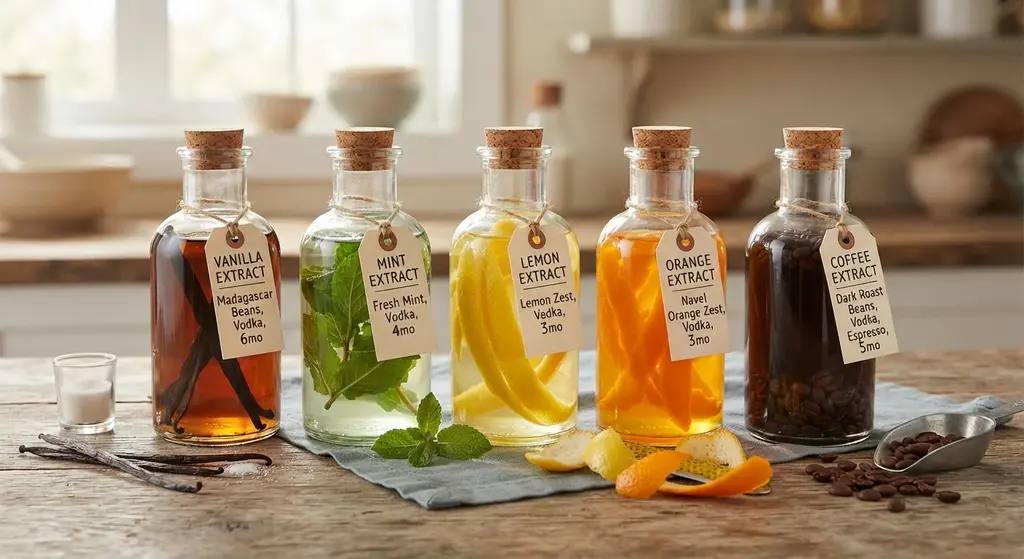
| Extract | Main Ingredient | Starting Steep Time |
|---|---|---|
| Vanilla | Vanilla beans | Several months |
| Peppermint | Fresh mint | 2–4 weeks |
| Lemon | Lemon zest | 4–6 weeks |
| Orange | Orange zest | 4–6 weeks |
| Coffee | Roasted coffee | Taste after 1–2 weeks |
Ways to Use Homemade Extracts
- Cookies and cakes
- Frostings
- Homemade coffee creamers
- Hot chocolate
- Pancakes and waffles
- Quick breads
- Whipped cream
- Chocolate desserts
- Homemade pantry gifts
Common Homemade Extract Mistakes
Using Non-Food Alcohol
Only use alcohol sold for beverage consumption. Rubbing alcohol is not a culinary ingredient.
Leaving Citrus Pith on the Peel
The white portion beneath citrus zest can create unnecessary bitterness.
Using Wet or Spoiled Herbs
Start with clean, sound ingredients and remove excess surface moisture.
Leaving Ingredients Above the Alcohol
Choose a container that lets the flavoring material remain submerged.
Assuming Every Extract Needs the Same Time
Vanilla, mint, citrus, and coffee extract at different rates. Taste and aroma matter more than blindly following one steeping time.
Homemade Extract FAQ
Can I use 80-proof vodka for homemade extracts?
Yes. Eighty-proof vodka contains 40% alcohol by volume. For comparison, federal standards require vanilla extract to contain at least 35% alcohol by volume.
How long should lemon extract steep?
About four to six weeks is a useful starting range. Taste periodically and strain when the citrus flavor is strong enough.
Do I use lemon juice in lemon extract?
For this type of culinary extract, use the aromatic outer zest rather than adding lemon juice. Keep as much bitter white pith out of the jar as possible.
Can I make extract with fresh mint?
Yes. Start with clean mint that has been dried of surface water, cover it completely with food-grade alcohol, and strain once the flavor is strong enough.
Can I make almond extract from almonds and vodka?
Soaking ordinary sweet almonds may create an almond-infused spirit, but it should not be assumed to reproduce commercial almond extract. FarmSolo recommends using commercially prepared food-grade almond extract when that classic flavor is required.
Can I use these extracts for canning?
Do not add homemade extract to a tested home-canning recipe unless that recipe specifically allows it. Changing tested preservation formulas can affect safety. Penn State recommends following tested canning formulas rather than improvising ingredients.
The Bottom Line
Homemade extracts are a simple pantry project when you stick to culinary ingredients, food-grade alcohol, clean jars, and reasonable steeping times.
Vanilla needs patience, mint extracts relatively quickly, citrus needs only the fragrant colored zest, and coffee should be tasted early enough to avoid excessive bitterness. Skip questionable DIY almond-extract shortcuts and use commercial almond extract when you need the traditional flavor.
Sources
- U.S. Food and Drug Administration / 21 CFR §169.175 — Vanilla Extract Standard
- Alcohol and Tobacco Tax and Trade Bureau — Vanilla Extracts and Vanilla Flavors
- Utah State University Extension — Lemon Zest Guidance
- Utah State University Extension — Alcohol-Based Propolis Tincture Guidance
- Penn State Extension — Safely Making Infused Oils