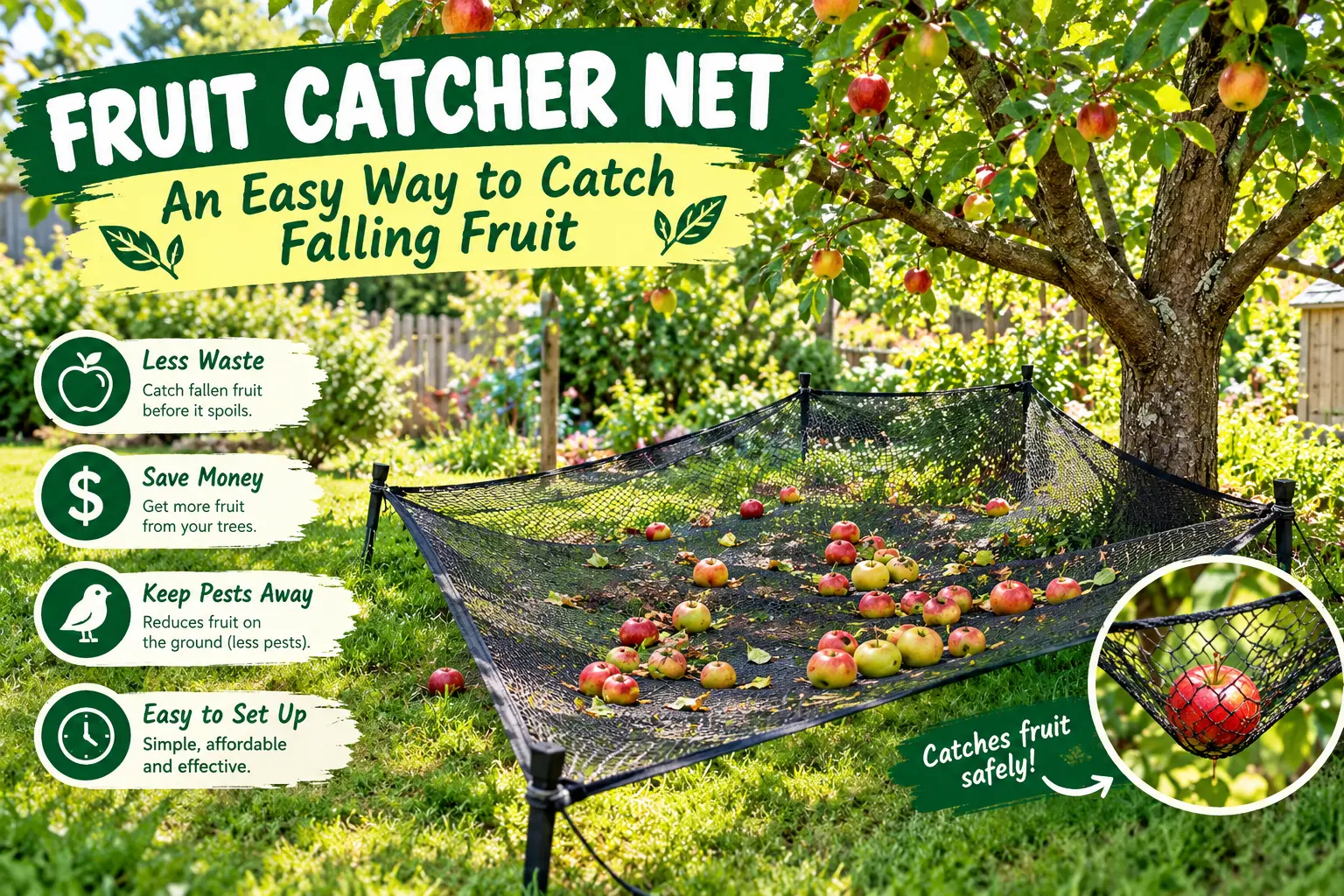
A fruit catcher net sits below a fruit tree and catches ripe fruit before it lands directly on the ground. It can make harvesting and cleanup easier and may reduce some impact bruising, but the net needs to be positioned correctly and every piece of fruit should still be inspected before eating, storing, or processing it.
Fruit catcher net basics
- Stretch the net below the fruiting part of the tree.
- Keep the catching surface raised above the soil.
- Use a gentle slope to make collection easier.
- Do not tighten straps or cords around the tree trunk.
- Collect fruit regularly instead of leaving it outside for days.
What Is a Fruit Catcher Net?
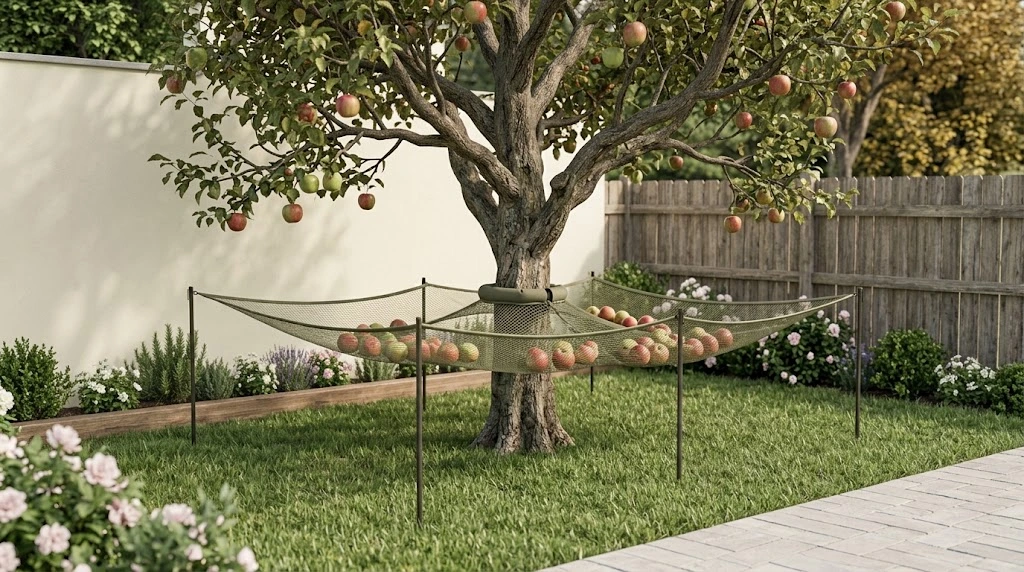
A fruit catcher net is a mesh or fabric collection surface placed underneath a fruit tree. Instead of covering the tree canopy, the net sits below the branches and catches fruit as it drops.
Many designs open around the trunk and extend outward beneath the fruiting canopy. Stakes, poles, or a simple frame keep the outside edge raised above the ground.
The purpose is simple. Fruit lands on a flexible surface instead of dropping directly onto hard soil, stones, paving, or tall grass.
Some systems are slightly sloped so the fruit naturally moves toward an edge or collection point.
This is different from fruit tree netting used to protect fruit from birds and pests. Protective netting normally surrounds the canopy. A fruit catcher net stays underneath it.
Why Put a Net Under a Fruit Tree?
It makes fallen fruit easier to collect
A mature apple, pear, plum, or similar tree can drop fruit across a surprisingly wide area. Fruit can disappear into long grass, fallen leaves, mulch, or nearby planting beds.
A catcher net creates one clear collection area. Instead of searching around the tree, you can inspect the net and remove the fruit from one accessible place.
It may reduce impact bruising
Fruit that falls directly onto hard or uneven ground can bruise, crack, or split. A suspended mesh surface can provide a softer landing.
It cannot prevent every bruise. Fruit may still hit branches on the way down, land on other fruit, or drop from enough height to be damaged.
It keeps fruit away from direct soil contact
Raising the fruit above mud, wet grass, or bare soil can help keep the harvest cleaner and easier to inspect.
This does not mean every fruit caught by the net is automatically suitable for eating. Moldy, rotten, badly bruised, split, or heavily damaged fruit should still be discarded.
It can simplify harvest cleanup
Fruit that stays beneath a tree can soften and rot quickly. It may also attract insects and wildlife.
A net does not remove the need for cleanup. Its main advantage is that the fruit is easier to see and collect regularly.
How to Set Up a Fruit Catcher Net
1. Look at the fruiting canopy first
Before choosing the net size, stand beneath the tree and look at where the fruit is actually growing.
The catching surface should extend underneath the productive branches rather than simply forming a small circle around the trunk.
A narrow young tree may need a very different setup from an old apple tree with large spreading limbs.
2. Keep the net above the ground
A fruit catcher works best as a suspended surface. If the net rests directly on hard ground, fruit may still experience much of the same impact.
Use suitable supports around the outside so the mesh stays above the soil. Check the center as well. It should not sag so far that collected fruit eventually touches the ground.
3. Protect the tree trunk
Many catcher designs meet around the trunk, but nothing should tightly constrict the bark.
Avoid pulling thin wire, cord, or straps tightly around a living tree. The trunk increases in diameter as the tree grows, and forgotten attachments can damage it.
Use a loose, adjustable connection where one is needed and inspect it throughout the season.
4. Add a gentle collection slope
A completely flat net can leave fruit scattered across the entire surface. A gentle slope can encourage it to move toward an area that is easier to reach.
Keep the slope modest. A steep net can cause fruit to roll quickly, hit other fruit, or fall over the edge.
5. Make the fruit easy to reach
A collection system should reduce work rather than create another difficult garden job.
Leave an accessible edge where you can remove fruit without crawling under low branches or stepping on the net.
Fruit Catcher Net vs. Fruit Tree Netting
The names sound similar, but the two systems have different jobs.
| Net type | Main purpose | Location |
|---|---|---|
| Fruit catcher net | Collects falling fruit | Below the canopy |
| Fruit protection net | Helps keep birds and some pests away | Around or over the canopy |
If birds are eating apples, cherries, peaches, or other fruit while it is still on the branches, a catcher underneath the tree will not solve that problem.
For that situation, see FarmSolo’s fruit tree netting guide.
Which Fruit Trees Can Use a Catcher Net?
A catching system may be useful under apple, pear, plum, and other fruit trees where mature fruit drops and can reasonably be collected from below.
But one net does not work equally well for every crop.
Soft fruit can still split or bruise after falling. Heavy fruit puts more load on the support system. Very small fruit may pass through mesh openings that are too large.
Match the mesh size, support strength, catching height, and overall design to the fruit you grow.
Important: A catcher net is a harvesting aid. It does not mean every fruit crop should be left on the tree until it falls naturally. Harvest each crop at the stage recommended for that fruit and variety.
Can a Fruit Catcher Net Stop Apples From Bruising?
It can reduce the direct impact of an apple hitting hard ground, but it cannot guarantee bruise-free fruit.
Several things affect the result: how far the apple falls, how ripe it is, how tightly the net is stretched, and whether other apples are already sitting underneath it.
A thick pile of fruit can become a hard landing surface of its own.
During a heavy harvest period, check the net often and remove collected fruit before a large pile develops.
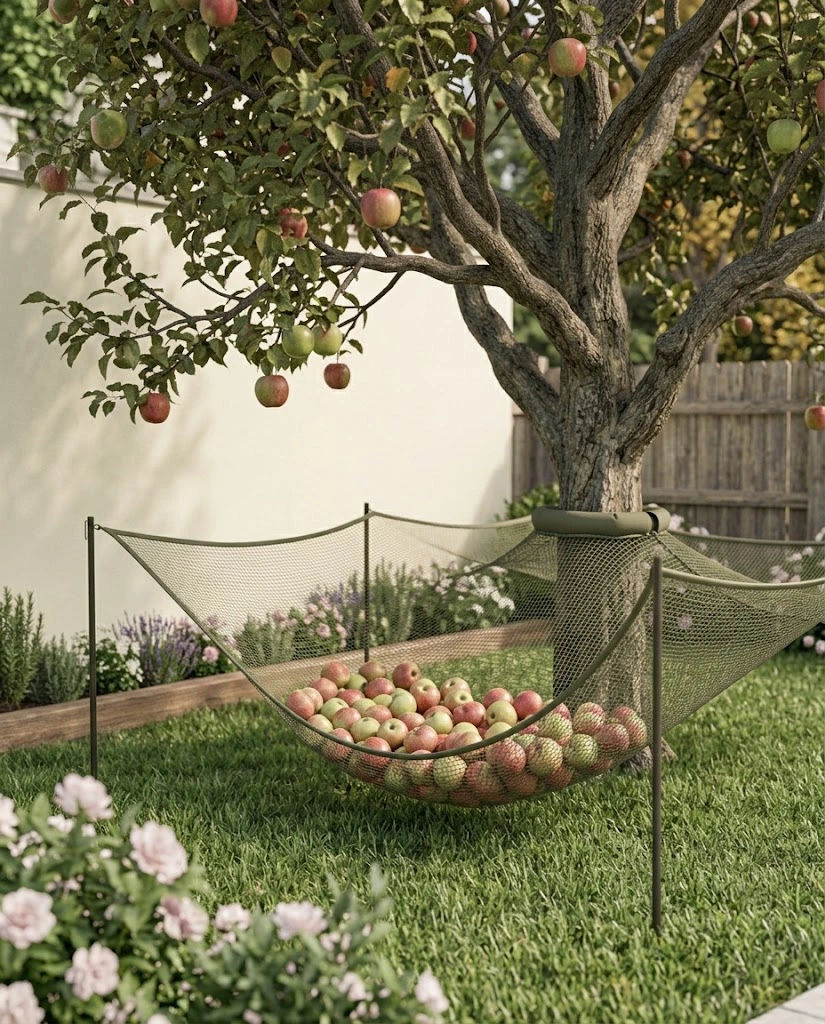
Do Not Leave Fruit Sitting in the Net
A fruit catcher makes collection easier, but it should not become long-term storage under the tree.
During peak ripening, check the catcher regularly. Remove fruit before it becomes soft, begins to rot, or builds up in a heavy pile.
Also clear away leaves, damaged fruit, and broken twigs so the net remains open and easy to inspect.
Simple routine: Check the catcher when you normally water, inspect, or harvest from the garden. Frequent small collections are easier than dealing with a large pile of overripe fruit later.
Is Fruit Caught in a Net Safe to Eat?
A catcher can prevent direct contact with the soil, but it cannot tell you whether a piece of fruit is safe or good quality.
Inspect every piece before eating or storing it. Discard fruit that is moldy, rotten, heavily bruised, split, or badly damaged by insects, birds, or other animals.
Apples intended for juice or cider deserve particular attention.
The U.S. Food and Drug Administration explains that patulin is a mycotoxin associated with molds on apples. Damaged and moldy apples can be more susceptible to molds that produce patulin.
For juice making, do not assume that catching an apple before it touches the soil removes that concern. The physical condition of the apple still matters.
You can read the FDA’s information about mycotoxins for more detail.
Common Fruit Catcher Net Mistakes
- Leaving the net on the ground. This removes much of the cushioning effect.
- Pulling material tightly around the trunk. Attachments should not constrict or damage bark.
- Using openings that are too large. Smaller fruit may pass through the mesh.
- Making the slope too steep. Fruit can roll rapidly into a pile or off the edge.
- Allowing fruit to accumulate. New fruit may land directly on fruit already in the net.
- Ignoring damaged fruit. A catcher does not make rotten or moldy produce usable.
- Forgetting mowing and garden access. Stakes and low cords can become obstacles around the tree.
- Leaving attachments on the tree indefinitely. Remove or loosen the system after harvest and inspect the bark.
A Simple DIY Fruit Catcher Setup
A basic home version does not need to be complicated. The goal is to create a stable, slightly raised collection surface under the productive part of the tree.
- Measure the area beneath the fruiting canopy.
- Choose a suitable mesh or collection fabric.
- Position it around the trunk without tightening it against the bark.
- Support the outside edge with stable stakes or a frame.
- Raise the surface enough that fruit does not hit the ground through the net.
- Create a gentle slope toward an accessible side.
- Test the setup before the main harvest begins.
Check that stakes, lines, and supports do not create a trip hazard, especially in a lawn or path that people use regularly.
When Does a Fruit Catcher Net Make Sense?
This setup is most useful when a mature backyard tree drops more fruit than you can conveniently collect by hand.
It can also help where fruit normally falls into tall grass, mulch, garden beds, uneven ground, or onto hard paving.
A catcher may be less useful beneath a small young tree where most of the crop is easy to pick directly from the branches.
The goal is not to add equipment simply because it looks clever. The best garden systems reduce repeated work.
That is the same basic principle behind FarmSolo’s homestead garden layout guide: arrange the garden around practical access and the jobs you perform most often.
Fruit Catcher Net FAQ
What is the net under an apple tree called?
You may see it described as a fruit catcher net, fruit collection net, fruit harvest net, harvesting net, or apple catcher net.
Should a fruit catcher net touch the ground?
If the goal is to soften the landing, the catching area should normally remain suspended above the ground. A net lying flat on hard soil provides much less cushioning.
Can I leave the net around the tree all year?
Seasonal use is usually more practical. Removing it after harvest makes mowing, pruning, cleanup, and inspection easier and prevents attachments from being forgotten around the trunk.
Does a fruit catcher net stop birds?
No. A catcher sits below the fruit. It does not stop birds from reaching fruit while it is still hanging on the tree.
Can I make apple juice from apples caught in the net?
Do not use moldy, rotten, badly bruised, or otherwise damaged apples for juice. The condition of the fruit still matters even when it has been caught before touching the soil.
Can the same net work for pears and plums?
The basic idea can work for different fruit trees, but fruit size, softness, falling height, mesh openings, and harvesting recommendations all need to be considered.
Is a Fruit Catcher Net Worth It?
For the right tree, a fruit catcher net can be a simple way to make harvest cleanup easier and keep dropped fruit in one accessible place.
Its value comes from good setup, not from the net alone. Keep the surface raised, protect the tree trunk, use only a gentle slope, remove fruit frequently, and inspect what you collect.
Used that way, the catcher can become a practical seasonal tool instead of another piece of garden equipment that creates extra work.