An A-frame garden swing gives you a freestanding place to sit without depending on a porch ceiling or tree. Before building one, plan the seat first, then work outward to the hanger spacing, top beam, frame footprint, swing clearance, anchoring, and the ground underneath it.
Plan these first
- Choose the swing seat before finalizing the frame dimensions.
- Use hardware specifically rated for a suspended swing.
- Leave open space in front, behind, and beside the moving seat.
- Place the frame on firm, level ground.
- Inspect the frame, hangers, chains, bolts, and anchors regularly.
What Is an A-Frame Garden Swing?
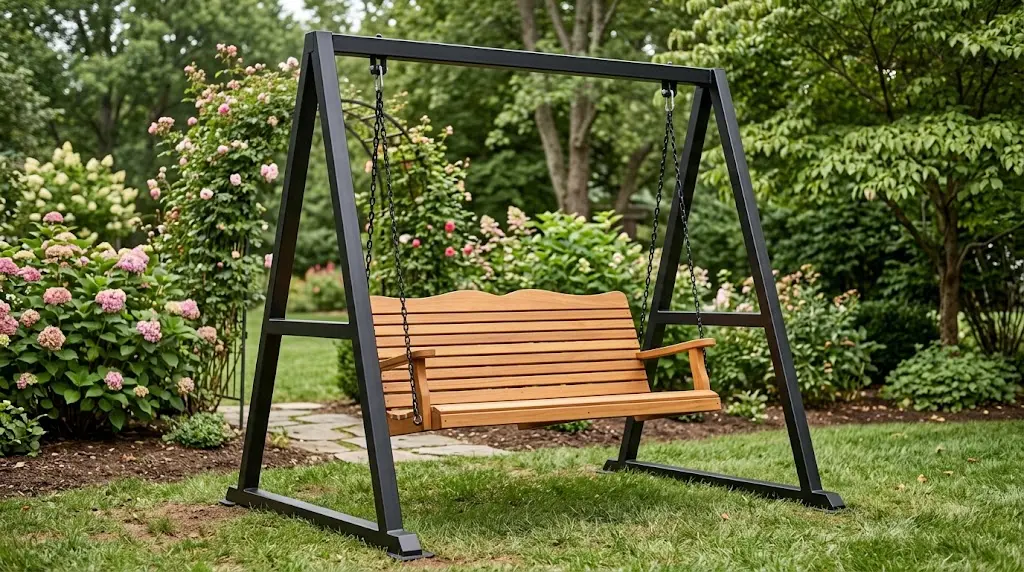
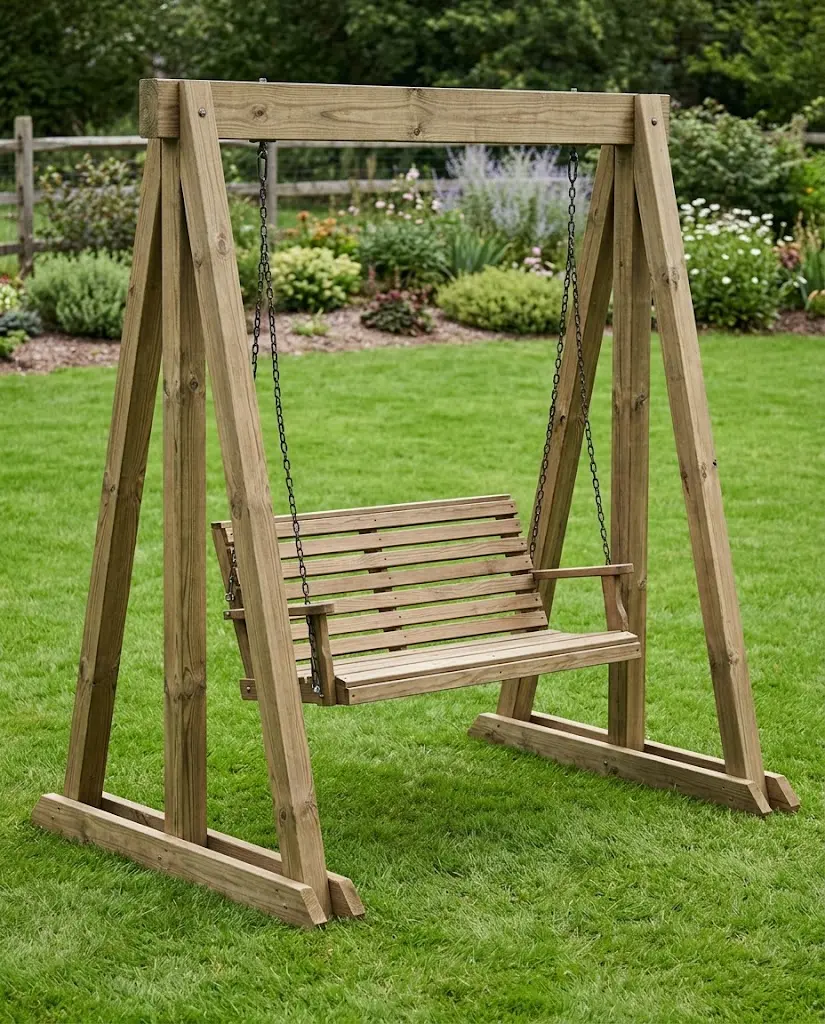
An A-frame garden swing uses two wide triangular side frames connected by a strong top beam. The bench hangs from the beam using rated hangers, chains, or another suspension system designed for the swing.
The wide stance of the legs helps create a stable freestanding structure. Because it does not need an overhead porch beam, the swing can be positioned in a garden, lawn, patio area, or other suitable part of the backyard.
The basic shape is simple, but the finished structure still has to handle people sitting on the bench plus the changing forces created as the seat moves. That is why a Pinterest photo should be treated as design inspiration rather than a structural plan.
Can You Copy the Dimensions From a Photo?
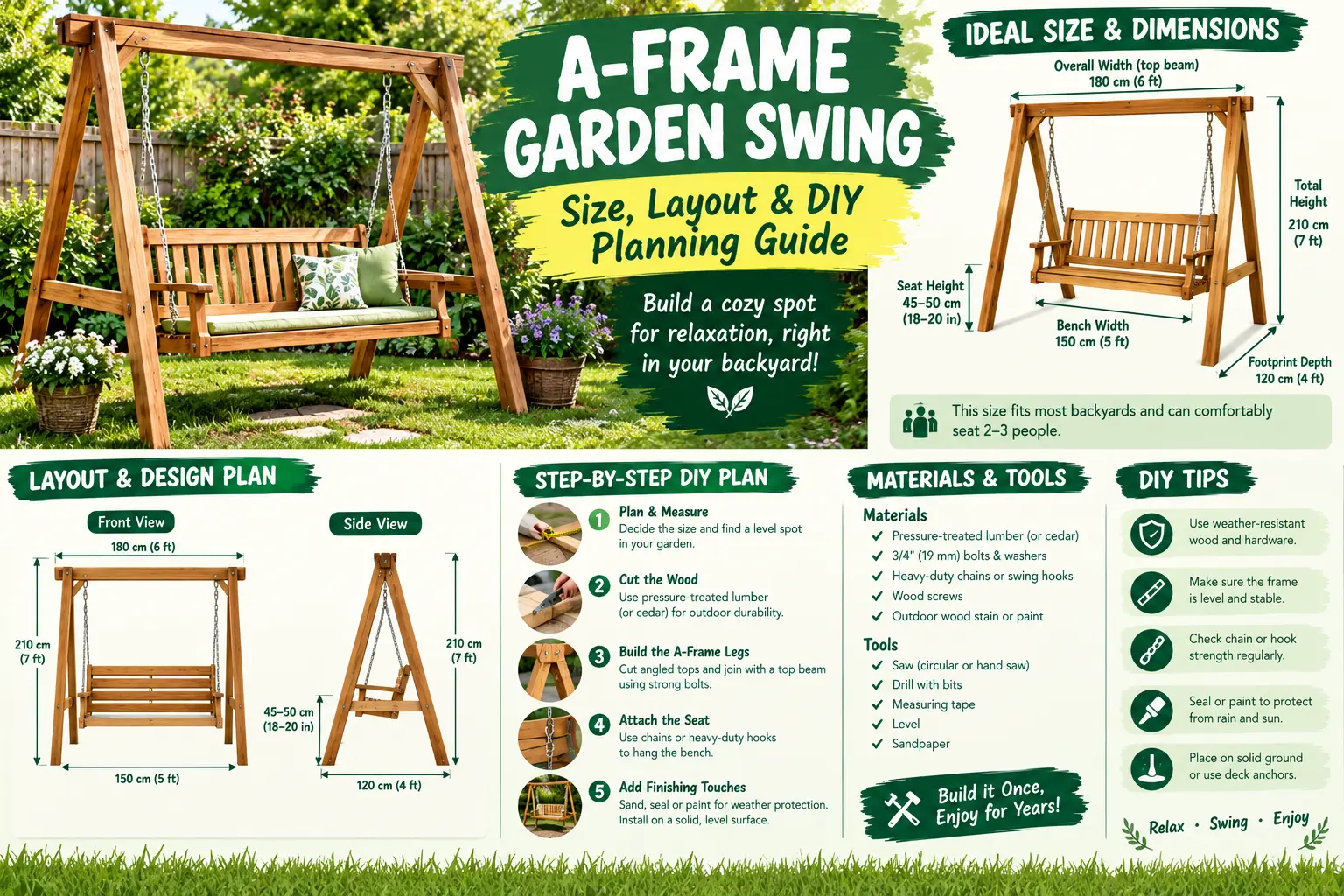
The reference image shows useful measurements for one particular swing, including the overall height, base footprint, top beam, and bench area.
Those dimensions should not be treated as universal measurements.
A wider or heavier bench may need different hanger spacing and a different support structure. Changing the lumber, metal section, connection method, swing height, or expected load can also change what the frame needs.
Important: If you are building the structural frame yourself, use a complete plan designed for your materials, seat, hardware, and intended load. Do not scale a structural swing frame only by looking at an online photo.
7 Things to Measure Before Building an A-Frame Swing
1. The Swing Seat Width
Start with the bench you actually plan to hang.
A compact two-person garden seat and a wide porch swing do not need the same frame. Measure the seat width, the position of its suspension points, and the manufacturer’s recommended hanger spacing if available.
Do not decide the top beam length first and then try to squeeze an unrelated bench underneath it.
2. Hanger Spacing
The two suspension points need to match the geometry of the seat and its chains or hanging hardware.
There is no single hanger spacing that works for every garden swing. Follow the seat and hanger manufacturer’s specifications instead of choosing a number only because it appears in another project.
3. Seat Height Above the Ground
The bench needs enough clearance to move without touching the ground, but it should also remain comfortable to enter and leave.
Test the final position carefully before regular use. Remember that the suspension system may settle slightly and the seat may move lower when occupied.
4. The Frame Footprint
The feet of an A-frame spread wider than the top of the structure. That wider base is an important part of the design.
Mark the entire footprint on the lawn or patio before building. Make sure it does not block a garden path, gate, irrigation line, drainage route, or frequently used work area.
5. Front and Rear Swing Clearance
A garden swing needs open space in the direction it moves. Do not position it directly in front of a wall, raised bed, tree trunk, fire pit, fence, garden furniture, or another obstacle.
Use more clearance than the stationary bench appears to need because the seat moves beyond its resting position.
6. Side Clearance
The bench should not rub against the A-frame legs or side braces as it moves.
Allow enough space for the suspension system and normal side-to-side movement, and verify the finished swing before anyone uses it.
7. Total Height
The overall height affects the suspension length, footprint, appearance, and the amount of space needed around the frame.
A taller structure is not automatically better. Use the dimensions specified by the structural design or manufactured frame you are following.
Where Should You Put a Garden Swing?
The best location feels relaxing without creating another obstacle in the backyard.
- Choose firm, level ground.
- Keep the moving area clear of walls, trees, fences, and garden structures.
- Check where afternoon sun falls if you want comfortable summer seating.
- Avoid low areas that remain wet after rain.
- Keep the swing out of important garden work routes.
- Think about the mature size of nearby shrubs and trees.
If your yard already has a seating structure, FarmSolo’s backyard pergola ideas can help you think about shade, sight lines, and how a relaxation area fits into the rest of the garden.
Wood or Metal A-Frame Swing?
| Frame | Advantages | Things to consider |
|---|---|---|
| Wood | Natural garden appearance, easy to finish and stain | Needs suitable structural lumber, weather protection, and regular inspection |
| Metal | Can create a slimmer modern frame | Connections, corrosion protection, section size, and fabrication must be appropriate for the load |
Neither material is automatically safer simply because it looks heavier.
The structural design, connection details, material condition, hardware, anchoring, and intended load all matter.
Choose Swing Hardware Carefully
The hanging hardware is not a good place to improvise.
Use hangers, connectors, chains, bolts, and other components intended for suspended swing loads and compatible with the beam or frame you are using.
Follow the manufacturer’s installation instructions and weight limits. Do not assume that an ordinary eye bolt, decorative hook, or general-purpose screw is suitable because it physically fits.
Product manuals for freestanding swing frames also commonly instruct users to place the structure on a stable level surface, stay within the stated load limit, and inspect connections regularly.
Before the first use: Check the beam, frame joints, hanger installation, chains, seat connections, anchors, ground contact, and all fasteners. If the frame rocks, twists, cracks, or shifts unexpectedly, stop and correct the problem before using it.
Does an A-Frame Swing Need Anchoring?
That depends on the specific frame design, surface, local conditions, and manufacturer’s instructions.
Do not assume that a heavy-looking frame cannot shift or tip. Moving loads are different from a stationary bench.
If a manufactured frame includes anchors or specifies anchoring, install them exactly as directed. For a custom structure, anchoring should be part of the structural plan rather than an afterthought.
What Should Go Under a Garden Swing?
For an adult garden bench swing, the surface should first be level, stable, well drained, and appropriate for the frame or anchors.
If children will use the structure as play equipment, safety requirements become more specific. The U.S. Consumer Product Safety Commission recommends impact-absorbing surfacing and dedicated use zones for residential playground swings rather than relying on ordinary grass or hard ground.
A decorative adult garden swing should not automatically be treated as a children’s playground swing unless the entire structure and installation are designed for that use.
How to Make the Swing Fit the Garden
Once the structural and safety decisions are settled, the swing can become part of the landscape rather than looking like equipment dropped in the middle of the lawn.
- Use a frame finish that works with fences, raised beds, or existing garden structures.
- Add low planting outside the swing clearance zone.
- Use a simple path so the seat remains accessible after rain.
- Position the swing toward a garden view rather than a blank wall when possible.
- Add shade separately if the frame was not designed to carry a roof or canopy.
If you want a simpler freestanding relaxation project, FarmSolo also has a DIY backyard hammock stand guide.
Common A-Frame Garden Swing Mistakes
- Copying dimensions from a photo. The original materials, load, and connection details may be completely different.
- Choosing the frame before the seat. Start with the bench and compatible suspension system.
- Using unrated hardware. Swing components experience repeated moving loads.
- Ignoring the moving clearance. Measure the swing area, not only the stationary frame.
- Placing the feet on uneven ground. The structure should not rock or twist during use.
- Adding a roof later without checking the design. A canopy changes wind and structural loads.
- Skipping maintenance. Outdoor fasteners, chains, wood, welds, and coatings all need inspection.
A-Frame Garden Swing FAQ
How wide should an A-frame garden swing be?
There is no universal width. It depends on the seat width, hanger positions, side clearance, braces, and the structural plan or manufacturer’s dimensions.
How tall should an A-frame swing be?
The required height depends on the frame design, suspension length, seat position, and intended motion. Use the dimensions from a complete structural plan or the frame manufacturer’s instructions rather than choosing height independently.
Can an A-frame swing sit on grass?
A frame may be designed for a lawn, but the ground still needs to be firm and level and the structure must be installed or anchored according to its design. Grass alone should not be assumed to provide stability or child fall protection.
Can I add a canopy to an A-frame swing?
Only if the structure is designed to support it. A canopy adds weight and can also catch wind, so do not attach one to a basic frame without checking the design.
How often should outdoor swing hardware be checked?
Inspect it regularly and follow the manufacturer’s maintenance schedule. Check again after severe weather, unusual movement, visible corrosion, cracking, loose fasteners, or any change in how the swing feels during use.
Measure the Swing, Not the Pinterest Photo
The A-frame in the inspiration image is useful because it clearly shows the parts that need planning: a wide base, tall side frames, a top support, a suspended bench, and open space around the moving seat.
Use those ideas when planning your own garden swing, but let the real bench, rated hardware, structural design, ground conditions, and expected load determine the finished dimensions.
That approach gives you a garden swing that fits the yard instead of a structure built around measurements that were never intended for your project.