How to Compost: What I Learned After Making a Very Stinky Pile
The first time I tried to learn how to compost, I thought it was going to be easy.
Throw some kitchen scraps in a pile, add some leaves, wait a while, and boom… free garden soil.
Well, sort of.
My first compost pile smelled terrible. I mean really terrible. I would walk past it and suddenly remember an important job I needed to do somewhere else.
My wife asked what was going on back there, and I had to admit I had created what was basically a giant bucket of wet food scraps.
You’re gonna laugh at this, but that ugly pile taught me more about composting than any perfect-looking compost bin ever could.
After more than 10 years of gardening and homesteading, compost has become one of the most useful things I make. It helps my vegetable garden, reduces the amount of organic waste going into the trash, and gives me a practical way to build healthier soil.
So if you’re wondering how to compost at home, lemme show you the simple way I do it now, including what I got wrong at the beginning.
What Is Compost, Really?
Compost is basically decomposed organic material.
Leaves, plant material, certain kitchen scraps, grass clippings, and other suitable organic materials break down over time with the help of microorganisms and other decomposers.
Eventually, you end up with a dark, crumbly material that can be useful in the garden.
It’s not exactly “dirt,” even though people sometimes call it that.
I think of finished compost as food for the soil.
And that’s what makes it so useful for a backyard homestead.
Instead of buying something every time my garden needs organic matter, I can turn some of the waste from around the property into something useful.
How to Compost Without Making It Complicated
Here’s the biggest thing I learned: you don’t need an expensive compost machine.
My first setup was basically a simple pile in a designated area of the backyard.
Later, I used a basic compost bin because it looked cleaner and helped keep everything contained.
You can use a compost bin, a homemade enclosure, a tumbler, or even a simple managed pile, depending on your space and local rules.
For beginners, I’d start with something simple.
You need a place where organic material can sit, get some air and moisture, and break down over time.
That’s really the heart of it.
The Two Types of Compost Material I Think About
You don’t need to memorize a giant scientific chart.
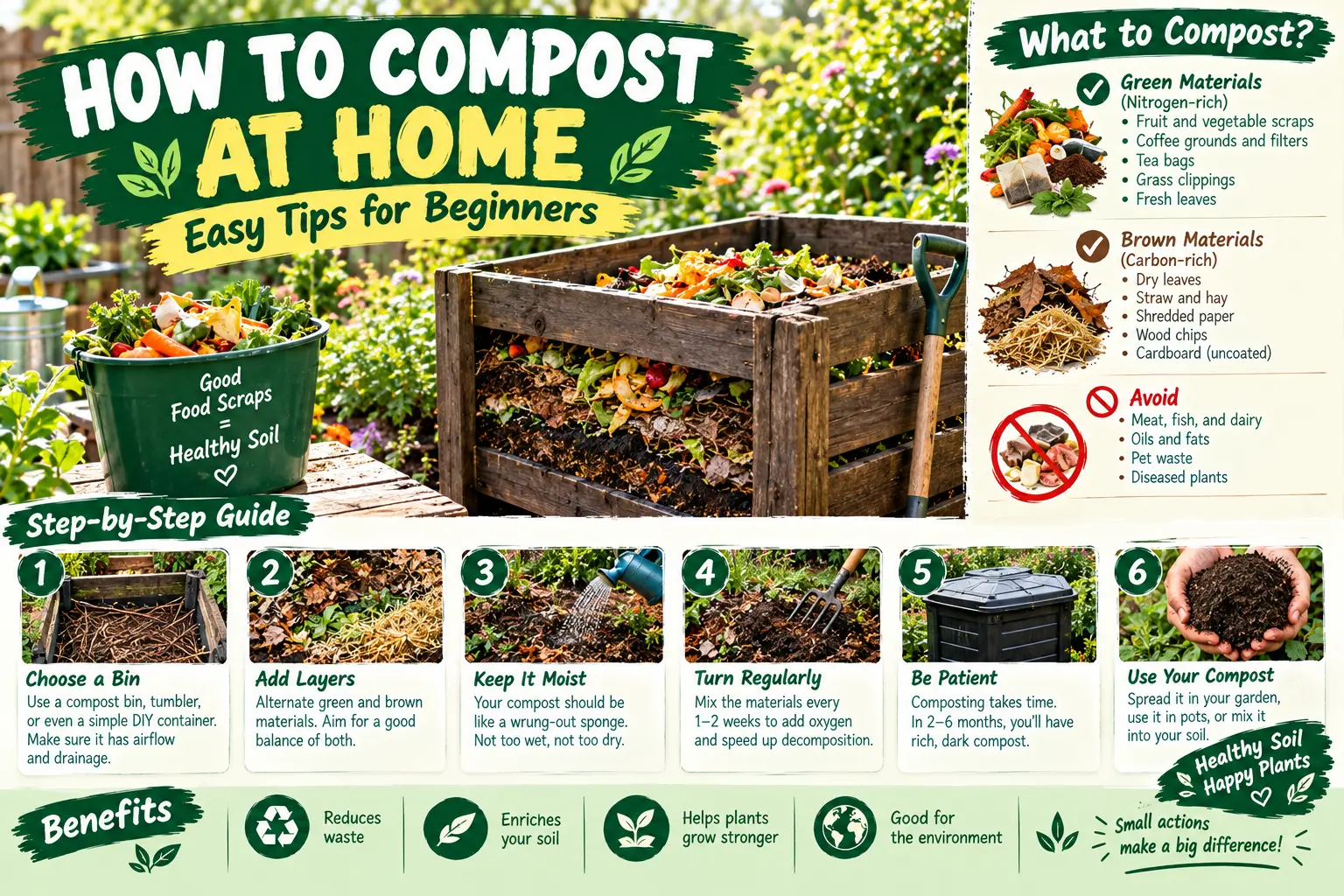
I mostly think about two broad groups: brown materials and green materials.
Brown materials are generally carbon-rich materials such as:
- Dry leaves
- Plain cardboard
- Paper that is suitable for composting
- Dry plant material
- Small amounts of untreated woody material
Green materials are generally nitrogen-rich materials such as:
- Fruit and vegetable scraps
- Fresh grass clippings
- Fresh green plant material
- Some suitable manure from herbivorous animals
You don’t need to obsess over having a perfect ratio every time you add something.
I used to worry about this way too much.
Now I just make sure I’m not building a pile that’s almost entirely wet kitchen scraps or almost entirely dry leaves.
Balance is the goal.
My Biggest Composting Mistake: Too Many Kitchen Scraps
Let’s talk about the smell.
One summer, I got excited about composting and started saving every vegetable scrap from the kitchen.
That part was good.
The problem was that I wasn’t adding enough dry material.
The pile became wet and heavy. Air wasn’t moving through it very well, and it started smelling like something had died behind the shed.
I knew immediately that something was wrong.
The fix was pretty simple.
I added more dry leaves and other suitable brown material and mixed the pile so air could get into it.
The smell improved.
That experience taught me one of the easiest composting lessons: if your pile is wet and smelly, don’t just keep adding more food scraps.
Step back and look at the whole pile.
What Can You Put in a Compost Pile?
This is where beginners sometimes get into trouble.
Not everything that came from a plant belongs in your compost pile automatically.
For my household compost, I usually stick with things like fruit and vegetable scraps, coffee grounds, tea leaves without unsuitable materials, leaves, and suitable yard waste.
Plain cardboard can also be useful when prepared properly.
Before adding something, I ask myself a simple question: “Would I want this material breaking down in my garden?”
If I’m not sure, I leave it out and check a reliable composting resource first.
What I Don’t Put in My Home Compost
I keep things simple here.
I don’t throw meat scraps, bones, oils, greasy foods, or dairy products into my ordinary backyard compost pile.
These materials can create odor, attract unwanted animals, or cause other problems in a basic home compost setup.
There are advanced composting systems that can handle certain materials, but that’s not what I’m talking about here.
If you’re just learning how to compost, start with easy materials.
There’s no prize for making your compost pile complicated.
Do You Need to Turn Compost?
I’ve turned compost with a pitchfork.
I’ve also ignored it for longer than I should have.
Both approaches can work, depending on how you’re managing the pile.
Turning helps mix materials and introduce air into the pile, which can help decomposition.
But you don’t need to stand there every morning turning your compost like you’re mixing pancake batter.
I usually turn it when it looks like the pile needs more air or when I want to mix fresh material into the older stuff.
If you have a compost tumbler, turning is obviously easier. If you have a large pile, a pitchfork works fine for me.
How Wet Should Compost Be?
This is another thing that confused me at first.
You don’t want your compost bone dry, but you don’t want it soaking wet either.
I think of a damp sponge.
That’s the general feel I’m looking for.
If I squeeze a handful and water pours out, the pile is probably too wet.
If everything is dusty and completely dry, it probably needs some moisture.
Weather makes a difference too.
During a rainy period, I may need to cover part of the pile. During a hot dry spell, I might add a little water.
Can You Compost in a Small Backyard?
Absolutely.
You don’t need a huge homestead.
A small compost bin can work in an urban backyard, and some people use compact systems designed for patios or other small spaces.
If you live close to neighbors, think about location.
Don’t put your compost pile right beside the fence where your neighbor’s bedroom window happens to be.
I know that sounds obvious, but when you’re excited about starting a garden, common sense sometimes takes a coffee break.
Keep the compost area reasonably convenient, but also consider drainage, sunlight, access, and potential pests.
What About Compost and Chickens?
Chickens produce manure, and manure can be a useful compost ingredient when handled properly.
But don’t take fresh manure and dump a giant pile of it directly onto plants.
That’s not how I use it.
I prefer composting appropriate manure with other materials and allowing it to break down properly before using the finished compost in garden areas.
And keep chickens from turning your compost pile into their personal playground unless you’re intentionally managing it that way.
My chickens once scratched half the dry leaves out of my pile.
They looked very proud of themselves.
I was not impressed.
How Long Does Compost Take?
This is one of those questions where everybody wants a simple number.
But compost doesn’t work like a microwave.
How fast it breaks down depends on things like the materials, moisture, temperature, pile size, airflow, and how often you turn it.
A well-managed pile can break down relatively quickly, while a neglected pile may take much longer.
I don’t worry too much about the calendar anymore.
I look at the compost.
When it’s dark, crumbly, earthy-smelling, and the original ingredients are mostly unrecognizable, that’s a much better sign that it’s ready than simply saying, “It’s been three months.”
How I Use Finished Compost in My Vegetable Garden
This is the part I really love.
Once the compost is finished, I use it as part of my soil-building routine.
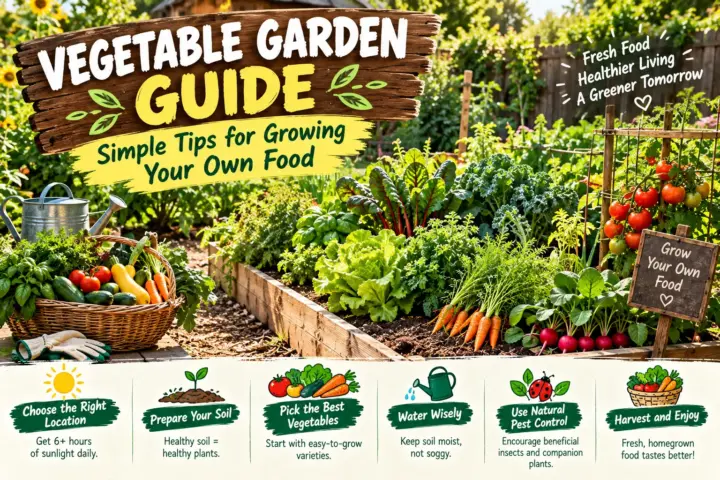
Before planting vegetables, I may add a layer to garden beds and mix it into the overall growing system according to what the bed needs.
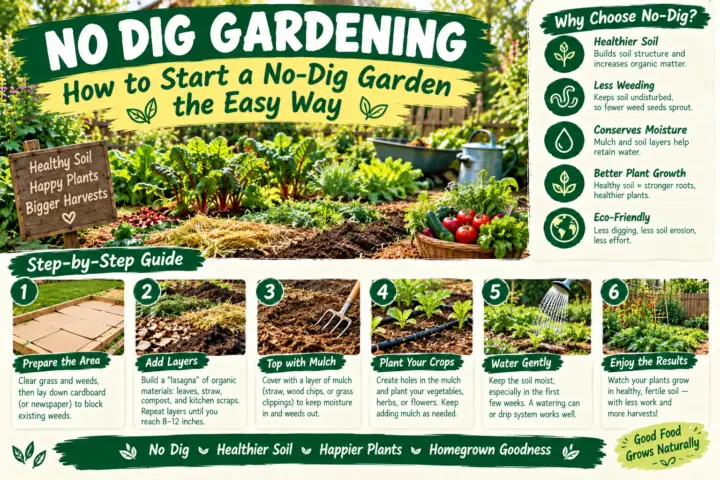
For no-dig beds, I can also add finished compost to the surface without deeply turning the soil.
I use compost around suitable plants as part of maintaining the garden, but I don’t assume that more is always better.
Too much of anything can cause problems.
The goal is to improve the soil, not bury your vegetables in a mountain of compost.
Compost Is One of My Favorite Homesteading Tools
There’s something satisfying about composting that I didn’t understand when I first started.
You take things that look useless and turn them into something valuable.
Leaves that would have gone into a bag become part of the garden.
Vegetable scraps from dinner become soil-building material.
Plant trimmings don’t automatically become trash.
That’s the kind of cycle I like about homesteading.
It’s practical, and it saves money over time.
I’m not saying compost will replace every fertilizer or soil amendment you might ever need. It won’t.
But it’s one useful piece of a bigger system.
My Simple Compost Routine
Here’s what I actually do without making it a big project.
I keep a small container in the kitchen for suitable food scraps.
When it’s full, I take it outside.
I add the scraps to the compost pile and cover them with dry leaves or another suitable brown material.
If the pile looks too dry, I add some moisture.
If it looks wet and smells bad, I add more dry material and turn it.
Every now and then I mix the pile to improve airflow.
Then I leave it alone and let nature do most of the work.
That’s it.
It takes me a few minutes, not half a day.
3 Composting Problems I Watch For
1. Bad smell
A strong rotten smell usually tells me something isn’t balanced properly. I check moisture, airflow, and whether I’ve added too much wet material.
2. Nothing is breaking down
If the pile seems completely inactive, it may be too dry, too small, or lacking a useful mix of materials. I check those things before doing anything drastic.
3. Too many flies
Some insects are normal around compost, but if flies become a major problem, I cover fresh food scraps with a layer of dry material and make sure I’m not leaving exposed kitchen waste on top.
How to Compost Without Making Your Backyard Ugly
I’ll admit something.
My first compost pile wasn’t exactly beautiful.
It looked like a pile of yard junk.
Eventually I built a simple enclosure, and that made a big difference.
You don’t need an expensive designer compost bin. A simple structure can keep things contained and make the area look much tidier.
If you’re in an urban neighborhood, appearance matters a little more because you’re sharing space with other people.
And honestly, I like having a dedicated compost corner now. It feels like part of the homestead instead of a random pile behind the shed.
How to Compost: My Beginner Advice
If you’re starting from zero, don’t overthink it.
Get a suitable compost bin or make a simple contained pile.
Start with dry leaves, then add suitable green materials and kitchen scraps.
Keep adding a mix of dry and fresh organic material.
Keep the pile damp but not soaked.
Give it air when needed.
And be patient.
Don’t dig through it every three days wondering why you don’t have perfect black compost yet.
I did that.
It didn’t make the compost finish any faster.
How to Compost FAQ
Can I compost kitchen scraps?
Yes. Fruit and vegetable scraps are some of the easiest materials to compost at home. I keep meat, bones, dairy, and greasy foods out of my basic backyard pile.
Why does my compost smell bad?
A strong bad smell often means the pile is too wet, lacks airflow, or contains too much nitrogen-rich material at once. Try adding dry brown material and mixing the pile to improve airflow.
Can I use compost directly in my vegetable garden?
Use mature, finished compost rather than fresh, actively decomposing material. Finished compost should look dark and crumbly and have an earthy smell rather than smelling like rotting food.
What I Wish I Knew When I Started
If somebody had explained composting to me this way 10 years ago, I probably would’ve saved myself a lot of trouble.
You don’t need to be perfect.
You don’t need an expensive compost machine.
You don’t need to measure every handful of leaves.
You just need to understand the basic idea: give organic material a reasonable mix of moisture, air, and different types of material, then let time do its thing.
Some batches will be better than others.
Sometimes you’ll forget about the pile for a month.
Sometimes you’ll add too many kitchen scraps and get a nasty smell.
That’s normal.
My composting journey has been a lot like the rest of my homesteading life. I try something, screw it up a little, figure out why, and try again.
And that’s probably the best advice I can give anyone learning how to compost.
Start small. Keep it simple. Don’t be scared of making a mistake.
Before long, those kitchen scraps and leaves that used to go in the trash can start becoming one of the most useful things in your garden.
And if your first pile smells horrible, don’t worry.
Welcome to composting. I’ve been there.
Got a compost problem you’re trying to figure out? Leave a comment and tell me what’s happening. I may have made the same mistake already.