


You’re gonna laugh at this… story about Types of Pigs the very first pig I ever raised ran right through my fence like it was made of spaghetti. I had no idea pigs could be that strong or smart. I thought I was just getting a cute pink oinker that’d eat scraps and give me bacon someday. Nope. What I got was an escape artist with an appetite for chaos.
After that, I decided I better learn everything I could about pigs the good, the bad, and the muddy. Over the years, I’ve raised quite a few different types of pigs on my little backyard homestead, from the docile Yorkshires to the fiery Tamworths. Each breed’s got its own personality, its own quirks, and its own lessons. So lemme walk you through what I’ve learned the hard way, most times about choosing and raising the right kind of pig for your setup.
So, Why Pigs Anyway?
If you’re new to homesteading or backyard farming, pigs are one of the most rewarding (and hilarious) animals you can raise. They grow fast, they eat just about anything, and if you treat ‘em right, they’ll treat you right back. Plus, they turn your kitchen scraps into rich compost faster than any machine I’ve seen.
But picking the right Types of Pigs can make or break your experience. Trust me, not every pig is made for small farms or first timers. I learned that after trying to raise a Landrace in a tiny pen let’s just say he wasn’t happy and neither was I.
The Big, Friendly Ones: Yorkshire Pigs
My first “real” pig after the escape artist was a Yorkshire. Big, white, friendly-looking fellas that seem like they’d pose for a family photo. Yorkshires are one of the most common pig breeds you’ll see, especially on commercial farms.
They grow fast, get big, and have a calm temperament. I liked that my kids could feed them scraps without getting scared. The only thing is, they eat a ton. I mean a ton. If you’re feeding store bought grain, that cost adds up fast.
What I loved about Yorkshires is how easy they are to handle. But they need space. They’re not built for tiny backyards or muddy corners. If you’ve got a few acres, go for it. But if not, you might wanna look at smaller breeds.
The Bacon Machines: Berkshire Pigs
One summer, I tried raising Berkshire pigs, and man, that was the best-tasting pork I ever had in my life. These black pigs with white feet and snouts are just… classy. They’ve been around for centuries, and the meat’s got that marbled fat that melts right in your mouth.
They’re friendly, clean, and adapt well to pasture living. I kept mine in a rotational grazing setup, moving their pen every couple weeks. They rooted up the ground nicely and helped with soil aeration.
The only downside? Berkshires don’t grow as fast as Yorkshires, so it takes a bit longer before you get meat on the table. But if flavor’s what you’re after, these are your pigs.
The Rusty Red Firecrackers: Tamworth Pigs
You ever have that one animal that just gives you attitude? That was my Tamworth sow, Rosie. She was smart, loud, and faster than any pig I’d ever seen. But boy, was she a great forager.
Tamworth pigs are known as the “bacon breed.” They’ve got lean meat with deep flavor, and they thrive on pasture. If you’ve got woods or open space, they’ll be in heaven. Rosie used to dig up roots, acorns, bugs basically, her own buffet.
Now, here’s the warning: Tamworths are escape artists. If your fencing isn’t solid, you’ll be chasing a red blur through your neighbor’s cornfield. Trust me, it’s not fun explaining that to them.
Still, if you want a hardy, natural grazer that’ll do great off-grid, Tamworths are worth the effort.
The Little Ones with Big Hearts: American Guinea Hogs
One of my favorite pigs ever was a little American Guinea Hog named Daisy. She wasn’t much bigger than a Labrador, but she had more personality than most people I know.
These pigs are perfect for small homesteads or backyard setups. They don’t need tons of feed, they’re gentle with kids, and they can live off pasture, veggies, and scraps.
I’ll be honest Daisy spoiled me. She followed me around like a dog, loved belly rubs, and kept my compost pile tidy. If you’re just starting out or live in the suburbs with some space, Guinea Hogs might be your best pick.
The Wild Cousins: Duroc Pigs
Then there’s the Duroc, that reddish brown powerhouse that looks like it could star in a farm calendar. I raised two Durocs a few years back, and they were some of the easiest pigs I ever kept.
They’re hardy, grow fast, and produce a lot of lean meat. They’re also great mothers if you’re thinking of breeding pigs. The only issue I had was that they don’t handle heat well. During one hot July, I had to keep them cool with mud baths and shaded shelters, or they’d start panting hard.
If you live in a cooler area and want pigs that’ll pack on weight fast, Durocs are solid.
The Pink Classics: Landrace Pigs
Ah, the Landrace. I’ve got mixed feelings about them. They’re the long, pink pigs with those droopy ears kinda cute, actually. They’re known for their big litters and high-quality meat.
But, man, they’re not great for beginners. They’re picky about food, don’t like small spaces, and can be a little jumpy. I made the mistake of keeping one in a tight pen once, and he tore it apart in two days.
Still, I know folks with big setups who swear by them. If you’ve got room and patience, you’ll be rewarded with a ton of meat.
My Experience with Mixing Breeds
Here’s something most folks don’t tell you sometimes, the best pig isn’t one breed, it’s a mix. I once had a Yorkshire Berkshire cross, and it was the perfect combo. Grew fast, tasted amazing, and handled pasture like a champ.
Crossbreeding can bring out the best of both worlds, but be ready for surprises. You never quite know what you’re gonna get. One litter might be calm and chunky, and the next might climb your fence like a ninja.
What I Feed My Pigs (And What I Don’t)
People always ask what I feed my pigs. Here’s the truth pigs will eat almost anything, but that doesn’t mean they should. I’ve learned the hard way that giving them too much junk food, bread, or citrus can mess with their digestion.
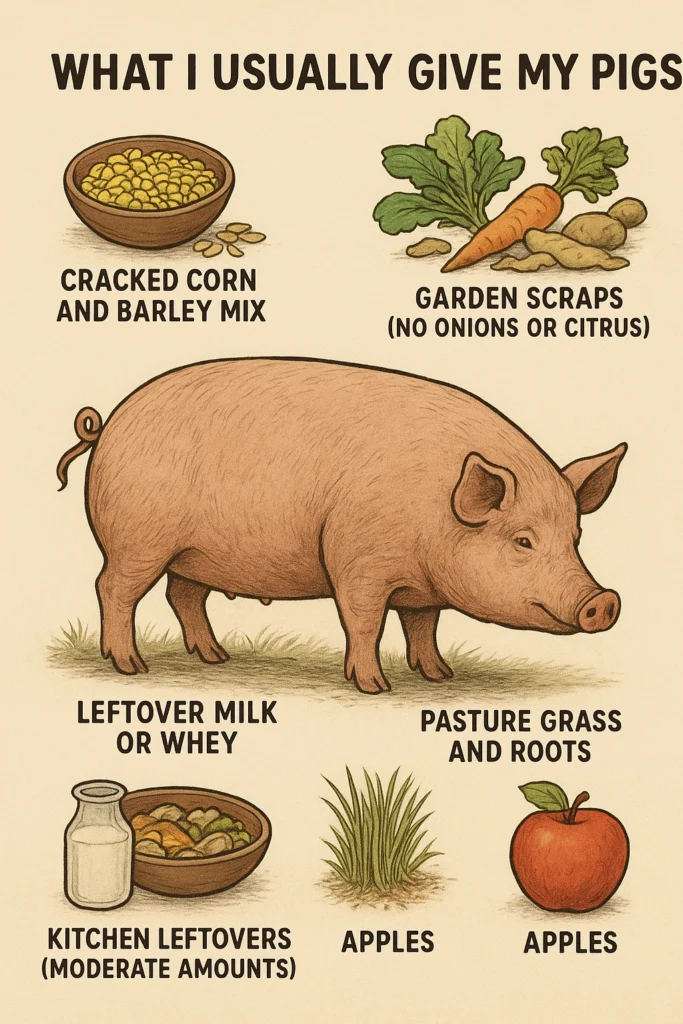
Here’s what I usually give them:
- Cracked corn and barley mix
- Garden scraps (no onions or citrus)
- Leftover milk or whey
- Pasture grass and roots
- Kitchen leftovers (moderate amounts)
And once in a while, I treat them to apples. They go nuts for apples. But balance is key. A well fed pig grows better and stays healthier plus, their meat tastes better too.
Common Mistakes New Pig Keepers Make
You’re gonna laugh, but I made almost all of these at some point:
- Weak fencing pigs are stronger than you think
- Overfeeding fat pigs are cute but unhealthy
- No wallow area they need mud to cool off
- Ignoring the smell it adds up fast, trust me
- Forgetting water they drink a lot, especially in summer
If I could go back, I’d build stronger fences from the start. It saves a ton of headaches later.
My Top Tips for Raising All Types of Pigs on a Small Homestead
Here’s what’s worked best for me over the years:
- Start small. Two pigs are plenty for your first round.
- Rotate their pasture. Keeps the ground healthy.
- Use sturdy fencing. At least 3 strands of electric wire.
- Give them shade and mud. Happy pigs are cool pigs.
- Make friends with them. It makes chores easier and butchering day a little less hard.
I also keep a bucket of water and a brush nearby brushing them daily keeps them calm and used to human touch.
Q&A About Types of Pigs (Because I Get These Questions a Lot)
Q: What’s the best Types of Pigs for beginners?
A: Honestly, American Guinea Hogs or Berkshires. They’re friendly, small enough to manage, and great for small farms.
Q: Can pigs live with chickens or goats?
A: Nope, not safely. Pigs get curious and can hurt smaller animals. Keep ‘em separate.
Q: Do pigs smell bad?
A: Only if you don’t manage their bedding or space. Deep litter composting keeps the smell way down.
Final Thoughts on the Different Types of Pigs
After more than a decade with pigs, I can say every breed’s got its own charm and its own headache. The best Types of Pigs for you depends on your space, your goals, and how much chaos you can handle.
If you want easygoing pigs, go with Guinea Hogs or Berkshires. If you want fast growth, Yorkshires or Durocs. And if you want a challenge, well, get yourself a Tamworth. You’ll never be bored again.
So yeah, raising pigs isn’t always pretty, but it’s worth every muddy boot and busted fence. Trust me, you’ll laugh more than you cry and the bacon ain’t bad either.


Pingback: What Are the Legal Challenges of Urban Homesteading? - Farmsolo