


You ever have one of those ideas like Raising Guinea Fowl that seemed good at the time… but then you start wondering if you’ve lost your mind? That was me the first time I brought home guinea fowl. My wife said, “Are those the birds that scream all day?” Yep. That’s them.
But lemme tell you after more than ten years of homesteading, I’ll still say raising guinea fowl is one of the best and weirdest choices I ever made. They’re loud, yes, but they’re also some of the best natural pest controllers you’ll ever find. And funny? Oh man, they’ve got more personality than half the neighbors.
How I First Got Into Raising Guinea Fowl
I didn’t start with guineas right away. I had chickens, ducks, even a couple turkeys for a while. But one summer, ticks became a nightmare on my little backyard farm. My dog got one, then my kid almost did, and I said, “That’s it we’re getting tick-eaters.”
A buddy from town told me guineas eat ticks like candy. So I found a local breeder, drove an hour, and came back with six tiny keets (that’s what baby guineas are called). They looked like little brown puffballs, cute as buttons.
The first week was chaos. They were jumpy, fast, and louder than I expected. I lost one because I didn’t close the brooder tight enough lesson number one: guineas can squeeze through holes you didn’t even notice.
What Makes Guinea Fowl So Different From Chickens
You’d think raising guinea fowl would be like raising chickens. Nope. These birds are wild at heart. You can tame them a bit, sure, but they’ll never be as chill as chickens.
Here’s what I noticed:
- They don’t like being confined. You try locking them up, and they’ll pace like prisoners.
- They scream when something’s wrong. Hawk flying overhead? They sound the alarm. Stranger in the driveway? Same thing. It’s actually kinda nice once you get used to it.
- They’re loyal to their group. They move like a pack, always together. You lose one, the rest freak out.
Their personalities are wild, but they work hard. I’ve watched mine spend hours patrolling the yard, gobbling up ticks, beetles, grasshoppers even small snakes once. I don’t use bug spray anymore.
The Setup: How I House and Feed My Guinea Fowl
If you’re thinking about getting guineas, let me save you some headaches. Here’s what I learned the hard way:
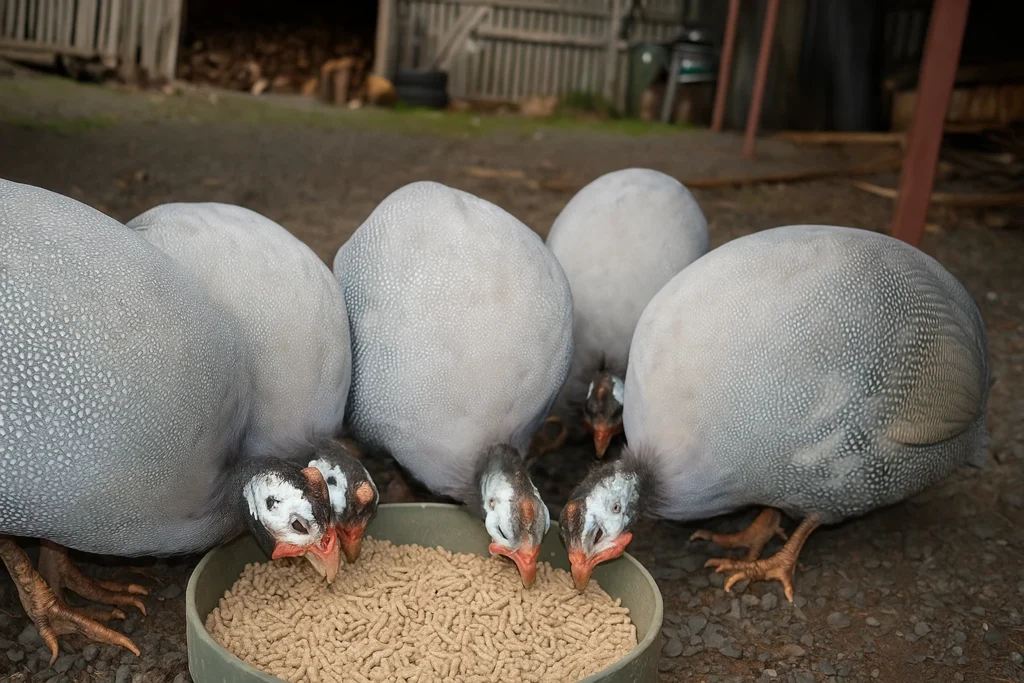
1. Give them space.
They hate being locked up. I keep them in a big coop with a fenced run for the first six weeks so they know where “home” is. After that, I let them free-range during the day.
2. Feed them like chickens (mostly).
I give mine a mix of chicken layer feed and cracked corn. They also get kitchen scraps they’ll pick at just about anything. But they do most of their eating outside, finding bugs.
3. Teach them to come home.
This is tricky. Every evening I call them with a coffee can of feed and shake it so they learn that sound means dinner. Took about two weeks, but now they come running when they hear it.
4. Keep them dry and draft-free.
Guineas hate cold wet weather. Make sure their coop’s got good ventilation but no drafts. I learned that after losing two in a cold snap. Broke my heart.
Funny (and Frustrating) Stories About Raising Guineas
I could write a whole book about the crazy stuff these birds have done. One time, a delivery guy showed up and the guineas surrounded his truck screaming like they were under attack. He jumped back in his van and drove off I had to call him to come back.
Another time, they decided to sleep on my roof. Every morning I’d hear tap tap tap on the metal gutter. Took me a week to convince them to roost in the coop again.
And my favorite one day, a hawk swooped down at one of my chickens. Before I could run out, my guineas charged it together, flapping and screaming. The hawk took off so fast it didn’t even grab its lunch. I swear those little helmet headed birds saved my flock.
Why Guinea Fowl Eggs Are Worth Trying
Now, not everyone knows this, but guinea fowl lay eggs that are smaller than chicken eggs but super rich and tasty. The shells are hard as rocks you practically need a spoon to crack ‘em.
Their laying habits are… unpredictable. They’ll hide nests in tall grass or under bushes, and you might find 20 eggs in one pile. I once found a nest behind my compost bin after weeks of thinking my guineas stopped laying.
If you can find their nests, the eggs are great for baking or frying. I mix them with chicken eggs, and most folks can’t even tell the difference they just say it tastes “better somehow.”
How Noisy Are Guinea Fowl, Really?
Alright, I won’t lie they’re noisy. Sometimes too noisy. If you’ve got close neighbors, you might wanna warn them first.
They make this “buck-wheat” sound (that’s the females) and an endless chatter when they’re upset or curious. I actually got used to it it’s like the soundtrack of my homestead now.
Funny thing is, I kinda like it. It makes the place feel alive. And they only really go crazy when something’s off like a snake in the grass or a fox sneaking near the coop. So the noise isn’t random; it’s their version of yelling “danger!”
Common Problems (and How I Fixed Them)
Let’s be honest raising guinea fowl isn’t all sunshine. Here are the biggest headaches I’ve run into and what I do now:
1. They wander too far.
Mine once went two properties over. Now, I clip one wing (just the flight feathers). It keeps them grounded and closer to home.
2. They fight sometimes.
Males can be rough, especially during breeding season. I keep about one male for every five females to avoid chaos.
3. Predators love them.
They’re tough birds, but raccoons and foxes are sneakier. I close the coop door every night, no exceptions. Lost three before I learned.
4. They scare guests.
If you’ve got visitors, warn them first! Guineas don’t trust strangers. My mother in law still talks about “those wild birds” from her last visit.
What I Love Most About Raising Guinea Fowl
They’re independent. They don’t need babysitting like ducks or turkeys. They eat pests, sound alarms, and make the yard feel alive.
They’re also tough way less likely to get mites or diseases compared to chickens. And once you’ve raised them a while, they become part of the family in their own weird, noisy way.
I remember sitting on the porch one summer evening, watching the guineas chase bugs across the field. My daughter said, “They look like tiny dinosaurs.” And she’s right they kinda do.
My Top Tips for New Guinea Fowl Keepers
If you’re just getting started, here’s what I’d tell a friend:
- Start small. Six to eight birds are enough to learn with.
- Keep them penned at first. Don’t let them free range until they know where home is.
- Use high roosts. They like to sleep up high.
- Don’t freak out about noise. You’ll get used to it or at least learn to laugh about it.
- Collect eggs often. Once they go broody in a hidden nest, good luck finding it.
Mini FAQ About Raising Guinea Fowl
Q: Can guinea fowl live with chickens?
A: Yep, mine do. Just make sure the coop’s got enough room. Guineas are a bit bossy sometimes.
Q: Do they fly away for good?
A: Rarely, if you raise them from keets and let them know your place is home. Adults brought in from somewhere else might wander though.
Q: Are guinea fowl good for meat?
A: Oh yeah, the meat’s lean and rich. Tastes a bit like game bird kinda like pheasant. I butcher a few every year for special dinners.
Final Thoughts: Would I Do It Again?
You bet. Raising guinea fowl might not be for everyone they’re loud, a little wild, and unpredictable but they’ve earned their spot on my homestead.
They keep the bugs down, guard the flock, and make me laugh every day. Sure, they drive me nuts sometimes, but I wouldn’t trade them for anything.
If you’re on the fence, try a few keets and see how it goes. Just don’t blame me when they start roosting on your truck or waking you up at dawn yelling about a butterfly.
Trust me, you’ll love ‘em anyway.


Pingback: guinea hen eggs