
I gotta be honest with you right from the start. When I first started trying to improve pollination in my backyard homestead, I thought it was just about “getting more bees.”
Man… I wish it was that simple.
Backyard pollination mistakes are something I made a LOT of over the years. And sometimes I still mess up, even now, after more than 10 years of playing with raised beds, fruit trees, chickens, and all the urban homesteading crazy life.
I’m writing this because I know how frustrating it feels when your zucchini flowers dry up, or your tomatoes bloom like crazy and still give you like 3 sad fruits. Been there. Cursed about it. Blamed myself. Blamed the weather. Even blamed my neighbor’s kids one time (sorry Tim).
So lemme tell you the real mistakes I made, what actually worked after many failures, and what you can fix TODAY without spending a single dollar.
Why Pollination In the Backyard Is Tricky (And Why It Took Me Years to Understand)
A funny thing happened my second year of gardening. I planted 12 tomato plants, thinking I was gonna feed half my street. They grew huge, tons of flowers, looked happy.
Then came harvest.
I got 11 tomatoes.
I remember standing there like, “That’s it? After all that compost and talking to them like a crazy person?”
That’s when I first learned: flowers don’t mean fruit. Pollination means fruit. And backyard pollination mistakes can wipe out half your harvest before you even know what happened.
Urban yards are weird. We got fences, walls, neighbors spraying stuff, dogs running around, not much habitat for pollinators, not enough diversity… and we don’t realize how much that hurts our garden.
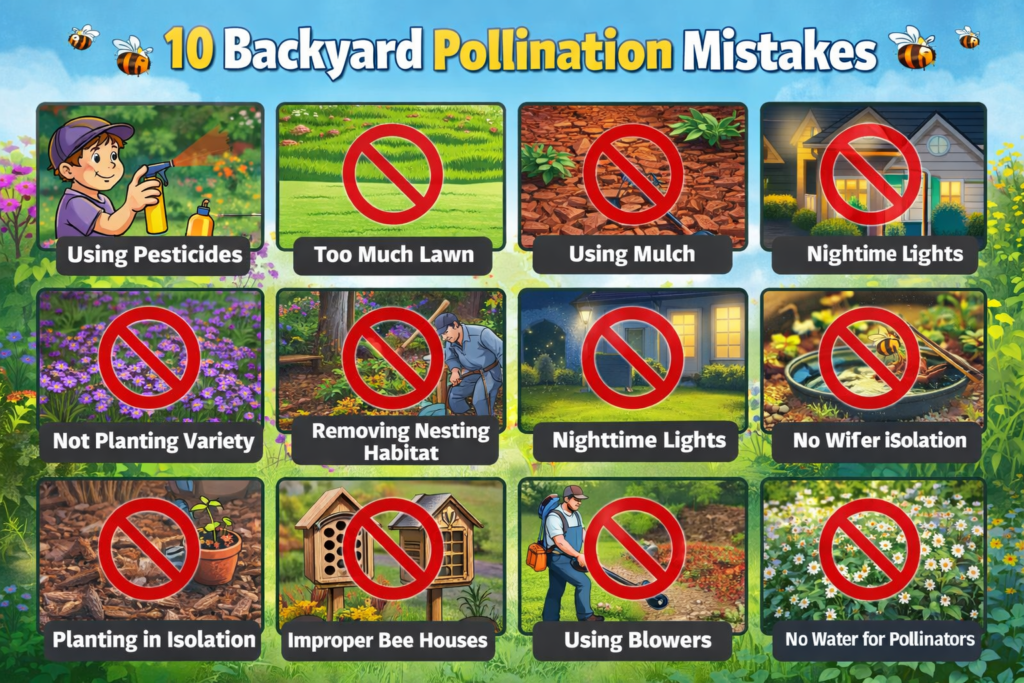
Mistake 1: Thinking “Bees Will Just Show Up”
Let me tell you something embarrassing.
For YEARS I just assumed bees would magically show up because I had flowers. I mean, that’s how nature works, right?
Wrong.
One summer, I stood out there for 20 minutes watching a squash flower. Not a single bee. Not even a confused fly. Meanwhile, my friend 2 streets over had bees all over his yard.
Turned out he had water, shade, and flower diversity. I had… well, nothing but vegetables.
Vegetable flowers alone don’t attract pollinators.
Bees don’t wake up in the morning excited for a zucchini blossom. They want nectar rich stuff like borage, basil flowers, sunflowers, clover, lavender, echinacea.
What finally fixed this: I started planting what I call my “pollinator strip” just a messy patch of random flowers bees love.
No fancy landscaping. I literally tossed seeds and hoped for the best. And guess what? Bees came.
Mistake 2: Killing the Very Bugs That Pollinate My Garden
This one still hurts to admit.
One summer I was spraying neem oil every 3 days because I got scared of aphids. I put way too much, too often, and on the wrong time of day.
I basically chased off every natural pollinator and beneficial insect in my yard.
I didn’t know that:
- Neem on open blossoms harms bees
- Pollinators avoid strong soap sprays
- Overuse kills ladybugs and lacewings
- Spraying in the heat burns plants
- Spraying while bees are active ruins everything
Now, I do this:
If I have to spray I do it at sunset, very small amount, and I never ever spray flowers.
And most seasons, I don’t spray at all anymore. I use my fingers, water hose, or let predator bugs do their job.
Mistake 3: No Water Source for Pollinators
This one is a big surprise to most folks.
Bees need water. Butterflies need water. Even some beetles need tiny moisture spots.
But for a long time, I had nothing out there.
A buddy of mine who keeps bees told me,
“Bro, your yard is like a desert. Even the ants are thirsty.”
So now I keep a small shallow bowl with marbles and rocks in it. Doesn’t look fancy. Kinda ugly honestly. But bees land on the rocks, sip water, and take off.
And suddenly my pollination skyrocketed.
Mistake 4: Planting Everything That Needs Bees… but Not Planting Enough Bees
I call this my “selfish garden year.”
I planted cucumbers, melons, squash, strawberries, peppers, tomatoes, beans… ALL things that need or benefit from pollination.
But I planted almost nothing that gives pollinators food.
Imagine inviting friends for dinner but you got no dinner.
That was my backyard.
Now I do this:
- 70% food plants
- 30% “pollinator support plants”
This ratio works great. You don’t have to measure it perfectly. Sometimes I’m more like 60/40 or 80/20. But as long as I have “bee food,” I get more fruits.
Mistake 5: Having Too Many Male Flowers… and Not Enough Female Ones
This one confused me for many years.
Especially with squash.
On squash plants, the male flowers come first. Sometimes for weeks. And I used to think something was wrong with the plant or soil.
Nope. It’s normal.
But the mistake I made was removing male flowers too early, thinking they were “stealing energy.”
Don’t do that.
Male flowers are essential for pollination, and bees love them. Only remove them later if you want to stuff them and fry them (very good by the way).
Mistake 6: Letting My Yard Be Too Clean
You know those Pinterest gardens where everything is perfect? Clean mulch lines, trimmed edges, no weeds, no leaf piles?
Yeah… that’s not where bees and beneficial insects live.
For a long time, I was obsessed with “neatness.” I’d clean up every fallen leaf, every stick, every weed.
I basically removed all the small habitats where native bees hide, rest, or nest.
One year I was too busy to clean up. Guess what? My pollination doubled.
Because messy yards = more life.
Now I keep:
- A small brush pile
- Some leaves in corners
- Little logs
- Hidden places under shrubs
This helps native bees more than any store bought insect house.
Mistake 7: Not Hand Pollinating When I Needed To
Look, some days you just don’t get enough bees. Weather is bad. It’s too hot. Too windy. Or bees just didn’t feel like visiting your yard.
I used to blame nature.
But the truth is, sometimes you gotta do the job yourself.
My method is simple:
- Use a small paintbrush
- Touch the inside of the male flower
- Then brush the inside of the female flower
- That’s it
With tomatoes, I just shake the plant gently. Works surprisingly well.
Hand pollination saved many seasons for me.
Mistake 8: Growing One Single Type of Flowering Plant
This is called a “monoculture,” but honestly I didn’t know that word until two years ago.
If you grow only marigolds, or only lavender, or only one type of flower, you’ll get visitors but not enough variety.
Pollinators love diversity.
Think about it like a buffet. One dish vs. ten dishes.
So now I mix stuff:
- Clover
- Basil (let it flower!)
- Borage
- Calendula
- Zinnia
- Sunflowers
- Oregano flowers
- Thyme flowers
I don’t plan it perfectly. I just add something new every season.
Mistake 9: Forgetting That Shade Actually Helps Pollinators
For years I thought pollinators wanted full sun only.
Turns out, too much sun stresses them.
When I added a little shade just a small umbrella near my pollinator strip the bees stayed longer and worked harder.
Sometimes it’s the small things.
Mistake 10: Not Knowing My Neighborhood Was Hurting My Pollination
This was a big “ah crap” moment.
One year my pollinators vanished. I thought it was my fault again.
But then I found out the city did mosquito spraying two blocks away.
Sometimes the problem isn’t you.
It’s neighbors spraying weed killer, or pest companies, or even construction noise.
I can’t fix the whole neighborhood, but I can do this:
- Plant more native flowers
- Add water
- Stop using pesticides
- Make my yard a “safe zone” for pollinators
- Keep flowering plants blooming from spring to fall
This created what I call my “pollinator shelter,” and even when bees vanish temporarily, they eventually return.
A Few Small Pollination Tricks That Really Made a Difference for Me
These are little things I do without thinking now:
- I keep my birdbath low so bees can reach it.
- I always plant mint in a bucket (not the ground, trust me!) because its flowers attract a ton of bees.
- I let a few radishes, carrots, and herbs go to flower.
- I never deadhead everything at once.
- And if I see a bee struggling in the water, I gently rescue it with a leaf.
Silly maybe, but it makes me feel like I’m helping.
Mini FAQ From My Inbox & Neighbors
Q: Do I need honeybees?
Nope. Most of my pollination comes from wild bees, bumble bees, hoverflies, and even beetles.
Q: Can I get good pollination in a tiny backyard?
Yes. My yard is small, and once I fixed my backyard pollination mistakes, my harvest doubled.
Q: Should I buy one of those fancy bee hotels?
Honestly… meh. They look cute, but most of mine just collected spiders. I had better results with simple logs and sticks.
Final Thoughts From a Guy Who’s Still Learning
Backyard pollination mistakes happen to all of us. Even after 10 years, sometimes I still lose a squash or melon because I forgot to water, or I pruned at the wrong time, or I just didn’t pay attention.
But I’ll tell you this:
When you get your pollination right, EVERYTHING else in your homestead gets easier.
More food. Less stress. Happier plants. More life in the garden.
If you got a weird question or you’re stuck with something, just ask in the comments or message me. I mess up all the time, so don’t be shy.
I’m still learning just like you.
And hey don’t make the same backyard pollination mistakes I did. One mistake is enough for both of us.