


If you’ve never seen a pickle plant before, lemme tell you it’s exactly what it sounds like. A tiny, quirky succulent that looks like someone glued a bunch of baby pickles on a stick. The first time I saw one, I thought it was fake. My wife brought it home from a local nursery, smiling like she found treasure. “It’s called a pickle plant,” she said. I laughed. “Well, I guess now we have a snack garden.”
But it turned out this odd little plant taught me more about patience and care than some of the big stuff I’ve grown. Let me walk you through my story what I got right, what I totally messed up, and how you can grow your own pickle plant without losing your mind (or the plant).
So, What the Heck Is a Pickle Plant?
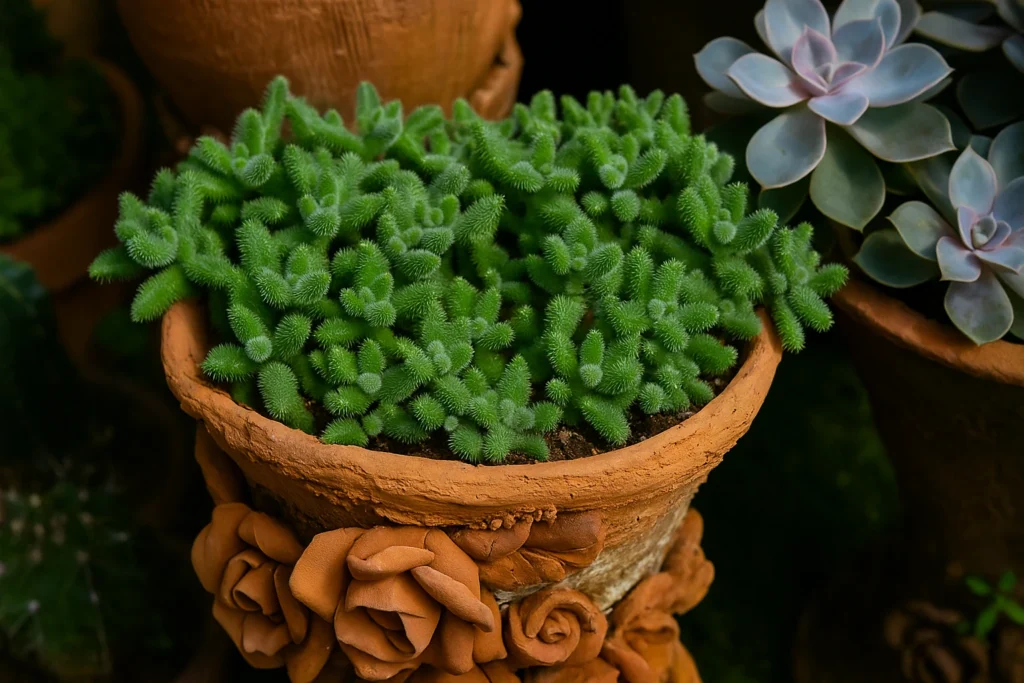
I didn’t know this at first, but the pickle plant (scientifically Delosperma echinatum) is a succulent from South Africa. It’s not related to cucumbers at all though you’d never guess that from its look. Its chubby green stems are covered in soft white hairs that glisten in the sun, almost like little spikes, but they’re harmless.
It’s a slow grower and honestly, one of the easiest plants I’ve kept once I understood what it wanted. But before that? Yeah… I drowned my first one. Literally. I treated it like basil, and it rotted within two weeks. The smell was awful.
The First Mistake: Too Much Love (a.k.a. Overwatering)
One of the biggest problems with the pickle plant is that it’s too cute. You see it sitting on your windowsill, looking thirsty, and your instinct is to water it. But succulents don’t work that way. They like to be ignored a bit.
The first pickle plant I had sat in a little clay pot near the kitchen window. Every morning, I’d see the soil dry up, and I’d water it sometimes twice a week. It didn’t take long before the stems went soft, the leaves started to droop, and soon it smelled like a wet sponge.
Lesson learned: pickle plants store water in their leaves, just like cacti. When in doubt, don’t water. It’s better to underwater than overdo it.
Here’s what I do now:
- Water once every 2–3 weeks (in summer)
- Once a month in winter
- Always check if the top 2 inches of soil are bone dry before touching that watering can
Trust me, the plant will thank you by staying firm and bright green.
Getting the Soil Right (It’s All About Drainage)
When I finally bought my second pickle plant, I did things differently. I used cactus soil mixed with a little sand and perlite. The first time, I used regular potting soil big mistake. It held too much moisture.
Now I know the secret: pickle plants hate “wet feet.” Their roots rot easily, so the pot needs a drainage hole and light, airy soil.
Here’s my homemade mix:
- 2 parts cactus soil
- 1 part perlite
- 1 part coarse sand
And if you’ve only got backyard dirt? Don’t. It’s too heavy. Your pickle plant will suffocate in it faster than a goldfish in syrup.
Sunlight and Placement: Don’t Cook It, Don’t Hide It
Another thing I got wrong at first sunlight. I figured, “it’s a succulent, it must love full sun!” So I put it outside in July on my porch table. By the next day, it looked like fried lettuce.
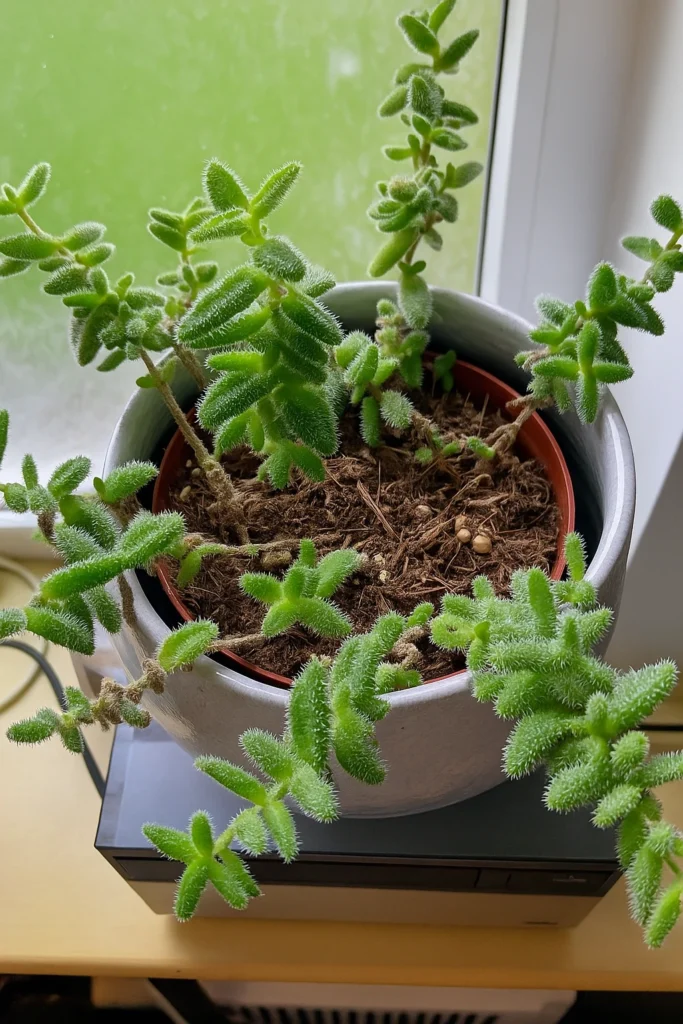
Pickle plants like bright light, but not scorching direct sun all day. Morning or late afternoon sun works best. I keep mine by a south-facing window where it gets about 4–6 hours of filtered light daily.
If the leaves turn red or shrivel, it’s getting too much sun. If it’s stretching out and leaning, it needs more light. Find that sweet spot and it’ll stay compact and happy.
Propagating the Pickle Plant: Easier Than You Think
Once mine started growing healthy again, I tried propagation mostly because my wife wanted “just one more.” I cut off a little stem about 3 inches long, let it dry overnight, and planted it in sandy soil. Within three weeks, roots popped out.
If you’ve never done propagation, don’t worry. It’s super easy. Just remember:
- Cut a healthy stem.
- Let it dry 24 hours (important or it’ll rot).
- Stick it in dry soil.
- Wait a few weeks before watering.
Soon enough, you’ll have baby pickle plants everywhere. I gave some away to friends, and one of them still sends me photos like proud parent updates.
My Weirdest Pickle Plant Moment
Alright, here’s a funny one. Last year, I had my pickle plant sitting near my chicken coop window (I thought it looked cute there). One of my hens somehow knocked it over, and I didn’t notice for two days. When I found it, the poor plant was lying on its side, dirt everywhere, roots half out.
I figured it was done for but nope. I stuck it back in fresh soil, trimmed the mushy bits, and a few weeks later it looked better than before. These little things are tougher than they look. Like the underdogs of the succulent world.
Common Problems (and What I’ve Learned to Do)
Let me just say I’ve made most of the mistakes you can make with this plant. So here’s what I’ve learned from trial and error:
Problem 1: Mushy, droopy stems
👉 You overwatered. Cut the soft parts, let it dry, repot in dry soil, and water less.
Problem 2: Shriveling leaves
👉 It’s too dry or getting too much sun. Move it to bright shade and water lightly.
Problem 3: Brown or burnt tips
👉 Probably too much direct sunlight or fertilizer. I never fertilize mine more than once every 2–3 months using a diluted succulent feed.
Problem 4: Pests (tiny white bugs or aphids)
👉 Wipe leaves with a bit of neem oil and water. Works every time.
How to Make It Thrive (My Go-To Routine)
Alright, lemme break down what I do every month for my pickle plants:
Weekly check:
I poke the soil with my finger. If it’s dusty dry, I water. If not, I wait.
Monthly check:
Wipe off the leaves with a damp cloth to remove dust. Helps them breathe.
Every 3 months:
Turn the pot around so it grows evenly toward the light. I also check for roots poking out of the bottom.
Once a year:
Repot into fresh soil. I do this every spring so it doesn’t get rootbound. Plus, it gives me a chance to propagate a few new ones.
This simple routine keeps mine perky and plump all year round.
Why I Think Every Homesteader Should Grow a Pickle Plant
You might wonder what’s a homesteader doing with a little decorative succulent? Well, for me, it’s about more than looks. The pickle plant reminds me that not everything on the homestead has to feed you or work hard. Sometimes, it’s okay to grow something just ‘cause it makes you smile.
It’s also a good teacher teaches patience, observation, and not to overdo things. And hey, once you learn to care for a fussy little succulent, managing your vegetable garden feels easier.
I keep one in the kitchen window, one by the chicken coop, and one in my shed. They’re low maintenance, cheerful, and make good conversation starters when neighbors drop by.
Mini FAQ (Stuff Folks Always Ask Me)
Q: Can I grow a pickle plant outside year-round?
A: If you live somewhere warm (like zone 9 or higher), yeah. But if you get frost, bring it inside. Mine doesn’t like cold feet.
Q: How big do they get?
A: About 8 or 10 inches tall, maybe more if it’s really happy. It stays pretty compact.
Q: Do they really smell like pickles?
A: Nope, not really. I was disappointed too. It’s more about the look, not the smell!
Q: Can I start one from a leaf?
A: I tried once didn’t work well. Stems are way easier.
What I’d Tell Any Friend About Pickle Plants
If a buddy asked me how to grow one, here’s what I’d say:
Don’t baby it too much. Give it sun, good drainage, and a bit of neglect. That’s it. The pickle plant doesn’t need pampering it needs balance. It’s one of those plants that reward you for doing less, not more.
I’ve killed a few plants over the years, but the ones that survive always teach me something. This one taught me that “less is more,” and that sometimes, the prettiest things come from the weirdest places like a plant that looks like a bunch of little green pickles.
So if you’re thinking about adding a pickle plant to your homestead, do it. You’ll get a plant that’s easy to care for, full of character, and surprisingly forgiving when life gets busy.
And if you ever mess it up don’t worry, I’ve been there. Just dust it off, repot, and try again. You’ll be surprised how tough these little guys really are.