


I’ll be honest, the first time I tried canning apple juice, my whole kitchen looked like a cider bomb went off. Sticky counters, wet towels, and the smell of apples for days. But man, when I popped open that first jar in the middle of winter pure gold. It tasted like fall in a bottle.
So lemme tell you what I’ve learned after years of doing this wrong, right, and everything in between. If you’ve got a few buckets of apples lying around or your neighbor just gave you a bag full from their tree, stick with me. I’ll walk you through how I make, can, and store apple juice the homestead way simple, honest, and without fancy equipment.
Why I Started Learn how Canning Apple Juice (and Why You Should Too)
One year I had more apples than I knew what to do with. My wife had already made pie, sauce, and dried slices for snacks, but the trees kept giving. A buddy of mine said, “Why not juice ’em?” And that was it.
Canning apple juice is one of those simple joys in homesteading. You take something that’s about to go bad and turn it into something you can enjoy for months. Plus, no preservatives, no weird flavor just pure juice.
If you live the self sufficient life or you’re just tired of store juice that tastes fake, you’re gonna love this.
Picking the Right Apples for Juice
Here’s the first mistake I made: I used whatever apples I could find. Some were bruised, some too sour, and a few had those little worm holes (don’t judge, I was learning). The juice came out… let’s just say “interesting.”
Now I know better. You want a good mix of apples. Sweet ones like Fuji or Gala balance out tart ones like Granny Smith. If you’ve got crabapples growing nearby, toss a few in just a few! they add a little zing.
Here’s what I usually do:
- About half sweet apples
- A quarter tart
- A quarter mixed wild or whatever’s on hand
Trust me, blending makes a big difference. One time I did only Red Delicious and it was flat as a pancake. Never again.
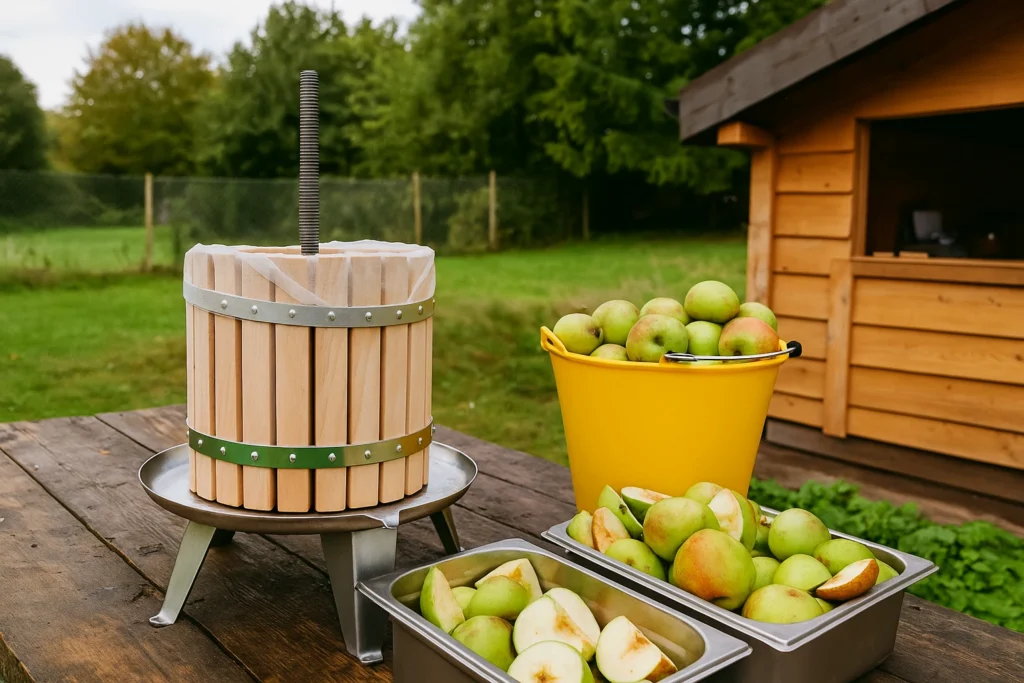
Prepping the Apples (a Little Work Upfront Saves a Lot Later)
Before you even think about juicing, clean your apples really well. I once skipped this step, and the dirt made my juice cloudy and weird-smelling. Lesson learned.
I wash them in a big tub with a splash of vinegar and water. Then I cut out bad spots don’t worry about peeling or coring, though. The skins and cores add flavor and color.
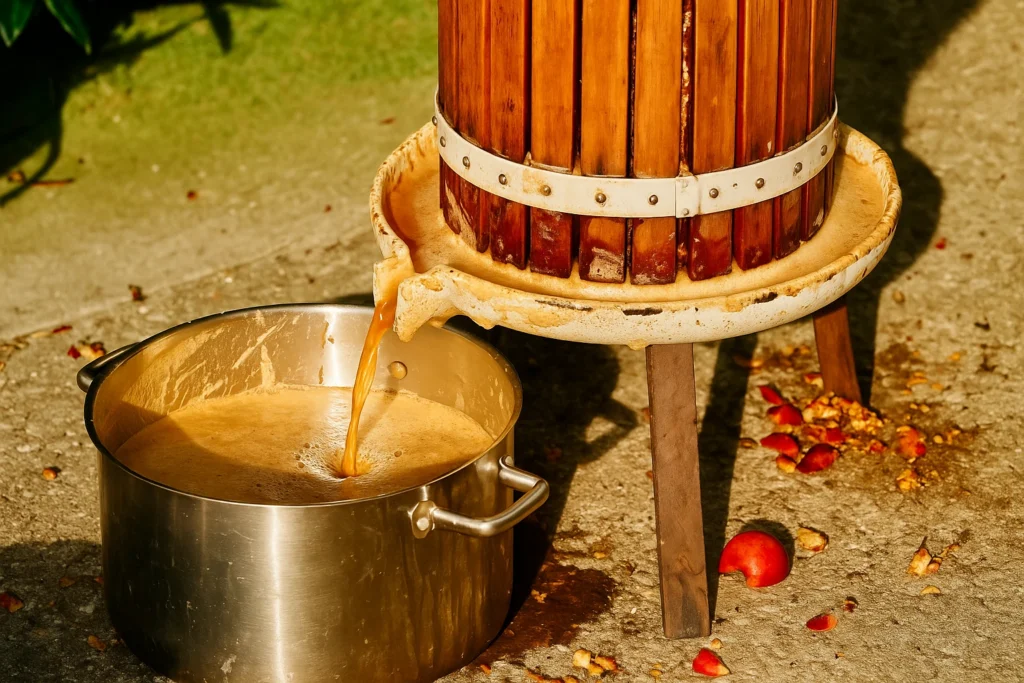
If you’ve got a juicer, great. If not, I’ve used my old hand crank apple press for years, and it still does the job. Even a big stockpot and potato masher can work if you strain it well after.
Making the Juice (It’s Easier Than You Think)
Alright, so here’s how I do it:
- Chop the apples into chunks (no need to peel).
- Boil them with enough water to cover the bottom of the pot so they don’t stick.
- Once they’re soft, mash them with a spoon or potato masher.
- Then strain through cheesecloth or a clean t-shirt into another pot.
Let it drip for a while. Don’t squeeze too hard or you’ll get cloudy juice. I learned that after trying to “speed things up” once. The juice looked like brown soup still tasty, but not pretty.
Sweetening (or Not)
This is personal. I like mine pure, no sugar. My wife says I’m crazy because she likes it a bit sweeter. Sometimes we compromise by adding a spoon of honey per jar before canning.
If your apples are tart, you can add sugar or even maple syrup. Just heat it up with the juice and taste before canning.
How I Can Apple Juice (Water Bath Method)
Here’s my go-to canning process. You don’t need a fancy pressure canner just a big pot will do.
- Heat the juice to about 190°F (not boiling).
- Pour into hot jars, leaving about ¼ inch headspace.
- Wipe rims, add lids and rings.
- Process in a boiling water bath for 10 minutes (pints or quarts).
That’s it. When you pull them out and hear that pop, that’s the sound of satisfaction right there.
Mistakes I’ve Made (and You Should Avoid)
Oh, I’ve made plenty. Here’s the top few you don’t wanna repeat:
- Using overripe apples they make funky juice that doesn’t last long.
- Not heating the juice before canning once it spoiled on me within weeks.
- Forgetting headspace yep, I lost half my jars one year to leaks.
- Not labeling jars I thought I’d remember which was apple juice and which was pear. I didn’t.
I laugh now, but at the time I was not amused.
Storing and Shelf Life
Once sealed, those jars last a year easy, sometimes two if kept in a cool spot. I store mine in the basement, away from sunlight. The flavor actually deepens over time.
Just make sure to check seals once in a while. If a lid’s popped or looks cloudy, toss it. I don’t take chances with canned stuff learned that after a bad jar of tomato sauce years ago.
My Favorite Ways to Use Home Canned Apple Juice
Here’s where it gets fun. Sure, you can drink it straight, but here’s a few other ways I use it:
- Warmed up with a dash of cinnamon on cold mornings
- Mixed with homemade sparkling water for a “fall soda”
- Used as the base for pork marinades
- In pancake batter instead of milk (adds a sweet twist)
My grandkids love when I heat it with a cinnamon stick and a slice of orange smells like the holidays.
The Time My Canner Overflowed (and My Wife Still Laughs About It)
One fall, I thought I’d “double up” and do two batches at once. The water bath was too full, and when I dropped in the jars whoosh! Boiling water everywhere. I burned my arm a little and said some words I won’t repeat here.
Now I always test-fill the pot before heating. Seems simple, but sometimes you learn the hard way. My wife still jokes every time she sees the canner come out, “Got your swim gear ready?”
Tips for Newbies (From Someone Who Screwed It Up Enough)
If this is your first go at canning apple juice, here’s what I’d tell you over a cup of coffee:
- Start small. Maybe 6–8 jars. You’ll learn quicker.
- Always have extra lids. I can’t tell you how many times I ran short.
- Label and date everything. You’ll thank yourself next fall.
- Don’t rush cooling time. Let those jars sit for 12–24 hours untouched.
And remember, every batch is a little different. That’s the charm of homesteading you’re not chasing perfection, you’re making something real.
Q&A (Stuff Folks Ask Me All the Time)
Q: Can I can store bought apple juice?
A: You can, but why bother? It’s full of preservatives already. I only can juice I make myself.
Q: My juice turned cloudy, did I ruin it?
A: Nah, that’s fine. Just means some pulp got through. Flavor’s still great.
Q: Do I need lemon juice for acidity?
A: Nope, apples are acidic enough on their own. You’re good.
The Real Reason I Keep Doing It
Sure, canning apple juice saves money and tastes better, but for me it’s about more than that. It’s about slowing down. About working with what you’ve got. Every fall when I see those jars lined up on the shelfdeep gold in the sunlight I feel proud.
I know what’s in that juice. No chemicals, no nonsense, just apples, water, and a little hard work.
And every time I open a jar in January, I remember the cool air, the smell of cider, and my kitchen full of steam. That’s what homesteading’s about connection to the seasons, to the land, and to your own two hands.


Pingback: How to Preserve Food Without Refrigeration - Farmsolo